





Being found by AI: Tips to keep your content healthy
Great content strategies fall apart in the day-to-day. Content ages, gaps appear, and you end up firefighting instead of following the plan.
This session gives you a simple system to keep your content healthy, and easy to find in AI search. You'll leave with a repeatable routine you can run every week, so your strategy stays on track without the extra work.
Learn about the Squiz Content Intelligence one-month trial →
Watch the Australia & New Zealand webinar
Transcript: Watch the webinar (ANZ)
1
00:01:17.880 --> 00:01:26.989
Joel Goodman: Good morning, everybody! Welcome to our webinar today, Being Found by AI Tips to Keep Your Content Healthy.
2
00:01:27.040 --> 00:01:39.340
Joel Goodman: My name is Joel Goodman, I'm the VP of Growth Strategy here at Squiz. I'm based in Nashville, Tennessee, so it's actually evening for me, but, really excited to be with all of you. With me is, my…
3
00:01:39.420 --> 00:01:48.969
Joel Goodman: Actually, one of my oldest friends in this business of web, but also now a colleague, Fran Zablocki, our client strategy director. Hi, Fran, how's it going?
4
00:01:49.740 --> 00:01:57.259
Fran Zablocki: It is going well, Joe. Good morning to all. I am in Rochester, New York, so it is also good evening to me, but glad to be here with all of you.
5
00:01:58.540 --> 00:02:13.330
Joel Goodman: Just a couple of quick housekeeping notes up front, if, well, you've registered for this webinar because you're here, you're gonna get the recording of this afterwards, so, don't worry about that. If you want to send it on to friends, we really appreciate it, like, please do that.
6
00:02:13.330 --> 00:02:31.580
Joel Goodman: Today's, we're just, we're just gonna cover some, tips to keeping your content healthy. It's meant to be very practical, we're not gonna go into broad AI theory or anything like that. This is really just how to keep the content across your websites healthy for AI visibility, for usability, for the people that visit your website.
7
00:02:31.580 --> 00:02:36.710
Joel Goodman: And just general maintainability for your own teams, whether they're small.
8
00:02:36.790 --> 00:02:53.340
Joel Goodman: or large. So, you know, most content teams already know what good content should do, it needs to be useful and accurate, it needs to be easy to find, easy to maintain, but we all recognize how hard it is to, keep up with requests, keep up with.
9
00:02:53.340 --> 00:03:07.550
Joel Goodman: how well that, that usefulness and accuracy kind of stays when multiple people are editing content or creating content, when your business priorities change. And that's what we kind of want to talk about with you today.
10
00:03:07.920 --> 00:03:13.880
Joel Goodman: Who is Squiz? We're a global digital experience company, hence why Fran and I are…
11
00:03:13.970 --> 00:03:33.689
Joel Goodman: here in the US, talking to you in Australia, New Zealand. We help enterprises build brilliant digital experiences fast on a platform that embraces change, and we are super excited to show you, some of, well, one, some of the thinking we've been doing around content, as well as how to, we've practically applied that to the tools that we're building.
12
00:03:35.460 --> 00:03:46.770
Joel Goodman: So today, a few things that we're gonna look at. One, why good content practice quietly breaks down those ways that kind of get into the good intentions that you have when you're planning content.
13
00:03:46.770 --> 00:04:02.389
Joel Goodman: We're going to look at four AI discovery signals, and then we want to look at how to use those signals in the content health loop to make sure that you're able to see how AI is being discovered, and then work that into your content to make it better and more discoverable.
14
00:04:02.390 --> 00:04:12.640
Joel Goodman: And then finally, we want to show you Squiz Content Intelligence, which is the tool that we've built to help you in that content loop, making all of that content manageable at scale.
15
00:04:12.880 --> 00:04:31.099
Joel Goodman: It's meant to, really show you those AI discovery signals. If you've come to a previous webinar, you'll probably have heard, some of that. We want to get into more practical uses for you, and really help you work this into your day-to-day workflows, for your organization.
16
00:04:33.170 --> 00:04:37.400
Joel Goodman: So, first I want to look at why good content practice breaks down.
17
00:04:37.520 --> 00:04:59.909
Joel Goodman: You already know this, mentioned this at the top, like, the problem is keeping all of your content accurate, and relevant and fresh all throughout the year. Good content practice breaks down when you have new requests that come in, you have unclear ownership or governance, you have pages that are aging, and you don't know which ones they are, and how often you need to go back and update that content.
18
00:04:59.910 --> 00:05:17.950
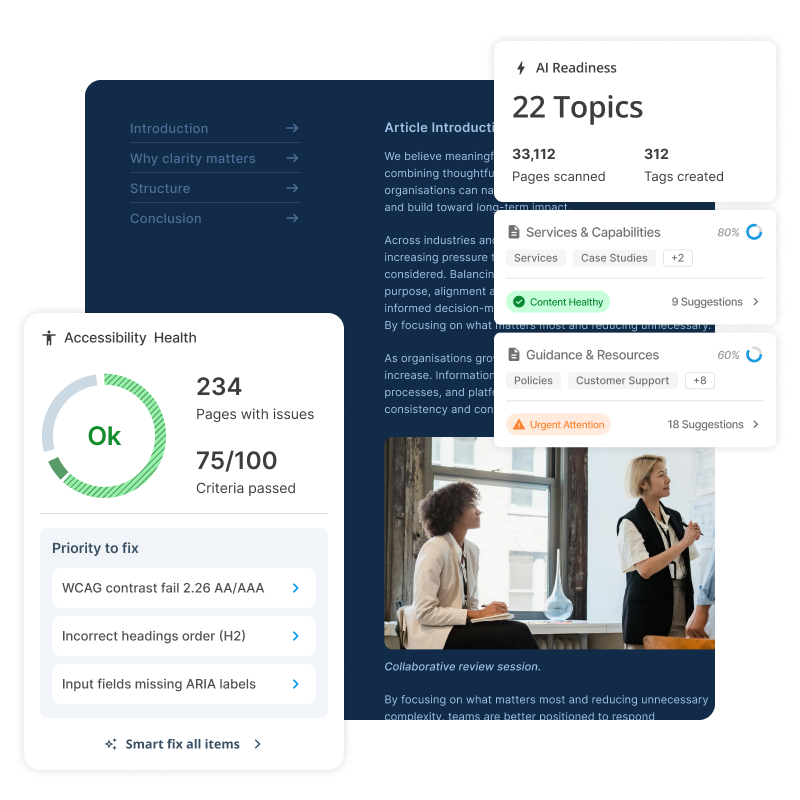
Joel Goodman: you might have stale audits, or duplicated content in different places across your website, or a lack of prioritization across all of this. You know, these are familiar principles, you know, your content should be clear, and it should be accurate, useful, current, findable, and owned.
19
00:05:19.070 --> 00:05:41.050
Joel Goodman: you might think of, like, a campaign page that repeats information that's on a product page. You can slowly find those pieces of information conflicting with each other. That can be difficult to spot and difficult to track, but it also makes it difficult for AI search to find and understand which of those points is accurate, which is correct, and which it should serve up in its answers.
20
00:05:41.050 --> 00:06:03.739
Joel Goodman: It could be also a PDF that remains live someplace after your web page has changed, and you may find that you're not able to keep those consistent, and so you have basically dead content that's living on, and where do you find it, you know? AI search, I mean, the truth of this is that AI search really puts a magnifying glass on all of these problems.
21
00:06:03.740 --> 00:06:05.180
Joel Goodman: If you…
22
00:06:05.180 --> 00:06:16.030
Joel Goodman: use AI in any capacity, you've probably seen this. You know, it amplifies the language that everyone uses. That's how we get generative AI. It also looks at all of the
23
00:06:16.030 --> 00:06:29.549
Joel Goodman: the problems and the discrepancies across our content, across the ways that we operate, and makes it even louder. So, for all the good that it actually does, there's a whole other side of it that just amplifies those areas that
24
00:06:29.550 --> 00:06:32.010
Joel Goodman: We need to focus on.
25
00:06:35.430 --> 00:06:52.599
Joel Goodman: And this is a little flowchart about how that works, right? So, you might have an audience question, and your healthy content is the one thing that needs to be consistent, needs to be current, needs to be structured, needs to be clear, so that that person gets a clear answer when they're searching on ChatGPT or on Google with AI mode turned on.
26
00:06:52.600 --> 00:07:02.670
Joel Goodman: You know, or being found by AI starts with healthier content, but that healthy content isn't something that teams can guarantee through, like, a one-off check here and there, right?
27
00:07:02.670 --> 00:07:08.089
Joel Goodman: Ai search doesn't remove the need for good content operations, but it does make them more important.
28
00:07:08.090 --> 00:07:20.970
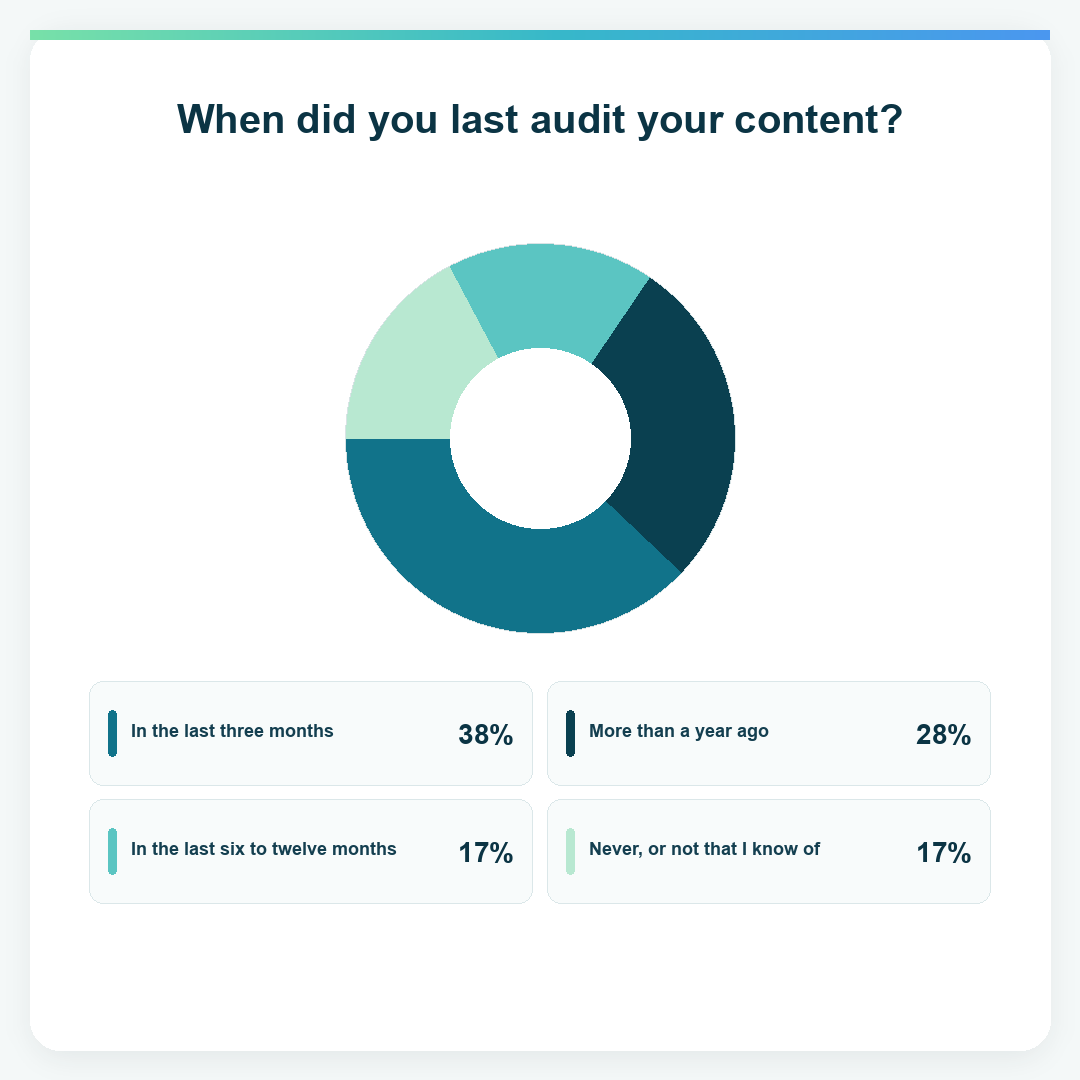
Joel Goodman: If your content estate contains duplicate, stale, or conflicting answers, AI systems have a weaker foundation to work from, and this comes down to trust signals. So, if your content's stale, if it's duplicative, if it's conflicting, if it's outdated.
29
00:07:20.970 --> 00:07:28.010
Joel Goodman: the AI doesn't know how to trust that content. It doesn't know which points are real, which points are the right points, and so…
30
00:07:28.010 --> 00:07:41.989
Joel Goodman: the way that large language models work is when they get confused, they either make something up, and that's why you see hallucinations, or in the case of especially third-party search, if you're talking about your chat GPTs and your perplexities and your clods.
31
00:07:41.990 --> 00:07:51.269
Joel Goodman: they're gonna go somewhere else where they can trust that content, where those trust signals are stronger, and they're not getting confused. And that's… that's really what…
32
00:07:51.270 --> 00:07:54.710
Joel Goodman: Healthy content, works to prevent.
33
00:07:55.990 --> 00:07:58.220
Joel Goodman: So I'm gonna kick off with a poll.
34
00:07:58.900 --> 00:08:00.189
Joel Goodman: We love a poll.
35
00:08:00.490 --> 00:08:17.569
Joel Goodman: So which of these do you see most often in your content? We want to talk about A out-of-date information, B, duplicate or conflicting pages across your website, gaps that nobody spots until a user asks, or too many requests and no clear priorities.
36
00:08:17.580 --> 00:08:25.259
Joel Goodman: Fran, which ones are you seeing as you work with, with clients, across these different, content operation pieces?
37
00:08:26.730 --> 00:08:45.799
Fran Zablocki: You know, I'm always, interested in the governance side of things, and it's that too many requests and no clear priorities that really becomes the true challenge, I think. It's just… I mean, this is overwhelming sometimes in its scale and the amount of work that it is to keep a website up and all that content.
38
00:08:45.800 --> 00:08:58.260
Fran Zablocki: And adding in the layer of trying to find… be visible to AI can feel like an additional burden on top of something that's already really heavy. And so, you know, I feel… I think a lot of times…
39
00:08:58.270 --> 00:09:13.060
Fran Zablocki: it's the other processes and people that, at the institution or organization, who mean well, but are just kind of, you know, peppering people with lots and lots of requests. And it can just kind of feel overwhelming. So I've heard that a lot recently in conversations.
40
00:09:18.300 --> 00:09:27.429
Joel Goodman: Alright, we're looking at 42% have out-of-date information across their websites. We've got some of you with a mix of duplicate or conflicting pages and gaps.
41
00:09:27.600 --> 00:09:33.560
Joel Goodman: We're seeing a lot of these things, in and across all of the content that we…
42
00:09:33.730 --> 00:09:42.749
Joel Goodman: look at every day. And so, this is… this is, this is pretty par for the course. Like, people… people are seeing this across every…
43
00:09:42.870 --> 00:09:46.350
Joel Goodman: single… Sector that we work with.
44
00:09:51.850 --> 00:10:10.280
Fran Zablocki: Alright, so I want to talk a little bit about some of the different content health problems that are causing a weakening of AI discovery signals. If you have listened to some previous webinars, you'll remember that we have four major signals, structure, metadata, authority, and freshness, that
45
00:10:10.280 --> 00:10:19.740
Fran Zablocki: we evaluate content on, to make sure that it's ready for AI, and each of those kind of has fail points or weakening points. So, for structure.
46
00:10:20.480 --> 00:10:37.210
Fran Zablocki: the main point is to extract a clear answer, right? And so, with that, you're looking at structured headings, structured content, and making sure that each page is focused on only one topic with a number of different subtopics.
47
00:10:37.210 --> 00:10:54.260
Fran Zablocki: a page is having a tough time understanding… or, sorry, if AI is having a tough time understanding what the page is about, it's likely a metadata problem. And this is going to be familiar for anyone who has worked in SEO as well, where page titles, page URL structures, if you have meta descriptions that are either blank.
48
00:10:54.260 --> 00:11:10.009
Fran Zablocki: or duplicate, with a number of different pages, that can really trip up AI, just as it does humans and SEO. Authority is interesting, because if you have brand authority, and you have authority with the site, you've gotten a long way already.
49
00:11:10.010 --> 00:11:24.560
Fran Zablocki: However, authority in this case for AI is just how trustworthy the single source of truth is on a particular page, and it can get eroded by having duplicate content on more than one page, or content that's really, really similar.
50
00:11:24.560 --> 00:11:36.939
Fran Zablocki: on more than one page. So, for those of you who are familiar with, you know, canonicals in the SEO world, AI needs to be able to trust that you have a single source of truth for things, and if you have slightly different
51
00:11:37.090 --> 00:11:50.519
Fran Zablocki: versions of very similar information on different pages, that's gonna start to erode things, too. And then freshness, I think that was, you know, one of the ones a lot of people responded to in the poll. This one is pretty self-evident, right? Like, just making sure that you have
52
00:11:50.520 --> 00:12:05.819
Fran Zablocki: Current content, making sure that pages that have publishing dates have the most recent publishing dates, making sure, especially if you have reference information, like tables and figures and processes, that the latest versions of those are showing up, and kind of,
53
00:12:06.190 --> 00:12:24.520
Fran Zablocki: in that vein that older versions of documents and processes and procedures are cleaned out of the website, so they're not accidentally showing up there. AI really appreciates current content, and anything that's beyond, like, 6 months old starts to really weaken that signal.
54
00:12:27.700 --> 00:12:38.069
Fran Zablocki: So, today we want to talk a little bit about a content health loop for AI discovery, and this is a simple four-step process that can be used at scale, but it can also be used
55
00:12:38.070 --> 00:13:02.040
Fran Zablocki: at the micro level, so you could take this approach for an individual page, you could take this approach for sections of a particular website, or you could take it across the entire website. The first step being planning things out, then step two being publishing, then we want to monitor what we've published and see how it's performing against what we'd hope for, and then iterating and improving
56
00:13:02.040 --> 00:13:06.759
Fran Zablocki: And then repeating the cycle from there. I'll go into a little bit more detail on each of these.
57
00:13:08.680 --> 00:13:17.970
Fran Zablocki: The first step, plan, is really the most important to get started, and it can be a little bit tricky
58
00:13:17.970 --> 00:13:38.109
Fran Zablocki: to know where you need to go if you haven't already figured out where you are today, right? And so, having an audit of what you already have, having an honest review of what's working and what's not, is the first step. And this can be before creating a brand new page, or it can be when you want, you know, before doing some kind of modification on an existing page.
59
00:13:38.110 --> 00:13:42.719
Fran Zablocki: You can see to the right the content intelligence tool.
60
00:13:42.720 --> 00:14:03.940
Fran Zablocki: is going to help with that at scale by looking at all the pages on the site and starting to organize them around topics, and identifying where those individual topics are either performing well in terms of AI visibility or poorly. That kind of initial audit and assessment is really necessary in order to be successful with all the steps that
61
00:14:03.940 --> 00:14:04.840
Fran Zablocki: beyond.
62
00:14:07.560 --> 00:14:18.370
Fran Zablocki: The second step is publish, and this is really where most of the work and most of the impact on the ultimate result for people, for SEO, and for AI search.
63
00:14:18.370 --> 00:14:43.200
Fran Zablocki: is involved, and this is where we get into those AI discovery signals, and where we have the ability to strengthen them. So, whenever you're going to be publishing new information, we want to make sure that we have the appropriate structure and metadata, like I mentioned before, that you don't duplicate content from another page, and that you have this as a source of good information. If this isn't the page that is the authority on something, and it's referring to
64
00:14:43.200 --> 00:14:56.739
Fran Zablocki: content that's better owned by another page, it's fine to have reference content, and it's fine to link over to it, but we just want to make sure that we're not duplicating large amounts of content that are exactly the same from page to page, and of course, freshness.
65
00:15:00.870 --> 00:15:21.749
Fran Zablocki: We've published our page, or our section, and now we need to make sure that we're monitoring it over time to make… to see if we're successful with the changes that we've made. You can see to the right that we have, in the content intelligence tool, an accessibility and an AI readiness health check. It's gonna give you a top-level overview of overall health.
66
00:15:21.750 --> 00:15:43.360
Fran Zablocki: But it's also going to drill down into those different areas of accessibility rules and topics on the AI readiness side, and it's going to let you know where those things are either strong or weak. We'll go over a short demo of that in a little bit. But you really need to set up regular content health checks to keep your best content trusted, and that's easier said than done, right? We don't…
67
00:15:43.540 --> 00:15:58.279
Fran Zablocki: even doing the content health checks and setting up those schedules can feel like a task that can get overwhelming, and the way that I've usually handled that when I've been in charge of content is to prioritize the most important pages with the most,
68
00:15:58.280 --> 00:16:06.999
Fran Zablocki: or the least amount of distance between each review, right? So let's say you have an editorial calendar, you have a review calendar, and the top…
69
00:16:07.000 --> 00:16:24.090
Fran Zablocki: 15-20% of your website needs to be reviewed every 2 weeks or every month. Maybe the next 25 to 30% needs to be reviewed every quarter, and then the bottom 50% needs to be reviewed annually at a minimum. That is one way of managing
70
00:16:24.430 --> 00:16:31.060
Fran Zablocki: a really large web estate, and I usually… Organize that around…
71
00:16:31.180 --> 00:16:40.899
Fran Zablocki: How much traffic particular pages are getting, but you also want to look at it from the standpoint of which pages are part of your core
72
00:16:40.900 --> 00:16:50.049
Fran Zablocki: conversions and tasks that people are trying to do, and which ones are part of your key audience pathways. And also which pages may…
73
00:16:50.050 --> 00:17:05.640
Fran Zablocki: be performing really, really well, in terms of web traffic, even though they're kind of tucked away and buried within the web structure. So, it's a combination of using a tool like Content Intelligence and things like Google Analytics for overall traffic, to prioritize what
74
00:17:05.640 --> 00:17:12.520
Fran Zablocki: You know, what, pages you need to do from month to month and quarter to quarter, but ultimately.
75
00:17:12.780 --> 00:17:25.219
Fran Zablocki: Like we've been saying, it can be quite a lot of work to put that together, and it can be quite a lot of returns to the same pages over the course of the year, which is why we came up with a tool that can really help lift that heavy weight.
76
00:17:28.500 --> 00:17:34.639
Fran Zablocki: And then the last piece, after we've published our content and we've evaluated it and measured it against what we hoped.
77
00:17:34.720 --> 00:17:49.860
Fran Zablocki: were… are to turn any gaps that have been identified by the tool or by our own eyes into decision-making points. And this is the act of actually improving content page to page. So, you may find that you had an important question that
78
00:17:50.190 --> 00:17:51.989
Fran Zablocki: Didn't have a clear answer.
79
00:17:52.240 --> 00:18:04.799
Fran Zablocki: That means we need to create a focused answer or update an existing page. Perhaps we just need to tweak something, maybe the information is actually on the page, but we need to put it in the form of a question and an
80
00:18:04.800 --> 00:18:14.000
Fran Zablocki: answer. Maybe the header needs to be rewritten as a question, and the answer needs to be rewritten as the paragraph below it.
81
00:18:14.450 --> 00:18:19.730
Fran Zablocki: We may have a useful page, we know there's good content on it, we know that it's authoritative content.
82
00:18:19.730 --> 00:18:42.529
Fran Zablocki: But we're also noticing that it's not showing up as well, or performing as well as we thought. In that case, we want to take a look to see if any of the metadata is an issue. So, do we have structured headings? Do we have the appropriate page title, or another title that's showing up in the code? Do we have meta descriptions at all? And if we do have those meta descriptions, are they actually describing what is on…
83
00:18:43.140 --> 00:18:45.110
Fran Zablocki: page.
84
00:18:45.350 --> 00:18:56.369
Fran Zablocki: Again, like I've mentioned, we only have pages that are competing or contradicting. In that case, you may want to remove the contradictions altogether, or turn them into more direct references.
85
00:18:56.370 --> 00:19:06.160
Fran Zablocki: Or consolidate all of them into one page, and even remove the other pages entirely. But this will at least give you a sense for what needs to be done when you run a scan.
86
00:19:06.280 --> 00:19:20.789
Fran Zablocki: And then the last piece, if content is stale, expired, or critical, it may be time to update it, or redirect it, or retire it. And so, a lot of, conversations I have with content managers.
87
00:19:20.790 --> 00:19:32.159
Fran Zablocki: Are around just reducing the overall size of the website, and the number of pages and number of instances we have of things, because it makes it easier to manage.
88
00:19:32.160 --> 00:19:42.339
Fran Zablocki: And so running something like Content Intelligence can identify where you might be able to just cut out some older content that hasn't been performing well or hasn't gotten a lot of traffic.
89
00:19:46.350 --> 00:19:54.149
Joel Goodman: And we want to go on to another poll off of that. When was the last time you audited the content across your website?
90
00:19:54.230 --> 00:20:04.419
Joel Goodman: as we talk about Fran, like, the prioritization part is the most, difficult part within this, and so, you know, a lot of times these audits…
91
00:20:04.420 --> 00:20:17.220
Joel Goodman: take a long time, they take a lot of effort. And we see that a lot, and that's, again, why content intelligence exists. It helps us do these audits at scale across thousands and thousands and thousands of pages.
92
00:20:21.410 --> 00:20:26.200
Fran Zablocki: It'll be interesting to hear… How recently people have done this.
93
00:20:27.400 --> 00:20:35.909
Joel Goodman: Yeah, I'm curious, I mean, how often, or I guess how long have these projects traditionally taken for you when you've done, say, a large university content audit?
94
00:20:36.660 --> 00:20:42.530
Fran Zablocki: Well, I'm gonna make everybody feel a little bit better about themselves, hopefully, with this answer, because there are, in a lot of cases.
95
00:20:42.930 --> 00:21:02.609
Fran Zablocki: pages that have never been audited, because they weren't important enough, or there's just too many pages and not enough human effort behind them, and, you know, a lot of times, people only get to, like, the top 20 to 30% of their pages if it's a team that's strapped and has a lot of other responsibilities and a lot of things on their plates. So…
96
00:21:02.680 --> 00:21:10.860
Fran Zablocki: Yeah, I mean, some people get to it all, they have good systems set up, but I think, you know, the point we're trying to make across the board here is…
97
00:21:10.880 --> 00:21:23.899
Fran Zablocki: that sometimes it's just too much content for humans to be able to manage, and so that's what these results are kind of showing, too. We got kind of an even set of replies here. Good news is, majority of you,
98
00:21:23.950 --> 00:21:41.080
Fran Zablocki: or saying that you've had content audits in the last 3 months, that's great. But, you know, there's a good percentage of you, 20%, that are saying that they've never had a content audit, or none that they know of, and that's actually perfectly normal, too. I mean, we work a lot with folks who just…
99
00:21:41.230 --> 00:21:50.459
Fran Zablocki: haven't had a chance to do this, and that's exactly the reason why we've created Content Intelligence, because it can do, again, it can do that heavy lifting, and it can do a job that really nobody else has had time to do.
100
00:21:51.440 --> 00:22:11.020
Joel Goodman: And I think the important thing is that even if you have recently looked across all of your content and looked at whether it's performing or not, there's a big question of how long it's going to be up-to-date, you know? Will it go stale? How quickly will AI search not recognize it or not, not trust it as much?
101
00:22:11.020 --> 00:22:27.049
Joel Goodman: how many people have their hands and their keyboards built in there as well, right? So, we want to talk about good practice at scale, you know, meaning when you've got hundreds or thousands of pages, that's where it gets really difficult to maintain a grasp on all of this.
102
00:22:27.050 --> 00:22:44.879
Joel Goodman: You know, the loop's super clear on one page, or 10 pages, or maybe… maybe 100 pages if you've got the team to do it, but it does get, it does get difficult when you've got lots and lots and lots of pages or content spread across different teams and topics.
103
00:22:44.880 --> 00:23:00.420
Joel Goodman: You know, multiple pages answering the same question, different governance structures where, you know, owners don't know when to review content, or just aren't doing it because it's not set in. And then it gets really difficult because you don't know what to fix first.
104
00:23:00.570 --> 00:23:03.590
Joel Goodman: So it is a scale problem, and…
105
00:23:03.820 --> 00:23:18.900
Joel Goodman: What we would like to do, even, you know, a good number you've audited recently, we saw, but, you know, the real question again is, like, how long does that… that picture of your content stay accurate once that content starts to get moving again and more people start working on it?
106
00:23:20.200 --> 00:23:26.790
Joel Goodman: I want to show a video, and Fran and I will kind of talk through how this works, but…
107
00:23:26.790 --> 00:23:47.409
Joel Goodman: We built content intelligence around, looking at thousands and thousands and thousands of pages, and so we look across all of your content, and then we split it between accessibility and then also AI readiness, meaning, you know, can AI read your content? Are you doing all these things to give good trust signals out to the AI?
108
00:23:49.660 --> 00:23:56.209
Joel Goodman: So, accessibility is important because it, it's kind of the baseline, right, Fran? It's the baseline of whether.
109
00:23:56.210 --> 00:24:21.179
Joel Goodman: whether a machine can read your content in the first place. So we know it's important for, you know, for kind of equitable work, for making sure everyone can access your website, but the same tools that people with disabilities are using to read content on your site are also being used by AI technology to understand it. And so our tool both looks at it, it gives you a breakdown of the
110
00:24:21.180 --> 00:24:39.250
Joel Goodman: impact of the different infractions against WCAG 2.2, and then gives you a solution of how to fix these sorts of things. It wants… we want you to understand what the problems are and why they're important to fix, and then how to fix them.
111
00:24:40.020 --> 00:25:00.789
Fran Zablocki: Yeah, and the thing I really like that's showing right now is that it's finding the larger issue, pointing out the pages that that issue exists on, then really drilling down into, hey, this is the code in here that is not meeting that need, and here's a suggested piece of code to fix it. So that last bit where you saw the, kind of, the red and the green, was really, the part that I find most
112
00:25:00.790 --> 00:25:08.749
Fran Zablocki: interesting and effective for content managers. Now, on the AI readiness side, we like to say that on the accessibility side, this is, you know, making it accessible for humans.
113
00:25:08.750 --> 00:25:26.079
Fran Zablocki: And the AI readiness side is really making it accessible for AI in search. This is showing the Squiz website and showing the topics that our content intelligence tool has identified as, important, and is also showing our relative performance, even with
114
00:25:26.120 --> 00:25:39.329
Fran Zablocki: content that is being shown as AI-ready without high-priority issues. The system has a number of different other priorities, and so it's showing that we have 4 lower priority issues and about 30, 31 pages that are associated with that.
115
00:25:39.330 --> 00:25:50.839
Fran Zablocki: So you kind of get that high-level overview, but then you can drill down into a lot of detail, and I think one of the most valuable parts of the content intelligence is what it's showing now, which is just how many questions it's asking of each topic.
116
00:25:50.860 --> 00:26:10.189
Fran Zablocki: it's emulating the same kind of behavior that AI Search does, which is called fan-out querying, and it's really hitting your website with as many possible variations on questions as it can think of, and you have full insight and visibility into those questions and can kind of see how it's answering them on your behalf.
117
00:26:10.190 --> 00:26:16.370
Fran Zablocki: This is a good example of, like, drilling all the way down into an individual issue, and it's pointing out
118
00:26:16.600 --> 00:26:27.560
Fran Zablocki: exactly what's needed for that particular page, and making a suggestion. This is showing how we're using our own tool on our website,
119
00:26:27.930 --> 00:26:47.390
Fran Zablocki: conversational search is something that has become very, very common for all of us to use through things like ChatGPT, but we can now enable this exact same kind of experience on our website or your website. It comes up with answers in written text, but it also does citations of all the different sources.
120
00:26:47.390 --> 00:26:51.650
Fran Zablocki: And is able to ask follow-up questions so you can chain together
121
00:26:51.650 --> 00:26:58.839
Fran Zablocki: Different, follow-up details, and kind of retain that conversation, throughout.
122
00:27:00.090 --> 00:27:11.929
Joel Goodman: What's great is that all those questions that Content Intelligence uses to ask and interrogate your content are used to make the results better, and more accurate within our conversational search product.
123
00:27:11.930 --> 00:27:27.040
Joel Goodman: And, that's one of those things that means we basically eliminate hallucinations entirely, because it's only answers coming from your content. We're not making anything up. In fact, the model doesn't even have access to make something up in that sort of a way.
124
00:27:29.870 --> 00:27:33.410
Joel Goodman: Yes, with that… Oh, go ahead, Fran.
125
00:27:34.020 --> 00:27:50.820
Fran Zablocki: Yeah, I was just gonna say, I really like conversational search and content intelligence paired together, because content intelligence is kind of the blanket, audit tool to make all of your content better, and it's… it is the source, it's improving the source so that all the different destinations
126
00:27:50.820 --> 00:28:11.800
Fran Zablocki: Are also improved, right? The destination we just showed, which would be, like, your local search that's, you know, in your own conversational search, or even keyword search, is going to be improved. The different, AI models are going to have more visibility. You're going to have more visibility with those different AI models. It's going to improve accessibility scores, which is going to improve for people who have,
127
00:28:12.030 --> 00:28:24.789
Fran Zablocki: screen readers, and it's also, going to improve regular old SEO, because it's really looking at, you know, what kind of keywords are being used. So, it kind of covers all the different modes in a really easy-to-use interface.
128
00:28:26.440 --> 00:28:45.419
Joel Goodman: Content Intelligence works on any website, too. You don't have to be on the full SquizDXP, and it's really meant to help you get a handle on your content by helping you improve AI search visibility, auditing your website for accessibility, helping you prioritize what needs to be fixed, and even telling you what
129
00:28:45.420 --> 00:28:49.440
Joel Goodman: What needs to be fixed and how to fix it, and also where to fix it.
130
00:28:49.440 --> 00:29:04.669
Joel Goodman: So, we are… we're offering, a one-month trial. If you would, like to check it out, you can… you can hit that QR code, or we will, well, hit the… hit the link in the chat, and this will also come out.
131
00:29:04.720 --> 00:29:20.500
Joel Goodman: with the email that we sent afterwards. We'd love to show you how this works in person. You saw the quick demo across what we've done with Squiz.net, but we can actually show you that live, and you can ask questions, so we can dig into some of the things that didn't show up in that demo video.
132
00:29:22.830 --> 00:29:43.090
Joel Goodman: Key takeaways today, again, just to recap what we talked about, AI search is magnifying existing content health problems. You see that all the time with other things you use AI for. It always kind of amplifies the good and the not-so-good. AI depends on strong structure, metadata, authority, and freshness to understand your content and know what to trust.
133
00:29:43.230 --> 00:30:01.510
Joel Goodman: And a repeatable loop can keep those signals to AI search strong. And Squiz Content Intelligence can help you make that loop repeatable at scale, so you aren't having to cobble it together yourself out of, out of what you have, at hand, which is… tends to be spreadsheets and…
134
00:30:02.190 --> 00:30:13.510
Joel Goodman: notepads and things like that. So, with that, we are happy to take some questions. If you want to drop some questions in the Q&A, looks like we've got a couple that have popped up here.
135
00:30:13.510 --> 00:30:25.540
Joel Goodman: And fran, I want to go back to… I wanna go back to, what do you… what do you think the best way to decide which pages need attention first? Like, you talked about the analytics side of it.
136
00:30:25.540 --> 00:30:27.989
Joel Goodman: And, and kind of the traffic.
137
00:30:28.010 --> 00:30:39.789
Joel Goodman: portions, like, kind of looking at it that way, I mean, how do you think an organization should decide, kind of, that high-priority, leverage piece for which content to tackle first?
138
00:30:40.420 --> 00:30:44.920
Fran Zablocki: Yeah, yeah, so I think there's two halves to it. I do think that analytics are important, but…
139
00:30:45.110 --> 00:31:00.750
Fran Zablocki: analytics will not answer the question of why pages that are really important aren't getting the traffic that they should, right? So you… you may have pages that you really want there to be a lot of traffic to, or expect there to be a lot of traffic to, and it's not showing up in analytics. And so.
140
00:31:00.750 --> 00:31:05.709
Fran Zablocki: What you need to do is cross-reference what you're seeing in analytics with what your key…
141
00:31:05.710 --> 00:31:26.929
Fran Zablocki: customer or student or visitor journeys are, and mapping out those journeys across, the website. So, for example, let's take higher education. Somebody who is trying to decide whether or not they want to come to your school is going to need to look at a number of key areas of the website. And so, by look… by identifying what the key
142
00:31:26.940 --> 00:31:35.610
Fran Zablocki: touchpoints are throughout that journey, and the pages that are really answering those key questions that they might have, and also providing those key conversions, whether it's applying or…
143
00:31:35.710 --> 00:31:38.900
Fran Zablocki: You know, contacting somebody on campus.
144
00:31:38.950 --> 00:31:46.800
Fran Zablocki: you can plot out the pages that are most important to that conversion and to that audience. And so, that's a list.
145
00:31:46.810 --> 00:32:02.990
Fran Zablocki: that you have, then, that's a priority list, and you can cross-reference it with your analytics, and that can actually identify when you have pages that are really, really key and important for people to find, but people are not finding it. And then using something like Content Intelligence.
146
00:32:02.990 --> 00:32:12.929
Fran Zablocki: You'll be able to look at topically, okay, are we actually answering the questions associated with this piece, and cross-reference it as a third signal to see whether or not
147
00:32:12.930 --> 00:32:24.070
Fran Zablocki: those questions are being answered at all, and if they are being answered, kind of what's being sourced there? Like, are they the pages that you expect? So, I think using all three of those inputs can really help
148
00:32:24.070 --> 00:32:36.159
Fran Zablocki: in terms of prioritization, in addition to what content intelligence is going to do, which is to, you know, prioritize things as high, medium, and low on its own. So it's going to give some suggestions there. So you've got a lot of different signals and inputs there.
149
00:32:36.160 --> 00:32:40.789
Fran Zablocki: To figure that out, but start with your customer journey, start with the core things that people
150
00:32:40.790 --> 00:32:46.929
Fran Zablocki: That you know people must do on your site for it to be considered successful, and then use those other tools and signals.
151
00:32:48.640 --> 00:33:06.340
Joel Goodman: Ben asks, do you need SquizDXP for full functionality of Content Intelligence? And, Content Intelligence works on whatever stack you have, so you can… you don't have to be on SquizDXP managing your content there. Down the line, there will be some things that…
152
00:33:06.340 --> 00:33:16.299
Joel Goodman: you know, that probably the product will work better with it, you know, we'll need, you know, things like updating content automatically or things like that, you may need the DXP for.
153
00:33:16.300 --> 00:33:22.530
Joel Goodman: But right now, it works on your site, and it's meant to work on any site that's there.
154
00:33:24.850 --> 00:33:45.980
Joel Goodman: As mentioned, second half to that question, earlier it was mentioned that the search feature wasn't capable of hallucinating as a certainty. It's working off of the content that's on your site. If it can't find an answer within the content that's on your site, it is going… it's designed to say, I don't have a good answer for that. You can actually decide what that exact message is that pops up.
155
00:33:45.980 --> 00:33:54.649
Joel Goodman: But, the only way that it can give a poor answer is if the content hasn't been updated, and that's just how large language models work.
156
00:33:54.650 --> 00:34:10.449
Joel Goodman: And so that's why you have to use the content intelligence tool to improve your content, update, and make sure that it's not confusing to a model, but it's only going off of the content that's on your site. If it can't find an answer in the content on your site, it's not going to make something up.
157
00:34:12.480 --> 00:34:28.959
Joel Goodman: And then, Hannah asks if you just use keyword and boolean search terms in conversational search. Not really, it's built to split out a keyword into separate keyword search, but conversational search itself is fully AI.
158
00:34:28.960 --> 00:34:42.059
Joel Goodman: But we can, we can talk through details, with you on how that works. We still offer our keyword search with Funnelback, and conversational search is, is another layer on top of that.
159
00:34:45.170 --> 00:34:52.540
Joel Goodman: How can we write clearly for AI without losing our organization's tone of voice or sounding too generic?
160
00:34:53.199 --> 00:34:54.739
Fran Zablocki: This is an interesting one.
161
00:34:55.000 --> 00:34:59.600
Fran Zablocki: Yeah, this is an interesting one. You don't want to…
162
00:34:59.780 --> 00:35:07.509
Fran Zablocki: sanitize for AI so much that you lose that, sense of personality and that tone, and voice.
163
00:35:07.650 --> 00:35:12.179
Fran Zablocki: I think it's a balance. I think that…
164
00:35:12.660 --> 00:35:32.190
Fran Zablocki: we… well, we know that AI really skims over and kind of ignores marketing fluff in general, right? Like, it's looking for material answers to the questions that are asked, it's looking for referential information, it's looking for procedural information, it's looking for specific details,
165
00:35:32.350 --> 00:35:33.350
Fran Zablocki: Because…
166
00:35:33.690 --> 00:35:44.970
Fran Zablocki: people are asking very detailed, multi-part questions that are a site of marketing copy. It just means that you have to balance marketing copy bylines, and things like that.
167
00:35:45.060 --> 00:35:56.469
Fran Zablocki: with having real substantive information on those pages as well. So, I think there's still room, and there's a need for experiential
168
00:35:56.700 --> 00:36:10.049
Fran Zablocki: content on the website for people to understand who you are, and get a feel for who you are, and what you can do for them, and get a feel for, you know, your ethos of the institution. And there is a space for marketing language, but I do think that
169
00:36:10.830 --> 00:36:29.609
Fran Zablocki: sites that are overly reliant on just marketing language, and are not providing substantive answers are gonna start suffering in terms of their results, and so I think it's gonna be a matter of striking a balance. And you can still also include your tone and style within those substantive informational answers.
170
00:36:29.610 --> 00:36:34.440
Fran Zablocki: They just won't, you know, necessarily have the level of marketing
171
00:36:34.510 --> 00:36:41.960
Fran Zablocki: Language there, but, you know, you want to still have consistency across all of your content, so it sounds like it's being written from one source.
172
00:36:44.150 --> 00:36:54.110
Joel Goodman: Fran Ben asks, how does AI interact with PDFs within the website, and is it best practice to put any information from PDFs into a page, into page text?
173
00:36:55.830 --> 00:36:57.820
Fran Zablocki: It is best practice to put
174
00:36:57.820 --> 00:37:22.810
Fran Zablocki: information from PDFs into page text. I mean, this has been a challenge for a long time. PDFs, by default, unless you put a decent amount of work into them, and even then, they're not ideal, are not accessible, so they're not getting picked up by screen readers in a lot of cases. They're not great for SEO, and they're not great for humans, either. People are looking to be able to read something within HTML and responsive design and not have to, you know, pinch and zoom
175
00:37:22.810 --> 00:37:41.099
Fran Zablocki: Zoom on a mobile phone for that experience. So, it is best practice to put them into PDFs for AI as well. AI is not going to be able to pull out that information. AI needs it to be within HTML. You know, it may be able to surmise some detail about the PDF.
176
00:37:41.100 --> 00:37:44.270
Fran Zablocki: But it's no guarantee. So, and, and just like…
177
00:37:44.340 --> 00:37:53.990
Fran Zablocki: in every other mode, we really need to make sure that we've got an HTML version that can be crawled and picked up. If you need to have a PDF,
178
00:37:53.990 --> 00:38:08.800
Fran Zablocki: Because it's something that makes sense, like, someone's going to need to have a printable piece for this that they can carry around. You can have a download for that, but it shouldn't be an either-or situation. Anytime you have a PDF full of content, there should be an equivalent HTML version of it.
179
00:38:09.740 --> 00:38:23.660
Joel Goodman: Yeah, PDFs are risky, I think. They're just risky from another… from a bunch of different standpoints. They're risky from an accessibility standpoint. In a lot of countries, accessibility compliance PDFs kind of hit up against that because they're largely inaccessible.
180
00:38:23.660 --> 00:38:34.840
Joel Goodman: And for any of you that have been going through a massive PDF-to-web migration project, you understand the pain of
181
00:38:34.840 --> 00:38:49.089
Joel Goodman: the choices of choosing PDF 10, 15 years ago for the format for your content and moving back the other way. So I think they're extremely risky, and we know they don't perform as well because they don't show up in as many references, and…
182
00:38:49.110 --> 00:38:51.570
Joel Goodman: They are difficult for screen readers to read.
183
00:38:54.090 --> 00:38:58.559
Joel Goodman: Alright, one more here,
184
00:38:58.840 --> 00:39:05.509
Joel Goodman: Fran, what are the clearest signs that a piece of content should be consolidated, redirected, or retired?
185
00:39:08.350 --> 00:39:11.499
Fran Zablocki: Well, like I mentioned earlier, I think you can…
186
00:39:11.990 --> 00:39:28.199
Fran Zablocki: just take a look at the published date of something and start to get to some of the low-hanging fruit here, right? So, I mean, looking at your analytics and seeing what your oldest content is, and starting from that side, if it's something that is over a year old.
187
00:39:28.320 --> 00:39:34.420
Fran Zablocki: And it also does not get any significant traffic. It is a prime candidate to be removed.
188
00:39:34.450 --> 00:39:37.230
Fran Zablocki: From the site. Retired from the site.
189
00:39:37.230 --> 00:39:54.510
Fran Zablocki: If it is an older piece of content that has a lot of traffic, then you can make an exception to that. Like, maybe it's an article that somebody wrote years ago that still has a lot of traction, that still gets a lot of traffic, so it's not a cut and dry, just get rid of everything that's over a year old, but combining the age plus
190
00:39:54.510 --> 00:40:13.150
Fran Zablocki: how much viewership it gets can give you an idea for what can easily be removed. And then, you know, from there, I think it's also worth just taking a look at how much content is on a particular page. Like, one of the things that I always do is just see if a page even needs to be a page. You know, if there's just not enough
191
00:40:13.240 --> 00:40:15.220
Fran Zablocki: Content on a page,
192
00:40:15.260 --> 00:40:34.229
Fran Zablocki: to warrant it being its own page, then it's prime for consolidation into a larger page, and vice versa. You might have pages that just are trying to do too much, and trying to, like, lift too many topics all at once, and in that case, we're gonna go in the opposite direction, and recommend that you chop that up into dedicated pages.
193
00:40:34.230 --> 00:40:46.910
Fran Zablocki: And that gets back to that one signal of, you know, being, like, the authoritative source on things. If you're trying to do too much with a single page, it can confuse everybody, humans included, as to what, you know, where the primary destination for that is.
194
00:40:48.950 --> 00:40:59.979
Joel Goodman: And with that, we'd like to say thank you so much for coming to this webinar. Again, if you would like to trial Squiz Content Intelligence, you can hit that
195
00:40:59.980 --> 00:41:13.710
Joel Goodman: QR code of the link in the chat, but we can also offer you a free AI visibility report, for your specific website over a limited, set of content that you have now. You can hit that new link that just dropped in the chat.
196
00:41:13.710 --> 00:41:30.140
Joel Goodman: If you've got any other questions, feel free to follow up by email, the email that you got this, this registration form from. Please, please send us any questions, we're happy to chat with you. And keep an eye out for the next webinars and also the recording in your inbox soon.
197
00:41:30.160 --> 00:41:32.740
Joel Goodman: Thank you so much for joining us today.
198
00:41:33.210 --> 00:41:35.520
Fran Zablocki: Pleasure spending some time with you. Thank you.
Video: Watch the webinar (ANZ). Captions and transcript available on playback.
Poll Results
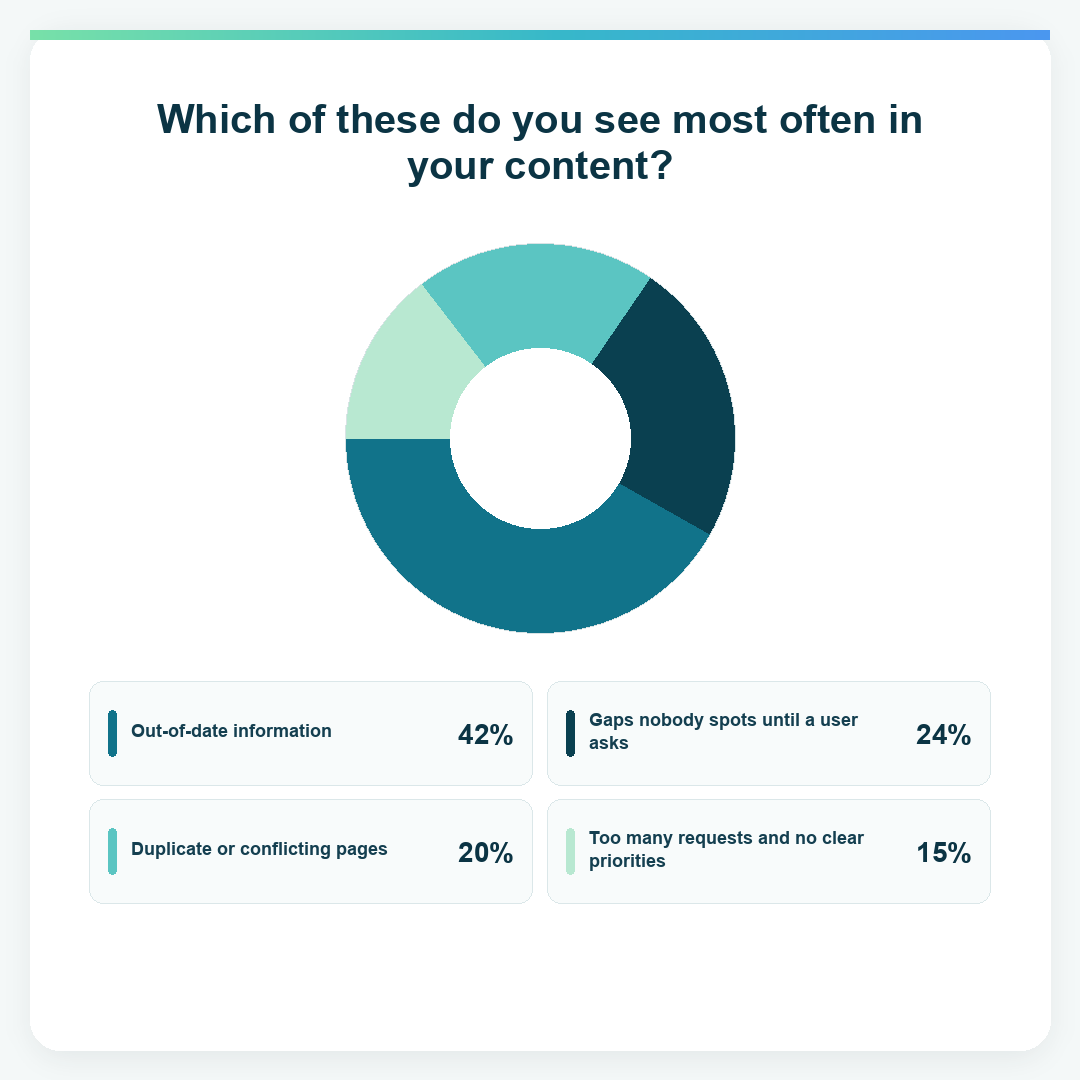
- Out-of-date information – 42%
- Gaps nobody spots until a user asks – 24%
- Duplicate or conflicting pages – 20%
- Too many requests and no clear priorities – 15%
- In the last three months – 38%
- More than a year ago – 28%
- In the last six to twelve months – 17%
- Never, or not that I know of – 17%
Watch the Europe webinar
Transcript: Watch the webinar (UK)
1
00:00:13.970 --> 00:00:22.069
Toby Margetts: Yeah, yeah, hi for those of you who've joined, just give it another, kind of, 30 seconds or so before, before we jump in.
2
00:00:39.320 --> 00:00:47.570
Toby Margetts: Alrighty, hello, and welcome, everybody. Thank you very much for, for joining us this morning. Really great to have you, have you on board.
3
00:00:47.760 --> 00:01:05.749
Toby Margetts: Today, we're going to be talking about how we can keep our content healthy in the world of AI. So, most content teams, I think, I'm pretty sure, I know, know what good content looks like and what it should do. It should be useful, it should be accurate, easy to find, easy to maintain.
4
00:01:05.770 --> 00:01:16.100
Toby Margetts: The hard part is keeping it that way once things like requests and updates and ownership changes and business priorities start moving faster than the team can realistically track.
5
00:01:16.650 --> 00:01:32.030
Toby Margetts: My name is Toby. I'm one of the Digital Strategy Directors here at Squiz. I'm joined by the wonderful Jamie Sharp, who is our Head of Customer. And just before we kind of jump in, I'm going to hand over to Jamie, who's going to say just a quick word on Squiz. So, Jamie, over to you.
6
00:01:32.030 --> 00:01:42.480
Jamie Sharp: Thank you, Toby, and morning, everyone. It's really nice to see so many new and familiar faces. So, just a little bit of background about Squiz for those of you who don't know us yet.
7
00:01:42.510 --> 00:01:58.999
Jamie Sharp: Squiz is a digital experience platform, so we've got a really powerful website platform that you can use to build websites, intranets, multiple sites, and get really great data out of that platform to help you prioritize how you drive your commercial marketing strategies. So, our platform is made up of three tools.
8
00:01:59.000 --> 00:02:14.070
Jamie Sharp: It's the digital experience platform, it's funnel-back conversational search, which brings that experience of AI search onto your website today, and then also content intelligence, and that will scan your website for AI search visibility, and it'll tell you exactly how to improve
9
00:02:14.070 --> 00:02:28.240
Jamie Sharp: to be found and to avoid that scenario of your competitors being found before you. And it's that AI visibility and the learnings and insights we've made about content from doing this ourselves and from working with hundreds of customers globally that's going to be informing what we're talking about today.
10
00:02:29.170 --> 00:02:31.469
Toby Margetts: Lovely stuff. Thank you very much, Jamie.
11
00:02:31.840 --> 00:02:49.169
Toby Margetts: So in terms of what we will be covering today, there are really four key things, I would say. Number one is why good content practice quietly breaks down. So I think with the best will in the world, it can be really tough to stay on top of your content's health for a number of reasons, and we'll get into that very shortly.
12
00:02:49.170 --> 00:03:01.640
Toby Margetts: Number two is the four AI discovery signals. We have actually talked about them in a previous webinar. Just as a quick reminder, we're talking about structure, metadata, authority, and freshness.
13
00:03:01.640 --> 00:03:15.380
Toby Margetts: keeping these healthy is absolutely essential. Number three is how to use those signals in a content discovery loop. What practical steps can you actually take to stay on top of ensuring your content adheres to those signals?
14
00:03:15.460 --> 00:03:26.730
Toby Margetts: For how Squiz's content intelligence tool actually helps you do this, even when you're dealing with thousands of pages of content, which I think it's fair to say most of our customers are.
15
00:03:28.080 --> 00:03:43.459
Toby Margetts: So, first up, why does good content practice frequently break down? So, none of this is new to a good content team. You already know content needs to be clear, accurate, useful, current, findable, and, of course, owned.
16
00:03:43.500 --> 00:03:56.450
Toby Margetts: The problem is, I think, what happens after publication, so new requests keep arriving, old pages keep on aging, similar answers appear in different places, ownership changes, audits go stale.
17
00:03:56.450 --> 00:04:04.460
Toby Margetts: over time, good practice breaks down, because no one actually has a current picture of the whole estate. That's a really difficult thing to do.
18
00:04:04.750 --> 00:04:12.900
Toby Margetts: A couple of examples, so, for example, there might be a policy update made on one part of the site, but it's not updated somewhere else.
19
00:04:12.960 --> 00:04:25.670
Toby Margetts: Maybe there's a PDF that's remained live after the web page it's been generated from has changed. Lots of ways that this can happen, and we don't often realize that we have these content issues until a user runs into them.
20
00:04:25.670 --> 00:04:34.499
Toby Margetts: And what I would say is that's kind of always been a problem, but AI is really putting a kind of enormous magnifying glass over these issues.
21
00:04:35.830 --> 00:04:53.980
Toby Margetts: I think a really good way to think about it, is that AI search is basically raising the cost of unhealthy content to organizations. So, I often find there's a bit of a misconception when it comes to content and AI. It's the idea that content is somehow sort of less important because of AI.
22
00:04:54.010 --> 00:05:02.499
Toby Margetts: But I think it's, it's actually the complete opposite, right? So, if the content estate contains duplicates, stale, or conflicting answers.
23
00:05:02.630 --> 00:05:18.490
Toby Margetts: AI systems have a much weaker foundation to work from. The really controllable part, I think, is not guaranteeing a citation, for example. The controllable part is actually making your content clearer, more current, and ultimately much more answerable.
24
00:05:19.590 --> 00:05:39.130
Toby Margetts: We're actually just going to jump into, a quick pile, bit of, early audience engagement, and I'm really genuinely interested to see what comes up here. It's gonna be, it's going to be interesting. But the question is, and we'd love everybody to answer if they can, which of these do you see most often in your content? So…
25
00:05:39.130 --> 00:05:50.660
Toby Margetts: Is it out-of-date information? Is it duplicate or conflicting pages? Is it gaps nobody spots until a user asks? Or is it too many requests and no clear priorities?
26
00:05:50.680 --> 00:05:54.570
Toby Margetts: We'll give it about, kind of, 30 seconds to a minute for people to answer.
27
00:05:54.920 --> 00:06:01.029
Toby Margetts: And then we'll see, we'll see what comes up. What's, Jamie, what's your, what's your money on, if you had to, if you were a gambling woman?
28
00:06:01.230 --> 00:06:15.950
Jamie Sharp: Aha, which I am. It's really interesting, because we see all of these all the time, like, I'm actually genuinely really interested to see which one is the most common, because out in the field talking to people all the time, I see these come up. Every single one of these come up, actually.
29
00:06:15.950 --> 00:06:25.919
Toby Margetts: Yeah, 100%, totally agree. I think if I was pressed, I'd probably go, like, duplicate or conflicting pages. We do see a lot of that. I feel like that's something that's actually really hard to…
30
00:06:26.030 --> 00:06:31.549
Toby Margetts: Stay on top of, particularly when we've got, yeah, lots of devolved content teams as well.
31
00:06:34.510 --> 00:06:40.329
Toby Margetts: Right, we'll just give it a few more seconds, and then we will see, see where we're at.
32
00:06:44.790 --> 00:06:51.970
Toby Margetts: Nice one. Okay, that's interesting. There's quite a big split, which is, I think, particularly interesting.
33
00:06:52.030 --> 00:07:08.979
Toby Margetts: We've got out-of-date information is coming out, on top, 34%, duplicate or conflicting pages, 24%, gaps nobody spots until a user asks, 16%, too many requests, and no clear priorities at 26%, percent.
34
00:07:09.500 --> 00:07:24.760
Toby Margetts: I think this is really interesting, because ultimately, like, whichever answer actually wins, it creates a problem for AI search, as well as for content teams. So, if we think about out-of-date content, that really weakens freshness, obviously.
35
00:07:24.760 --> 00:07:31.750
Toby Margetts: Duplicate and conflicting pages weaken authority. Gaps make it harder to actually answer the question for AI.
36
00:07:31.840 --> 00:07:45.860
Toby Margetts: too many requests without priorities, that creates more content debt. So, the content problems that content editors are firefighting are often the same problems that actually stop that healthy content being found and trusted by AI.
37
00:07:46.090 --> 00:08:00.340
Toby Margetts: But yeah, really interesting to see such a broad split across the board, key point being that, yeah, all of these really contribute towards you needing to get your content in really great health, to ensure that AI can generate really great answers from it.
38
00:08:00.450 --> 00:08:10.579
Toby Margetts: I'm going to pass to Jamie now, who is going to talk to us a little bit about some of the discovery signals that AI uses to generate good answers. So, yeah, Jamie, back to you.
39
00:08:11.180 --> 00:08:13.739
Jamie Sharp: Thank you. So…
40
00:08:14.800 --> 00:08:33.039
Jamie Sharp: Content health and AI discovery, they're two separate topics. If the answer's buried, then AI effectively is going to struggle to extract it. If your page is poorly labeled, again, AI is going to struggle to extract that. And if you've got five pages that are saying slightly different things, then you're going to find, of course, AI's got less reason to trust any of those sources.
41
00:08:33.039 --> 00:08:46.319
Jamie Sharp: If your information is stale, then it's likely AI is going to choose another source. So, in our previous webinar, we called these the four AI discovery signals, so structure, metadata, authority, freshness.
42
00:08:46.460 --> 00:09:09.120
Jamie Sharp: And I hear a lot in everyday conversations with customers that this can feel a bit complicated, the language is quite technical, so if you're thinking that, don't worry, you're absolutely not alone. But it's actually really straightforward, it's really practical, and it's actually a lot less technical than, like, an SEO checklist, those types of things that we're more used to. So today, we're going to go through really actionable steps that you can implement tomorrow, and the important takeaway here is that
43
00:09:09.120 --> 00:09:26.989
Jamie Sharp: content health matters for AI discovery. It really protects those signals that help AI find, understand, trust your content. So we're going to focus on how teams keep those signals healthy. As Toby was saying, when the estate keeps changing, that's when it's really difficult. So we're going to jump onto the next slide, which we are talking about, the loop.
44
00:09:26.990 --> 00:09:30.850
Jamie Sharp: And walk through how you build those signals into day-to-day content work.
45
00:09:31.210 --> 00:09:44.250
Jamie Sharp: So this loop that you can see on screen, this is a practical operating rhythm that your teams can use and keep applying this checklist as your content changes. So the four signals here tell us what AI-ready content needs, which
46
00:09:44.250 --> 00:09:48.010
Jamie Sharp: As discussed is structure, metadata, authority, and freshness.
47
00:09:48.010 --> 00:10:12.849
Jamie Sharp: But keeping those things true after you've published, that matters just as much. So, sticking with our theme of giving you actionable steps to use with your team, and not just a load of buzzwords, we're going to use this loop to enable teams to decide what to do before creating new content, what to check before publishing, what to monitor afterwards, and then how to turn gaps into clear actions. So, just briefly touching on all of the steps in this loop, we've got plans, so you need to audit before you just
48
00:10:12.850 --> 00:10:18.960
Jamie Sharp: fall into the trap of adding more content. Publish, so obviously make the answer easy to find.
49
00:10:18.960 --> 00:10:35.100
Jamie Sharp: easy to understand and trustworthy. Monitor, so once you've got that content out there, then continuing to look for signs that the signals there are weakening, and then continue to improve. So turn those gaps into decisions. So if we jump to the next one, we'll jump into each of those stages in a bit more detail.
50
00:10:35.440 --> 00:10:54.219
Jamie Sharp: So this is the plan stage. So, planning really protects that structure, your authority, your freshness, by making sure your team answers the right questions in the right places, simply. So instead of just adding more content, and this phase really is about, like I said before, falling into that trap of adding more content. We see folks all the time thinking.
51
00:10:54.220 --> 00:10:55.770
Jamie Sharp: Okay, we know that…
52
00:10:55.830 --> 00:11:10.970
Jamie Sharp: an LLM or an AI model is looking for a particular answer, we can see our user base, our customers are struggling to find a certain answer, so we're just going to create more content to fill that gap, but actually adding to that content that can actually weaken your AI discoverability.
53
00:11:11.240 --> 00:11:18.280
Jamie Sharp: So before creating a new page, the most important thing to do is audit what you've already got. So check whether the answer already exists.
54
00:11:18.410 --> 00:11:31.400
Jamie Sharp: You need to agree which page owns it, and then you need to decide, do I need to create something new? Do I need to update what we've already got, or can I consolidate? And the important thing here is less duplication means a much clearer source of truth.
55
00:11:31.840 --> 00:11:33.859
Jamie Sharp: Let me jump to the next one, please, Toby?
56
00:11:33.990 --> 00:11:48.559
Jamie Sharp: So then this is Publish. So publish is not only about getting your content live, it's that moment where you make the page either easier or harder for the AI to read, for it to categorize, for it to trust, and importantly, you want it to choose your content.
57
00:11:49.240 --> 00:12:04.860
Jamie Sharp: So this is where it's really easy, and we see a lot of customers, a lot of folks making mistakes. So if the answer's buried, if the labels are vague, if the source of truth is unclear, if no one knows when it should be reviewed, that page is already weakening before it's even had a chance to perform.
58
00:12:05.860 --> 00:12:18.760
Jamie Sharp: So if we just talk through, again, those four key things, we've got structure, so you need to think about, here, is the answer clear? Is it specific? Is it near the top? And clear writing doesn't have to mean bland writing, but it's important to think about those steps.
59
00:12:19.190 --> 00:12:24.450
Jamie Sharp: Metadata, so if you've got titles, are the descriptions, labels, is the content type clear?
60
00:12:24.670 --> 00:12:40.620
Jamie Sharp: For authority, is this the source of truth? Is it aligned with related pages, or have you got slightly different conflicting information across these different spots? And the page needs to make the main answer explicit. Again, you don't want to be hiding the answer across multiple sections.
61
00:12:40.770 --> 00:12:52.650
Jamie Sharp: And then freshness. So, is there an owner? Do you have a review trigger? What's the update expectation on this? And a last updated date by itself doesn't necessarily mean that the content's fresh.
62
00:12:53.570 --> 00:13:04.219
Jamie Sharp: If you think about all of that, this is where technology really helps, so these checks are easy if you've just got one page, but if you're trying to do this across a whole estate, tooling can really help limit that
63
00:13:04.380 --> 00:13:22.159
Jamie Sharp: cognitive load when all of our teams are trying to do so much more all the time. It can really help you by flagging those vague labels, jumping straight into identifying where have you got missing answers, where's there unclear ownership at publishing time, and just take that mental load out of where to start and how to keep the content healthy.
64
00:13:23.090 --> 00:13:25.129
Jamie Sharp: If you jump into the next one, please, Toby?
65
00:13:25.280 --> 00:13:42.189
Jamie Sharp: So now we're looking at signals. So, the work doesn't stop at publications, you've done your audit, you've got your content in a good spot, and you've published it out, but a page can be really clear today. You feel really good about what you've got out there at this moment, but then it could become buried under a load of related pages next week.
66
00:13:42.450 --> 00:13:51.669
Jamie Sharp: You can be really confident, you've done your review, it's authoritative today, but then actually, a couple of months down the track, it needs to compete with 3 new campaign pages that have been released.
67
00:13:51.880 --> 00:14:11.799
Jamie Sharp: Again, you can be really confident that it's not out of date, and that everything is in a really good spot with regard to freshness, but then your figures update, policy changes, and again, your content's not in a great spot. So monitoring is all about looking for these practical signs that those signals are weakening, and it's all about focusing on that, handing your marketing content teams
68
00:14:11.800 --> 00:14:19.060
Jamie Sharp: Signals that they can recognise, so that this doesn't become another thing that they've got to be thinking about and worrying about as part of their already hectic days.
69
00:14:19.320 --> 00:14:36.820
Jamie Sharp: So again, we're looking for AI discovery signals, your prioritization inputs to help you decide where to focus. So the types of things you want to watch out for are important questions that are not answered clearly, related pages that are giving different answers, new pages that are appearing on an already existing topic.
70
00:14:37.130 --> 00:14:40.579
Jamie Sharp: Obviously, broken links, stale dates, outdated facts.
71
00:14:40.940 --> 00:14:50.770
Jamie Sharp: Important pages that might have unclear titles, headings, descriptions, search items, or analytics or feedback that show that people aren't finding those answers.
72
00:14:50.950 --> 00:15:01.740
Jamie Sharp: And then demand is how you decide what to look at first. So you've probably got a heap of data there, but then you're looking for possible evidence to action items. So some examples of that could be.
73
00:15:01.750 --> 00:15:20.280
Jamie Sharp: If you've got lots of missing answers, then that probably points to you, do you need to create something to fill the gap? If you've got lots of competing or conflicting pages, then that probably points to the fact that you need to look at that estate of what you've got and consolidate to make sure the answers are really clear, you've got a single source of truth. If you've got lots of outdated
74
00:15:20.350 --> 00:15:27.540
Jamie Sharp: Pages, then you need to update, and if you've got redundant or risky pages, then at that point you want to be looking at retiring some of that content.
75
00:15:27.760 --> 00:15:33.259
Jamie Sharp: And again, this is where technology really helps, because this is usually the first stage that we see where
76
00:15:33.290 --> 00:15:52.969
Jamie Sharp: where people break down, so if you've got hundreds, tens of thousands of pages, monitoring that by hand is a huge job, and you really do need technology for it, and there are tools to do this. We happen to make one, and it's built on real-life learnings that we've made, and from what we can see happening within the market with our customers globally, so in a little bit, we'll run you through that.
77
00:15:52.970 --> 00:16:04.929
Jamie Sharp: But the main takeaway on this point in the loop is that monitoring is just about spotting where the structure, the metadata, the authority, the freshness might be slipping before the estate becomes harder for people and for AI to use.
78
00:16:05.960 --> 00:16:09.199
Jamie Sharp: And then on to the final piece of the loop.
79
00:16:09.260 --> 00:16:31.830
Jamie Sharp: So this is where we're looking to turn gaps into decisions. This stage is where the loop helps teams choose the right content action, rather than, again, falling into that tempting trap of, oh, let's just create some more content. And the more you get into the routine and using the loop, the more it becomes second nature. So, things to think about is, if an important question's got no clear answer, you might need to create or update.
80
00:16:31.830 --> 00:16:36.349
Jamie Sharp: If the right page exists, but the headings, the titles are vague, you need to update that.
81
00:16:36.440 --> 00:16:46.449
Jamie Sharp: If several pages compete, or they contradict, you consolidate. If the content's stale, or it's critical, you need to update, you need to redirect, you need to retire. So.
82
00:16:46.450 --> 00:17:09.319
Jamie Sharp: the critical point here is not about reducing more content by default, it's about strengthening the content that you've got and the conditions that help AI find your content, understand it, trust it, and crucially, you want it to cite your content, the right content. So the more you get into that routine, you should see it as just a natural way of reducing unnecessary production, not adding to it. And again.
83
00:17:09.319 --> 00:17:17.449
Jamie Sharp: that's where technology really helps. So the hard part is deciding what to fix first, and that prioritization by topic, importance, page value, risk.
84
00:17:17.460 --> 00:17:20.459
Jamie Sharp: That's where getting a tooling can save the most time.
85
00:17:21.810 --> 00:17:35.370
Jamie Sharp: All right, I think we're going to jump into another poll at this point, so we are really keen to hear when you last audited your content. So we've got a few options that are going to come up, and again, keen for everybody to provide some answers if they can, so we're interested to see
86
00:17:35.370 --> 00:17:41.890
Jamie Sharp: Was it in the last 3 months? In the last 6 to 12 months? More than a year ago? Never or not that I know of.
87
00:17:42.060 --> 00:17:49.489
Jamie Sharp: So we kind of see most teams audit rarely, because it's a bit of a beast to do, which is why your content health can slip.
88
00:17:49.690 --> 00:18:04.509
Jamie Sharp: But really keen to see what everybody's thinking, so if, if you wouldn't mind just clicking the button while you get a sec. Toby, you're… you're really close to teams and talking about this sort of stuff all the time. Any thoughts on what you think the most likely winner will be out of these?
89
00:18:04.830 --> 00:18:12.569
Toby Margetts: I mean, yeah, I think they were probably, like, a long time ago, maybe more than a year ago, I feel like…
90
00:18:12.590 --> 00:18:26.509
Toby Margetts: content audit… I've never met anyone who, like, loves, gets really excited about a content audit. They tend to be, they tend to take a long time. They tend to be things that people put off, even though they are, or traditionally have been super important.
91
00:18:27.080 --> 00:18:34.219
Toby Margetts: So yeah, it's going to be interesting to see. I can totally understand why people do put them off, but yeah, we shall see.
92
00:18:34.390 --> 00:18:40.379
Jamie Sharp: I don't know, everyone's favourite job. We'll give it a couple more seconds, and then we will get
93
00:18:40.690 --> 00:18:42.200
Jamie Sharp: Get some answers up.
94
00:18:42.870 --> 00:18:56.699
Jamie Sharp: Alright, interesting. It's a bit of a split again, so I would say in the last 3 months is probably the highest, so we've got just over a third of folks saying in the last 3 months, which is really positive, because this is what everybody should be thinking, and it's really important.
95
00:18:56.740 --> 00:19:03.870
Jamie Sharp: In the last 6 to 12 months, it's just very close after that, and then we've got about a quarter of people saying more than a year ago, and about…
96
00:19:04.220 --> 00:19:28.300
Jamie Sharp: just over 10% of folks saying never or not that I know of. So, I would say, you know, if you're answering more than a year ago, that's really normal. As Toby said, like, audits are big, they take a long time, we see a lot of folks, they sort of become set and forget, they're, like, stale as soon as they finish. So, again, like, just getting into the habit of that loop, rather than feeling you need to do a big audit, is exactly where you need to be thinking. Small, regular, prioritized, let tech do the work for you.
97
00:19:29.750 --> 00:19:39.469
Toby Margetts: Yeah, absolutely. Yeah, really interesting, again, to see, to see a bit of a split in there. I think for those that, did say it's not happened for quite a while.
98
00:19:39.670 --> 00:19:44.350
Toby Margetts: I don't think that's a discipline problem,
99
00:19:44.500 --> 00:19:56.999
Toby Margetts: Yeah, it's a scale problem, I think, more than anything. It just becomes a really daunting thing to want to do. As Jamie mentioned, when you've got tens of thousands, maybe hundreds of thousands of pages, that's a super daunting thing.
100
00:19:57.050 --> 00:20:15.249
Toby Margetts: But everything I think that we've just talked about, is kind of quite straightforward on one page, as I said, but most teams, you know, are managing hundreds, thousands of pages, tens of thousands of pages across lots of different teams. There are campaigns, there are PDFs, there are service areas, and there's old content.
101
00:20:15.320 --> 00:20:29.529
Toby Margetts: And of course, it's not static, right? The estate keeps changing all the while that you're auditing it. That's why often content audits fail sometimes. You know, by the time you've started it and finished it, a bunch of content on your site's changed in that time.
102
00:20:29.580 --> 00:20:35.770
Toby Margetts: And that's why they often get put off, and why the ones that you do finish tend to go stale very quickly.
103
00:20:36.440 --> 00:20:49.660
Toby Margetts: Squiz Content Intelligence, which we've, talked a little bit about, helps by giving teams a really kind of current view of the estate, so surfacing the issues, prioritizing actually what it is that matters, and tracking that progress.
104
00:20:49.710 --> 00:21:00.199
Toby Margetts: as content changes. So, content health then actually becomes something you keep an eye on, not something you sort of schedule a yearly project on to actually go and have a look at.
105
00:21:01.910 --> 00:21:14.189
Toby Margetts: What I'm gonna do is jump into a quick video, which shows content intelligence in action. It'll show content intelligence, it will show a little bit about how it works with conversational search.
106
00:21:14.210 --> 00:21:22.430
Toby Margetts: It is a video, and I… apologies to everybody, I'm going to be doing the voiceover, so I'm going to probably be, clicking around a little bit and stopping.
107
00:21:22.530 --> 00:21:26.029
Toby Margetts: But I'll do my best to make it as seamless as possible.
108
00:21:27.280 --> 00:21:51.420
Toby Margetts: What we can see straight off the bat here is a view of the DXP console. Content Health is where content intelligence exists, so we're going to show somebody kind of clicking in there. We're actually using Squiz's website as the example here. We're getting a bit of an insight into, yeah, the AI readiness of Squiz's website. Not a particularly big website, probably quite small compared to a lot of people that are on the webinar.
109
00:21:51.540 --> 00:21:56.630
Toby Margetts: 212 pages, but nonetheless, it'll be interesting to kind of see what's in there.
110
00:21:57.370 --> 00:22:11.290
Toby Margetts: When we click in, we can see, kind of, straight off the bat when the last scan was done, when the next scan is due. You'll notice as well, straight off the bat, it's split into two different areas. So, on the left-hand side, we have accessibility, which we've not talked about loads yet.
111
00:22:11.700 --> 00:22:23.989
Toby Margetts: And then AI readiness on the right-hand side. I'm actually just going to jump into the accessibility side of things to begin with, and then I'll jump into the AI readiness. But it's good just to kind of see how holistic the tool is.
112
00:22:23.990 --> 00:22:31.709
Toby Margetts: A lot of people use tools for accessibility. Accessibility is super important. The content intelligence covers that in its entirety.
113
00:22:31.720 --> 00:22:45.529
Toby Margetts: We can see when we click into the accessibility auditor, straight off the bat, we get some really useful information, so we get a view of what your overall accessibility score is. Luckily, ours is excellent, would have been maybe a different story if it wasn't.
114
00:22:45.530 --> 00:22:58.690
Toby Margetts: But you can see what your score is, you can see how many issues that you've resolved since you last scanned. You can also see, you know, the percentage of pages that you have that have issues. Again, luckily, we're 99.1% of pages.
115
00:22:58.870 --> 00:23:14.529
Toby Margetts: don't have significant issues, which is obviously great. What we can do is we can actually filter by fix type as well, so you can see here, you can choose either code fixes or content fixes. In this particular example, we're going to have a look at some of the code fixes we might want to do across the site.
116
00:23:14.890 --> 00:23:27.070
Toby Margetts: under the kind of quick wins section here, this is showing us what things could we do right now that are going to have the most, kind of, profound impact on our accessibility score. So we could click into those and just, kind of, do those straight off the bat.
117
00:23:27.340 --> 00:23:33.750
Toby Margetts: As we scroll down, there are a bunch of, kind of, useful things related to why we're failing, where we're failing.
118
00:23:33.760 --> 00:23:51.549
Toby Margetts: We can also see, basically, all of the issues that we have across the site down here, and what a lot of people like to do is to filter by impact, so we can select the critical and serious issues here. We can see that there are three issues, really, that need our attention, and we can then click into one of those to find out a little bit more.
119
00:23:51.710 --> 00:24:10.599
Toby Margetts: Crucially, what this tool will do, it won't just tell you you've got issues, it will actually give you a solution to that issue, which I think is a bit of a differentiator. That's one thing being told, hey, you've got accessibility issues, and most people would go, yeah, I know, thanks. What do I do? How do I fix them, and in what priority do I need to, do I need to attack them?
120
00:24:10.600 --> 00:24:25.329
Toby Margetts: So this will tell you why there is a failure, it'll tell you the impact that's having on users, and crucially here, it gives you the fix, right? So there is the current implementation, here is the AI-generated recommended fix. We can copy that, and we can paste it straight into our CMS.
121
00:24:25.630 --> 00:24:28.500
Toby Margetts: And we get the fix, which is, which is great.
122
00:24:28.900 --> 00:24:48.859
Toby Margetts: So that's accessibility. Appreciate I've kind of rattled through that in quick time. Very happy if people want to talk to me in more detail about it and have a kind of deeper walkthrough of the platform from an accessibility point of view. Absolutely love to do that. What I'm going to show you now is the AI readiness side of things. So again, panel on the right-hand side when we go into Content Health.
123
00:24:49.680 --> 00:25:04.949
Toby Margetts: We're gonna click in, and we're going to see some really interesting information. So, the 9 out of 12 score on the left-hand side, that is essentially saying that content intelligence has determined that we have 12 sections of our site, or 12 topics, we call them.
124
00:25:04.950 --> 00:25:15.010
Toby Margetts: It's saying that 9 of my 12 topics are AI-ready, which is great. There are 3, however, that aren't AI-ready, and that we need to do something, something about.
125
00:25:15.970 --> 00:25:28.880
Toby Margetts: what it will do, as we scroll down, we can see what all of those topics are. Obviously, most of the people, watching this webinar aren't DXP providers. Your topics will likely be very different to, to ours.
126
00:25:28.880 --> 00:25:36.490
Toby Margetts: But what we're going to do here is just click into one, more or less kind of at random, to show you what happens when we click into a particular topic.
127
00:25:36.490 --> 00:25:41.099
Toby Margetts: And then where we can see the problems that we've got, and how we might be able to deal with those.
128
00:25:41.140 --> 00:25:56.420
Toby Margetts: So what I'm going to do here, we're going to click into the conversational AI searches a little bit better, because we're sort of talking about that as part of the webinar as well. Conversational AI search is a section on our site where we talk about it and what it can do for people, how it can improve user experience.
129
00:25:56.550 --> 00:26:02.659
Toby Margetts: And yeah, I'll show you a little bit about what it's telling us about that particular section of the site.
130
00:26:04.490 --> 00:26:19.710
Toby Margetts: So, in here, there are a few really interesting things. So, it is telling us, at the top here, for those who've got, kind of, eagle eyesight, there are 31 pages on our site which cover this particular topic, or have content related to this particular topic.
131
00:26:19.910 --> 00:26:36.429
Toby Margetts: It also mentions 2,771 questions. So it's really important to understand broadly how this tool works. What it's doing in the background is it is generating, 50,000 plus, sometimes hundreds of thousands of questions.
132
00:26:36.430 --> 00:26:51.479
Toby Margetts: related to the content on your site, and more broadly about the, sort of, the organization that you are. It is then asking those questions to the LLM, and it is generating answers, based off of the content that you have.
133
00:26:51.630 --> 00:27:11.330
Toby Margetts: where it is struggling to give answers to those questions, that essentially is where it flags that you've got issues, and it will explain, this is the reason that you've got issues. So, it's basically a really super advanced sort of Q&A tool where it says, here are 100,000 questions that somebody that could come into your website is likely to ask.
134
00:27:11.450 --> 00:27:22.260
Toby Margetts: Of that 100,000, you know, 99% were getting really great answers, 1% were not. In order to get that 1% up, we need to do, the following kind of, the following kind of things.
135
00:27:22.900 --> 00:27:39.550
Toby Margetts: So that's just a bit of an insight into broadly, how the tool is working. Again, what this will do, so within the conversational AI search section, it's telling us that there are 31 pages. We could click into that if we wanted to, and kind of assess it in a bit more detail at a page-by-page level.
136
00:27:39.570 --> 00:27:55.930
Toby Margetts: What I find most of our customers like to do, though, is to actually focus on where we've got priority issues here. So, regardless of what page they're on, this is telling us these are the issues that we recommend you go and sort out first, because they will have the biggest impact on your AI visibility score.
137
00:27:56.030 --> 00:27:58.720
Toby Margetts: We can obviously click View All and see all of them.
138
00:27:58.940 --> 00:28:12.760
Toby Margetts: We can also see all of the questions in this particular section, so just under 3,000. We can scroll through. I'm not going to sit here and make you look at 3,000 questions, but you can go in here as a content editor and get an understanding of the type of question that's being asked.
139
00:28:12.770 --> 00:28:26.439
Toby Margetts: see the response that is being given. I can search if I want to find something very specific that I'm looking for, but it allows us to kind of make that mental bridge between the section of the site and the type of questions that the tool determines are really important.
140
00:28:27.070 --> 00:28:33.909
Toby Margetts: What we can do is actually click on a particular example that it's called out. This is one of the really high priority, issues.
141
00:28:33.970 --> 00:28:49.689
Toby Margetts: And again, very much like the accessibility auditor, this doesn't just tell us that we've got an issue, it gives us, a suggestion. So, here it talks specifically about a problem, and this is very much, I've been told I'm not allowed to say, eating our own dog food, it's drinking our own champagne.
142
00:28:49.690 --> 00:29:01.149
Toby Margetts: It thinks that we have an issue related to this, so we should add a concrete example of answering a complex user query with the postgraduate scholarship scenario. It thinks we've got a gap there.
143
00:29:01.150 --> 00:29:21.719
Toby Margetts: It explains why that's an issue, and then it actually gives us a really explicit suggested revision. So it says, we think in this section of the site, you should add this copy. This will then allow the LLM to take that information, create a question and answer pair from it, and we'll then be able to deliver a really good answer to the customer.
144
00:29:21.920 --> 00:29:36.969
Toby Margetts: So, at a high level, it's doing this across your entire estate, which is why it's so good at scale, right? So, a user could go in and kind of manually do this, but across 10,000 pages, that becomes basically a full-time job, probably more than a full-time job.
145
00:29:37.280 --> 00:29:46.679
Toby Margetts: This tool scans everything, and then orders everything for you, tells you where you need to focus, and it just makes things much, much easier for the content editor.
146
00:29:46.850 --> 00:29:57.409
Toby Margetts: Finally, what I'm going to do is just show you the kind of final part of the loop, I guess. I'm just going to kind of click into a page on our website and show you conversational search in action.
147
00:29:57.410 --> 00:30:22.080
Toby Margetts: It's important to realize that the way conversational search broadly works on the front end is it uses that enormous database of Q&A pairings that the tool has generated to generate its answers from. And because they're all sort of compliant and verified, and we know that they're good, it means that the speed of the answer is really fast. We can be really confident that what's in there is correct, because content intelligence has assessed it all and said, yep, great, we can get answers to these
148
00:30:22.080 --> 00:30:29.620
Toby Margetts: questions. That makes the job of the LLM on the front end to provide answers so much quicker and so much more accurate as well.
149
00:30:30.090 --> 00:30:45.029
Toby Margetts: So we have it implemented just kind of in our, normal search. A user can go to the site, they can search, so how can Squiz help website engagement and conversions? We hit enter like we would any kind of normal search.
150
00:30:45.570 --> 00:30:57.900
Toby Margetts: And we get an AI answer to our question, and you can see it only takes a couple of seconds to get that answer. The answer streams, which is pretty cool. It tells us what sources it's generated that particular, that particular answer from.
151
00:30:58.010 --> 00:31:15.930
Toby Margetts: And as I said, we can be super confident, that the answers that it's given are accurate, because it's all based on content intelligence having verified them. We can, of course, ask follow-up questions, so tell me more about conversational search. I get an answer to my question.
152
00:31:16.020 --> 00:31:31.189
Toby Margetts: The way that we've implemented on the Squiz site, we have included the search results below as well. We call it, like, a hybrid implementation. You can see search results still exist down here. They don't have to, you don't have to have it implemented that way, it could just be a four-page kind of takeover.
153
00:31:31.190 --> 00:31:39.069
Toby Margetts: But a lot of people are somewhat wedded to their search results, I would say, and who are we to say that you should absolutely get rid of them straight off the bat?
154
00:31:40.360 --> 00:31:51.699
Toby Margetts: Alrighty, so that is a walkthrough of content intelligence, conversational search, hopefully a bit of understanding around how practically it can help you across a really, really broad, broad estate.
155
00:31:52.420 --> 00:32:10.579
Toby Margetts: What we've got at the moment is the ability to try Content Intelligence for a month. If that looks at all interesting, please do scan the QR code or get in touch with myself or Jamie directly. We would be happy to work with you to get that set up, if it's something that you're interested in.
156
00:32:10.580 --> 00:32:26.369
Toby Margetts: We do also, offer, sort of, the ability to have a bit of a look at some of your content, so we use some of the tooling to say, hey, we'll look at maybe a small size of your site to give you a bit of an insight into how you're scoring. Maybe that's a bit of a toe in the water.
157
00:32:26.370 --> 00:32:38.269
Toby Margetts: If you're not ready to sort of commit fully to content intelligence at the moment, although we do strongly encourage that customers do, this is going to be something that is so, so important, I think, for anybody who's got any kind of…
158
00:32:38.580 --> 00:32:42.059
Toby Margetts: Any amount of, content going forward.
159
00:32:43.270 --> 00:32:57.110
Toby Margetts: In terms of key takeaways, and what we've kind of run through today, there are sort of four key things. We talked up front about the fact that AI search is really kind of magnifying the existing content health problems that people are having.
160
00:32:57.390 --> 00:33:07.199
Toby Margetts: AI depends on having a strong structure, metadata, authority, and freshness. Jamie touched on that at length. It's so, so important to get those four aspects right.
161
00:33:07.310 --> 00:33:24.199
Toby Margetts: a repeatable loop that keeps those signals strong. We can't just treat these as, like, one-hit projects and go, yeah, great, we did that 3 months ago, we're gold. It's something that has to happen on a continual basis, because content is being changed and updated so frequently on people's websites.
162
00:33:24.200 --> 00:33:39.229
Toby Margetts: And yeah, finally, Squiz Content Intelligence is hopefully that tool that can really, really help you do that, to help you stay on top of it, to proactively scan your site, and to say, here are where you've got issues, this is how you go and deal with them.
163
00:33:39.230 --> 00:33:50.299
Toby Margetts: That's so useful when you've got content being constantly added to a site, potentially across devolved teams. Yeah, that, to our mind, beats doing content audits any day of the week.
164
00:33:50.520 --> 00:33:57.869
Toby Margetts: Given the nature of them, where they take maybe 3 months to run, and by the time you finish them, half the content on your site maybe has changed anyway.
165
00:33:59.710 --> 00:34:13.209
Toby Margetts: That's it from Jamie and I. I did see a flurry of questions flying in as we were going, which is amazing, and maybe we can jump into some of those and talk a little bit about them.
166
00:34:13.210 --> 00:34:21.860
Toby Margetts: I'm happy to jump in, Jamie. I don't know, Jamie, if you've got your eye on any in particular that you fancied answering. I did see one crop up, I think it was maybe the first one that came in.
167
00:34:22.020 --> 00:34:38.310
Toby Margetts: which was, in terms of freshness, can this be as simple as going into a page and updating slash republishing it? Will an LLM know that that's happened? Basically, yes, it can absolutely be as simple as that, so content intelligence would
168
00:34:38.360 --> 00:34:51.679
Toby Margetts: go in, and it would say, yep, you have got some out-of-date content here, we recommend that you go in and make it up-to-date. Of course, the beauty of that, using that tool is it will find all the instances of that.
169
00:34:51.710 --> 00:35:08.390
Toby Margetts: And then, yeah, the next time that you scan your site, Content Intelligence will say, yep, great, we don't have that issue anymore, the content is fresh now, it's not out of date, and it will proactively kind of keep you, keep you on track in that way. So yeah, in short, you're kind of, you answered your own question there, and LLM will.
170
00:35:08.390 --> 00:35:15.869
Toby Margetts: Once it re-indexes the page, it will be using the new information, because that's the most current. It won't be using, kind of, archived content.
171
00:35:16.720 --> 00:35:40.619
Jamie Sharp: Yeah, and I would maybe just add to that, you know, like, you don't want to think of freshness as just being performative, like, the readers and the governance processes could stop trusting it. So again, this is where, like, don't overthink it, stick to having that, like, methodical process, like we've demonstrated with the loop. Having a tool in there that can just direct you to where you need to make changes is the best thing to do, rather than just feeling like you need to make performative changes just to tick a box.
172
00:35:41.080 --> 00:35:43.570
Toby Margetts: Yeah, 100%, great, great shout.
173
00:35:43.670 --> 00:36:06.240
Toby Margetts: Yeah, to pull out maybe a couple more, what is the best way to decide which pages need attention first? It's a great question, and actually, like, so much of the, sort of smarts and intelligence that went into building content intelligence was around that kind of exact question. It was like, hey, there are sort of tools out there that are sort of okay at telling you what you need to do.
174
00:36:06.240 --> 00:36:14.959
Toby Margetts: But there aren't many that actually are really good at telling you where you need to start, and that's so crucial when you're dealing with, you know, a big website with thousands and thousands of pages.
175
00:36:14.960 --> 00:36:27.369
Toby Margetts: It can be overwhelming, even for content intelligence, to say, hey, yeah, you've got, you know, like, 50 critical issues, and you go, right, okay, where do I start? The tool will specifically call out the most profound impact to your AI readiness.
176
00:36:27.400 --> 00:36:44.030
Toby Margetts: will be, by changing these particular things. One thing that's actually really interesting is, so that shouldn't… there is a bit of nuance here, that shouldn't necessarily just be dictated by, like, having a bad score. So if there's a web page that has a particularly bad score.
177
00:36:44.030 --> 00:36:47.829
Toby Margetts: That isn't necessarily the first place to start, so…
178
00:36:47.870 --> 00:36:56.739
Toby Margetts: To give, like, a bit of an analogy, if that's not a very high-trafficked page, say 20 people visit that page a year, and the content's in bad shape.
179
00:36:56.740 --> 00:37:10.080
Toby Margetts: that's maybe not as big a priority as some content that's in better shape, albeit still not great shape, but that gets thousands and thousands of visits a year. Obviously, there's a bit of balance to be had there between how sort of visible and active that page is.
180
00:37:10.220 --> 00:37:15.919
Toby Margetts: And the tool will factor that in. It's kind of based on risk as much as anything, so…
181
00:37:16.030 --> 00:37:19.550
Toby Margetts: Not just about what's got the lowest score, it's about what's got
182
00:37:19.760 --> 00:37:24.869
Toby Margetts: The most kind of visibility and is having, you know, the most impact on your particular users.
183
00:37:25.340 --> 00:37:36.309
Jamie Sharp: Yeah, nice. We did get a question about a lot of our important information lives in PDFs, how should we fit those into a content health routine? And that question comes up a hell of a lot.
184
00:37:36.440 --> 00:37:46.939
Jamie Sharp: So, you know, like, as part of… as part of the process, we can absolutely scan those PDFs and provide answers on that, but what… what our strong advice would be is to try and keep
185
00:37:46.940 --> 00:38:09.379
Jamie Sharp: PDFs when it's required. So, you know, if you need formal documents, printable forms, signed publications, things like that, but don't try and force users or AI into extracting basic guidance from PDFs. Our strong advice with regard to PDFs, and I know it's difficult, especially for a lot of organizations that are sort of deeply embedded into having heaps of stuff in PDFs, but try and track PDFs as
186
00:38:09.380 --> 00:38:28.909
Jamie Sharp: assets with an owner and a review cadence, and prioritize trying to convert as many of your, sort of, frequently asked questions into proper content. That will make it way easier for you to be confident that you're getting the right answers, that it'll be really visible and well-cited by AI, and obviously making it much easier for human
187
00:38:28.910 --> 00:38:43.039
Jamie Sharp: users to also find the content that you want them to get at, so I think, you know, as part of this process, it's an important and really useful step to be thinking about, actually, like, what information should live in a PDF, and how best to handle that as well. Did you want to add anything to that, Toby?
188
00:38:43.360 --> 00:39:02.729
Toby Margetts: I don't think so, I think you covered it really nicely. Yeah, we, like, PDFs are a bit of a sort of dirty word, aren't they, these days? Ideally, you don't want to have them on your estate, but we understand that people do, and, you know, it's not easy to just say, hey, put everything into HTML. But yeah, I think outside of that, you covered it really well.
189
00:39:04.440 --> 00:39:15.609
Toby Margetts: one of the final questions in here is around, getting content intelligence set up, or how easy is it to get it set up? The answer, the short answer, I guess, is, like, it's very, very easy to set up, so…
190
00:39:15.610 --> 00:39:31.139
Toby Margetts: There's maybe, like, a sort of 3-4 step process, where you literally insert the URL of your site, and it will basically scan everything and all of the child pages underneath that, so most people would put their homepage URL in, and it will scan absolutely everything.
191
00:39:31.140 --> 00:39:46.040
Toby Margetts: You can choose to exclude things if you want to. Often people don't, because they want to see a view of everything, but sometimes there is a need to, maybe if there's a part of the site which is, I don't know, going through a ton of changes at the time, or whatever.
192
00:39:46.040 --> 00:39:53.819
Toby Margetts: often a few different reasons why certain things might want to be excluded. You can do that. You simply just enter the URLs of what you want excluded.
193
00:39:53.820 --> 00:40:18.340
Toby Margetts: You then have, like, a drop-down list where you say how frequently do you want to run the scan, so it could be quarterly, it could be monthly, it could be weekly. You could do it every day if you wanted to, if you had a real, kind of, sort of fast turnaround of how content is created. But yes, as I say, it's like a three, four-step process. You run your first scan, it will tell you all of the different topics that your site is comprised of.
194
00:40:18.390 --> 00:40:31.220
Toby Margetts: You then decide, of those topics, which ones you want to monitor in more detail. You might want to just look at everything, or you might say, nope, we want to focus on this particular part of the site to begin with, and work through it in whichever way that you see fit.
195
00:40:31.390 --> 00:40:40.489
Toby Margetts: But yeah, basically, it's super easy to get set up. We also have, a fabulous customer success team that onboard you in the tool.
196
00:40:40.490 --> 00:40:56.190
Toby Margetts: To be brutally honest, like, the tool is so easy to use, you don't really need customer success to onboard you, like, it is super straightforward and intuitive, but we do like to have customer success kind of just there when we get everything set up to make sure people feel comfortable and we have any kind of questions answered.
197
00:40:56.190 --> 00:41:05.619
Toby Margetts: But yeah, 99 times out of 100, I would say, customers are perfectly capable of, kind of, almost onboarding themselves, because the tool is so straightforward and intuitive to use.
198
00:41:05.830 --> 00:41:07.740
Jamie Sharp: Yeah, 100%.
199
00:41:07.740 --> 00:41:32.659
Jamie Sharp: I can see a couple more questions that popped into the chat, so I can see, and David's asked, can content intelligence be used for non-squiz matrix sites, such as WordPress? Tom's just jumped into the chat to say, yes, it can, but it absolutely can, so it's, completely tech agnostic, and obviously, again, we have lots of customers that use our full DXP suite, but then also, you know, oftentimes there'll be a swathe of, I think, content that they want to capture that's elsewhere, so yes, you can add
200
00:41:32.660 --> 00:41:38.010
Jamie Sharp: Absolutely plug it in, run it across your entire estate, doesn't matter what tech it's on, it'll do the same job across everything.
201
00:41:39.440 --> 00:41:48.900
Toby Margetts: Love that. I think, that's everything in terms of what came through in the Q&A. I'm not sure if there was anything else, Jamie, in the chat that we missed,
202
00:41:49.030 --> 00:41:50.540
Toby Margetts: If not…
203
00:41:50.770 --> 00:41:59.480
Toby Margetts: we can probably, probably call it there. I would just finish by saying, yep, thank you very much for, all of the engagement and the questions that have come through, that's, that's great.
204
00:41:59.530 --> 00:42:18.529
Toby Margetts: If you're interested in the tooling at all, or just have any kind of further questions about it, feel free to scan the QR code. Feel free to fire a message through to myself or to Jamie. Always happy to answer anything via email or jump on a call, do a demo to whoever would like to see it. Yeah, we're always on hand to help out.
205
00:42:18.670 --> 00:42:26.209
Toby Margetts: So yeah, Jamie, thanks very much for joining us today. It's been a great session, and yeah, we'll see everybody at the next one.
206
00:42:26.430 --> 00:42:29.759
Jamie Sharp: Yeah, look forward to seeing you all soon. Thank you, everyone. Thanks, Toby.
207
00:42:29.760 --> 00:42:30.850
Toby Margetts: Thanks, bye-bye.
Video: Watch the webinar (UK). Captions and transcript available on playback.
Poll Results
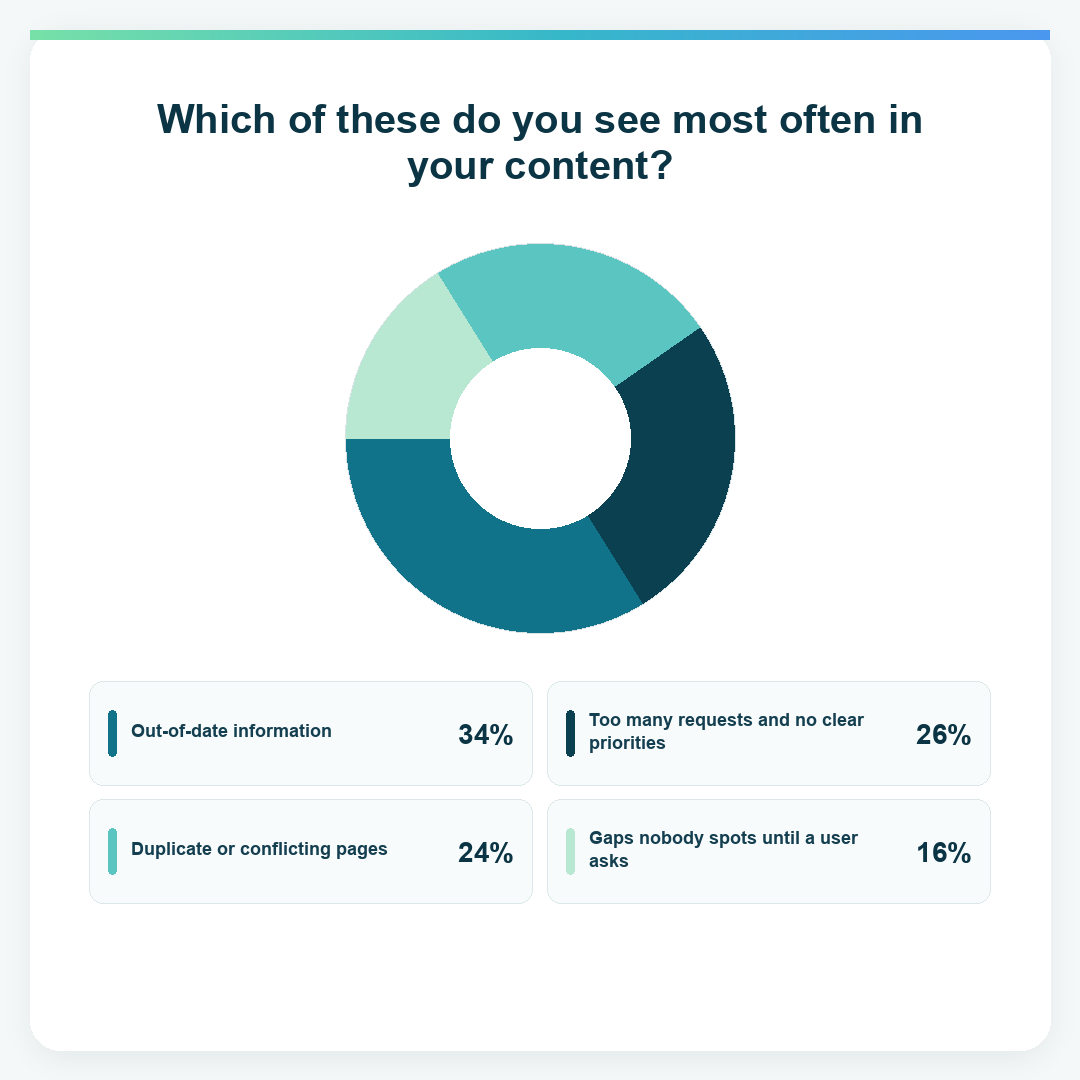
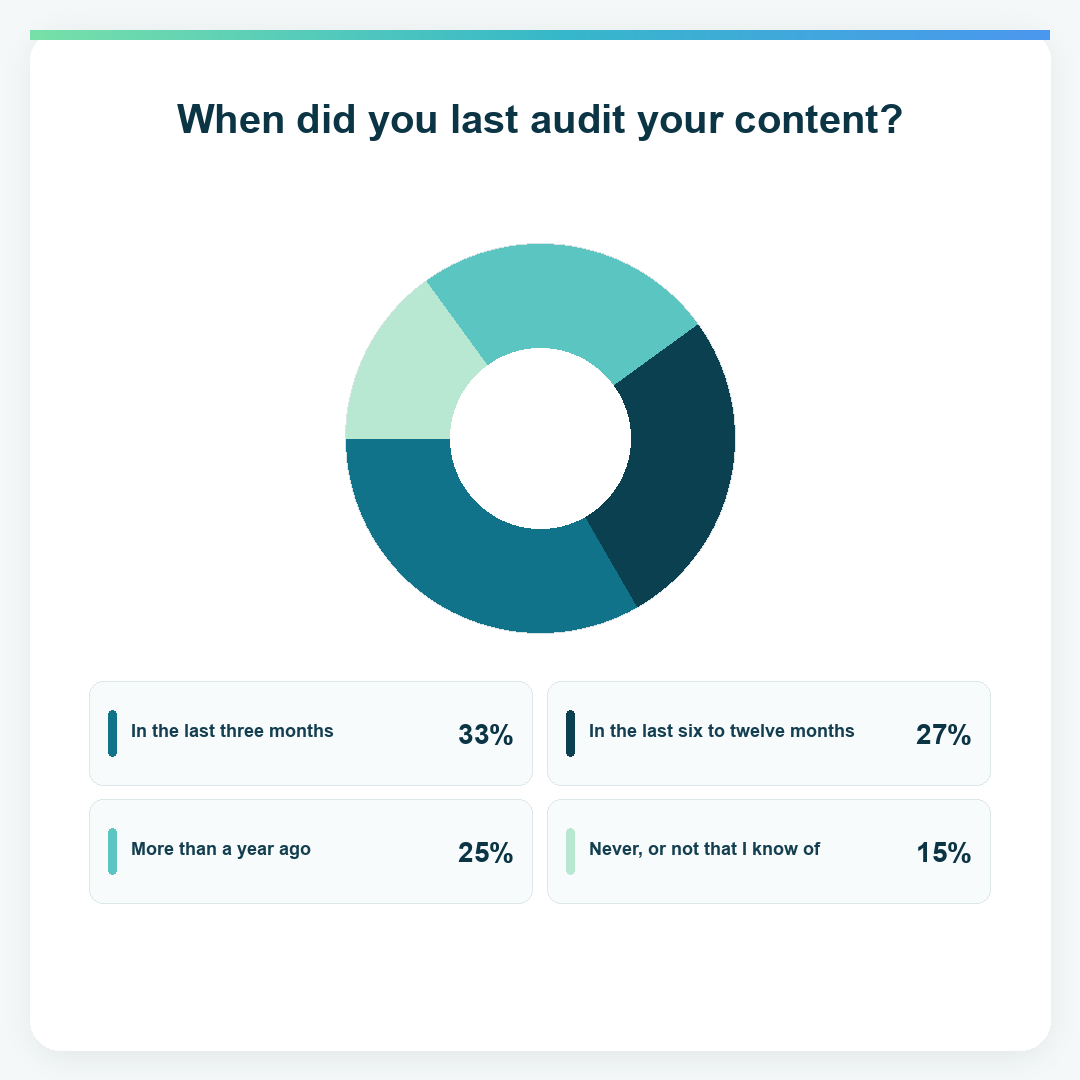
- Out-of-date information – 34%
- Too many requests and no clear priorities – 26%
- Duplicate or conflicting pages – 24%
- Gaps nobody spots until a user asks – 16%
- In the last three months – 33%
- In the last six to twelve months – 27%
- More than a year ago – 25%
- Never, or not that I know of – 15%
Watch the US & Canada webinar
Transcript: Watch the webinar (US)
1
00:00:29.540 --> 00:00:41.889
Megan Andrews: Hello, everyone! Welcome to our webinar today. I'm Megan Andrews, Director of Client Partnerships here at Squiz, and I'm joined by my colleague, Fran Zablocki, our Client Strategy Director.
2
00:00:41.890 --> 00:00:56.739
Megan Andrews: And today, we're gonna have some exciting content for you. Everything in this webinar is about being found by AI. So, really good tips to keep your content healthy, and just keep up with the pace of all the change we see today with AI.
3
00:00:56.920 --> 00:01:00.280
Megan Andrews: So, couple housekeeping items before we jump in.
4
00:01:00.510 --> 00:01:10.600
Megan Andrews: First of all, feel free to scan this QR code. You can access a one-month trial of Squiz Content Intelligence. So, get a little insight into your content, get a little head start.
5
00:01:10.600 --> 00:01:24.429
Megan Andrews: The other thing is, we will be recording this, so if you have to leave halfway through, or you want to share this out with colleagues after, you can do that. We will send out a link to the recording, and also any follow-up questions that we weren't able to get to today. So…
6
00:01:24.480 --> 00:01:28.180
Megan Andrews: Let's get into it, Fran. Exciting stuff today.
7
00:01:28.640 --> 00:01:35.409
Megan Andrews: Really quick introduction. If you're not familiar with Squiz, you probably are, but we're a digital experience company.
8
00:01:35.500 --> 00:01:49.989
Megan Andrews: So, if you're operating on any sort of scale with your organization, you're probably using lots of different tools across your tech stack, and the great part is Squiz has all these different types of tools to help you manage your digital experience across your site.
9
00:01:50.020 --> 00:01:57.220
Megan Andrews: You can find out more on our website, but certainly we'll talk a little bit more about one of those tools today.
10
00:01:58.630 --> 00:02:18.289
Megan Andrews: So, get out your pens, or your typewriters, and get learning today. We're gonna have four different areas that we really address. One is just, why does good content practice break down? If you're on a content team, you know this can happen, it's okay, it happens to the best of us. But we'll look at some of the reasons for that.
11
00:02:18.430 --> 00:02:24.349
Megan Andrews: And if you've joined our webinar series, the last one we gave was about these four AI discovery signals. So…
12
00:02:24.500 --> 00:02:32.029
Megan Andrews: Again, new information, a new era. We'll revisit those and talk through how that impacts your content and its discoverability.
13
00:02:32.140 --> 00:02:51.750
Megan Andrews: We will also look at how to use those signals in… in practice. What does that mean for how you're looking at your content, optimizing it, and keeping up to date with that content on your site? And then the fourth area is just how Squiz Content Intelligence as a tool can help you do this, and, you know, optimize and monitor that content.
14
00:02:51.750 --> 00:03:03.540
Megan Andrews: not just once, but at scale and repeatedly, right? So that's the part that's pretty hard, is content can be in great shape for a moment in time, but how do you continuously monitor it at scale?
15
00:03:05.710 --> 00:03:22.979
Megan Andrews: So, in theory, yeah, I think about this sometimes, Fran, where it's like these beautiful moments where maybe your team has done this website redesign, and you're so excited about it, you're like, ugh, our site's down to a thousand pages, and we know each one of those pages is thoughtful and curated and good to go.
16
00:03:23.040 --> 00:03:31.800
Megan Andrews: And for, I don't know, 6 months, maybe even a year, you feel pretty good about that, right? But over time, things start to happen.
17
00:03:31.830 --> 00:03:43.399
Megan Andrews: And, it's really hard to, over time, keep up with things, but also with just new best practices and things we're learning with this changing environment of large language models. So…
18
00:03:43.450 --> 00:03:54.810
Megan Andrews: Things we're used to, right, on content teams. You've got those beautiful pages, and then, oh, there's a whole new campaign! So we've got to build out this little, little sub-area of the site, new content, new requests there from different teams.
19
00:03:54.810 --> 00:04:04.409
Megan Andrews: The aging pages, look, most of us aren't in brand new companies or organizations. We've been around for a minute. Sometimes things have been, published for a decade or more.
20
00:04:04.410 --> 00:04:11.309
Megan Andrews: And it kind of stacks over time, too. You can imagine, different deadlines that come up across year to year.
21
00:04:11.310 --> 00:04:22.149
Megan Andrews: Maybe you have an orientation page that was… August 19th was an orientation day last year, but it's gonna be August 20th this year. Do both those pages still exist? Do they have conflicting content?
22
00:04:22.230 --> 00:04:26.429
Megan Andrews: And maybe your team has gotten really good at auditing.
23
00:04:26.630 --> 00:04:36.519
Megan Andrews: Once. And then, did you do it again? How stale was that audit after time? Did you have a good way to keep up with your auditing process?
24
00:04:36.740 --> 00:04:55.610
Megan Andrews: And I think all of us understand that, you know, the firehose of requests that can come your way, and just trying to understand, you know, where do we need to prioritize our time and our team's time to keep up with content. So, these are a lot of the common pitfalls, right, Fran? And I'm sure you've seen some of these across time as well.
25
00:04:55.610 --> 00:05:12.809
Fran Zablocki: Yeah, absolutely. You're reminding me of another thing that feels very similar, and that is gardening. Getting your whole garden nice and weeded and cleaned feels terrific, but it's always gonna need it again in, like, a week or two. So, good constant maintenance is key.
26
00:05:13.610 --> 00:05:24.940
Megan Andrews: It's true, and you want to… you know, like, finding the times, too, at scale where you need to bring other people in, recruit your daughter to come in and help you out on some of those days.
27
00:05:25.800 --> 00:05:26.880
Megan Andrews: Am I right?
28
00:05:28.310 --> 00:05:44.899
Megan Andrews: So, yeah, I think the other thing, too, is that, there… in a world of SEO, where we've been, there are ways around, content that's not great on your site. When I think about the impact of large language models and AI,
29
00:05:45.000 --> 00:05:49.969
Megan Andrews: Really, it's putting… casting a magnifying glass across every page on your site.
30
00:05:50.010 --> 00:06:02.329
Megan Andrews: And what I visualize is that moment in 2022, or whenever all these models were going out across the entire internet. They were indexing every single part of the internet.
31
00:06:02.330 --> 00:06:15.280
Megan Andrews: And so, if you had pages that existed and were published on the web, those were ingested by a large language model. Now, they're not constantly doing that all the time, but some are, and in different ways, and so…
32
00:06:15.320 --> 00:06:21.719
Megan Andrews: The real question is, when any of these new platforms, TrachiPT, Gemini, we're all using these.
33
00:06:21.870 --> 00:06:30.980
Megan Andrews: When users go to these sites and they ask a question, there's a lot of different paths in terms of what's gonna come back and be surfaced in that response.
34
00:06:31.120 --> 00:06:40.030
Megan Andrews: Now, some of these, models are relying on indexed information, or some combination of indexing and then going out and looking in real time.
35
00:06:40.330 --> 00:06:56.429
Megan Andrews: But what is true is that regardless of what's, being asked, once those models go out, if they can't find consistent, current, structured, clear information on a site, whether they did it, you know, 2 years ago, or they're doing it in real time.
36
00:06:56.530 --> 00:07:02.930
Megan Andrews: it's gonna skip over, that actual content. It's just not gonna pick it up, not gonna surface it in the response.
37
00:07:03.280 --> 00:07:16.979
Megan Andrews: So, if there's this stale, duplicate, again, things we talked about, conflicting information, it's outdated, you know, it's just a bypass. It's gonna go find some other source that's more relevant and better organized.
38
00:07:17.100 --> 00:07:28.529
Megan Andrews: So, while you might think you can get away with some things, those audience questions, they're gonna rely on good content underlying it, to give a clear, specific response.
39
00:07:31.490 --> 00:07:40.299
Megan Andrews: So, we'll engage with you all, because I am very curious. Which of these do you see most often in your own content?
40
00:07:41.010 --> 00:07:46.360
Megan Andrews: So we've got… is it out-of-date information? Duplicate or conflicting pages?
41
00:07:46.510 --> 00:07:49.080
Megan Andrews: Gaps nobody spots until user asks.
42
00:07:49.320 --> 00:07:55.410
Megan Andrews: Or too many requests and no clear priorities. Fran, I'm curious, what do you think we're gonna see here?
43
00:07:55.830 --> 00:08:20.789
Fran Zablocki: I suspect a little bit of everything. I imagine that everyone probably experiences a little bit of this on some level, but the one that comes up in conversation most is that last one, too many requests and no clear priorities. I feel like that's less of a content thing and more of a governance thing. A lot of times, the folks managing content on the website just have so many people asking them to make changes all the time, and it's hard to predict when that's coming in, so it's definitely been top of mind for people.
44
00:08:20.790 --> 00:08:22.770
Fran Zablocki: I've had lots of conversations on that point.
45
00:08:23.310 --> 00:08:32.590
Megan Andrews: Yeah, great point. And I've seen some duplicate pages, too, like, a good way to understand what's duplicated and what's going on there.
46
00:08:32.830 --> 00:08:36.189
Megan Andrews: Let's see, do we have the results? We do. Okay.
47
00:08:37.299 --> 00:08:53.300
Megan Andrews: Gaps, nobody spots until a user asks, about 40% of you. That's really interesting. Yep, how do we get insight into what's happening on those platforms? And you're right, that too many requests, no clear priorities, and out-of-date information, both at about 30%, so…
48
00:08:53.600 --> 00:08:59.750
Megan Andrews: Interesting. Well, you are all in line with each other, just common challenges right now.
49
00:09:02.830 --> 00:09:09.430
Fran Zablocki: Right, so what are some of the specifics on these discovery signals that
50
00:09:09.600 --> 00:09:22.190
Fran Zablocki: will tip you off that AI might struggle with, right? So, if you attended our previous webinar, we went in a deep dive on structure, metadata, authority, and freshness as the four AI discovery signals.
51
00:09:22.360 --> 00:09:37.129
Fran Zablocki: And there's some scenarios in which, AI is just gonna have a hard time, right? So, if you don't have clearly structured information, and this is best practice that has gone back a while, right? If you don't have structured headings, structured content,
52
00:09:37.170 --> 00:09:55.370
Fran Zablocki: if you don't necessarily have a single topic with subtopics in an organized way, AI is going to struggle with that, just like SEO struggled with that in the past, and just like human beings struggle to read, right? If it's not, you know, if it's not scannable, if it's not obviously organized, AI is also going to struggle with it.
53
00:09:55.370 --> 00:09:58.939
Fran Zablocki: On the metadata side, we need to make sure that
54
00:09:58.940 --> 00:10:08.899
Fran Zablocki: AI can understand what the page is about. And this also overlaps a little bit with traditional SEO, because we're looking at things like page title and URL path and
55
00:10:08.900 --> 00:10:13.630
Fran Zablocki: in particular, the meta description. I know in my experience that
56
00:10:13.630 --> 00:10:32.660
Fran Zablocki: One of the most common gaps is that either there's no meta description for the page, or there's a default meta description that's being used across tons and tons of different pages, and in both of those cases, that's gonna kind of erode AI's trust as to exactly what this page is about, and also that this page is unique and has, you know, a particular purpose.
57
00:10:32.670 --> 00:10:34.930
Fran Zablocki: On the authority side.
58
00:10:35.010 --> 00:10:45.300
Fran Zablocki: This is actually authority of what is on the page, not necessarily your brand authority or equity that you've established, there.
59
00:10:45.730 --> 00:10:51.070
Fran Zablocki: This is… Really making sure… that…
60
00:10:51.090 --> 00:10:59.429
Fran Zablocki: has a dedicated page. Probably the closest equivalent in the SEO world would be, like, having a canonical page, right? This is the one page that…
61
00:10:59.430 --> 00:11:24.389
Fran Zablocki: is the source of truth on this particular topic. And where authority can start to erode, and where AI may struggle, is if you have multiple pages that either have identical content around that exact topic, or really, really similar content. And this happens easily over time, right? People want to put as much information to be helpful as possible, but over time, several different units or departments replicate each other, and then have slight variations. And that may not be something that a human would pick up.
62
00:11:24.390 --> 00:11:35.230
Fran Zablocki: on, because it's spread out across the site, but AI will pick up on it right away, and it will erode that trust. It will think to itself, I'm not really sure which of these three versions to believe, and so I'm just not going to include you in the results.
63
00:11:35.510 --> 00:11:45.579
Fran Zablocki: And then the last one, on the freshness side, is pretty self-evident, right? Like, we want to make sure… this is really what we're focused on today, is, like, making sure that we're checking to be sure our…
64
00:11:45.680 --> 00:12:00.269
Fran Zablocki: content is up-to-date and hasn't been, you know, hanging out for 10 years, like Megan mentioned, or to make sure that we don't have multiple versions of the same thing with multiple dates. This is a really common issue as…
65
00:12:00.420 --> 00:12:18.240
Fran Zablocki: websites grow. You have annual or maybe semi-annual reports that go out, or information that goes out, whether if it's in higher education, you have courses that are being updated every semester, or whether it's financial aid information that has tables associated with it that get updated every year.
66
00:12:18.240 --> 00:12:33.109
Fran Zablocki: if you don't clear out the old versions of those, they're gonna end up competing with the new versions, and they're gonna confuse the AI answer, and in a lot of cases, erode that trust as well. So, that's, you know, some really typical scenarios in which
67
00:12:33.110 --> 00:12:40.979
Fran Zablocki: These discovery signals, if we're not doing a good job with upkeep, can start to, make it hard to show up in those results.
68
00:12:42.550 --> 00:12:46.879
Fran Zablocki: Alright, so, what's our solution here? It is a simple four-step.
69
00:12:46.900 --> 00:12:53.389
Fran Zablocki: process, a content health loop for AI discovery. Fairly straightforward. The first step is to plan.
70
00:12:53.390 --> 00:13:18.329
Fran Zablocki: It's always good to have a plan at the beginning. The second step is to publish, and that includes making any changes, that's new pages or edits to existing pages. The third step is to monitor and make sure that we're keeping track of how those changes and new pages are performing, and then once we see how they are performing, the fourth step is to improve and iterate and rinse and repeat, right? This is an ongoing cycle, and it's something that can be applied either in the micro.
71
00:13:18.350 --> 00:13:35.019
Fran Zablocki: for an individual page, or in the macro for an entire site. But as we'll talk about a little bit more, when you start to scale this up for a site that has hundreds or maybe thousands of pages, that's when it gets really, really labor-intensive and really, really difficult. I'm sure that's no surprise to any of you. I mean, I think that…
72
00:13:35.200 --> 00:13:42.529
Fran Zablocki: In my experience working with content for large institutions over 15 to 20 years now, I think
73
00:13:42.730 --> 00:13:48.549
Fran Zablocki: The reality is, and this is to make everybody… Feel a little bit better.
74
00:13:48.650 --> 00:14:03.650
Fran Zablocki: The reality is that most institutions don't even get to 100% of their content because they just don't have the time to get to 100% of their content. So not only is the tool that we're going to talk about today going to allow you to
75
00:14:03.800 --> 00:14:13.489
Fran Zablocki: save time on the pages you are looking at, it's actually going to make it possible to get coverage across the entire website, in some cases for the first time, or at least, you know, much more
76
00:14:13.490 --> 00:14:23.830
Fran Zablocki: readily than, you know, like, a major, major content effort would be, to do it manually. So, that's the content health loop. Let's drill down a little bit into the different steps.
77
00:14:23.830 --> 00:14:27.850
Fran Zablocki: On the first step plan, it's always good to have a plan.
78
00:14:27.850 --> 00:14:50.850
Fran Zablocki: it's always good to know where you are before you point to where you need to go, and so the first thing to do here is to just get that audit and get that assessment. And you can see we've taken some screenshots of our content intelligence tool to the right. That's what content intelligence does a really good job of. It gives you that macro view of overall site health and readiness from the AI side, but it also drills down into specific topics and pages.
79
00:14:50.850 --> 00:14:56.910
Fran Zablocki: In terms of where they're at and what kinds of improvements that they have. So… Planning really makes sure
80
00:14:57.000 --> 00:15:11.369
Fran Zablocki: you just know what you have, and what it contains, and you can start to identify things, even at the planning stage, that are going to be easy fixes, like really old content, or duplicate content, or things that are missing, things like, you know, the correct meta description, like I mentioned earlier.
81
00:15:12.030 --> 00:15:21.010
Fran Zablocki: The next step is publish, and this is really where AI discovery signals can be strengthened, right? This is where the change is actually taking place.
82
00:15:21.010 --> 00:15:27.630
Fran Zablocki: I talked a little bit about each of those discovery signals and what, you know, can erode AI trust.
83
00:15:27.630 --> 00:15:42.580
Fran Zablocki: But this is where you're addressing things like structure and metadata and authority and freshness, and we're trying to make those answers easy to find and understand and trust. So this is really you getting into the page, into the CMS, and making the changes.
84
00:15:43.040 --> 00:15:47.620
Fran Zablocki: The next step is to monitor, and this is…
85
00:15:47.700 --> 00:16:00.619
Fran Zablocki: The thing that easily falls through the cracks, if it's something that we have to do manually, and why something like content intelligence is so valuable, because even after you've published, it's going to be taking a regular look at everything that changes.
86
00:16:00.620 --> 00:16:08.160
Fran Zablocki: And it's going to be re-ranking things to show you how much they've improved, both on the overall site level and on the page level.
87
00:16:09.080 --> 00:16:26.560
Fran Zablocki: I like to divide up the monitoring plan into prioritization of pages, right? So, like, you don't necessarily have to monitor 100% of your pages every week or two, but you probably want to monitor your really, really important pages.
88
00:16:26.560 --> 00:16:44.540
Fran Zablocki: every couple weeks or every month, and you want to get to everything at least once a year, and I'd even recommend, like, every 6 months. We've… there's been some studies out that have shown that, like, after 6 months, AI's signals for freshness really start to erode, so it's looking for things that have been published within the last 6 months. So,
89
00:16:44.610 --> 00:16:56.660
Fran Zablocki: Anyway, it's possible to actually look at certain pages more frequently. You might look at the most important ones 3 or 4 times, before you look at some of the least important ones once. Now.
90
00:16:56.660 --> 00:17:09.360
Fran Zablocki: how do you know which ones are most important and least important? One way is to take a look at your overall traffic, and analytics can help that. But I would take that traffic, and I would cross-reference it with what you know to be your core
91
00:17:09.359 --> 00:17:32.089
Fran Zablocki: customer journeys, or student journeys, depending on your industry. So, you know, let's take higher education, for example. A prospective student is going to need some really top-line information in order to enroll. They're probably going to need to look at all the admissions content, your academic program content, maybe your campus visit content. So start with all the different pages that belong on that path.
92
00:17:32.090 --> 00:17:46.469
Fran Zablocki: And make those a priority. And then make those pages that are getting a lot of traffic a priority, and, you know, when you cross-reference both, it's high traffic, and within that critical path, it should be the first group that you take care of, and so on down the line.
93
00:17:46.820 --> 00:17:52.900
Fran Zablocki: Alright, next step is… to improve. And so, once we know what has…
94
00:17:53.480 --> 00:18:04.409
Fran Zablocki: A gap, we want to make sure to decide what we need to do with that, and some common scenarios that you might run into here, and considerations for those scenarios.
95
00:18:05.860 --> 00:18:15.399
Fran Zablocki: R. Finding, an important question does not have gate, because it's going to say, here's… here are the questions that, you know, people are asking.
96
00:18:15.500 --> 00:18:24.460
Fran Zablocki: here's the questions that I, as an AI tool, am asking, that I'm getting, you know, I'm getting answers that aren't quite good enough.
97
00:18:24.460 --> 00:18:44.280
Fran Zablocki: 2, and so that will point out which pages need to create a focused answer, whether it just doesn't exist at all, and you might need a new section on a page, or a completely new page, or whether it's just that the content of the page just needs an update. Perhaps it's to change the H2 title
98
00:18:44.280 --> 00:18:54.610
Fran Zablocki: to the form of a question, and tailor that next paragraph that's after that H2 to more directly answer the question. That's kind of a practical step there.
99
00:18:54.610 --> 00:19:09.850
Megan Andrews: One thing I'd like to point out here and remind people of, too, because you make such a good point that generally as humans, right, we don't necessarily think in terms of… unless we're content people. Like, oh, that H2 could be different, or we could ask it, you know, phrase that a different way.
100
00:19:10.090 --> 00:19:21.929
Megan Andrews: this is… this tool is driven by a large language model giving an evaluation, so it's actually really helpful. We don't always, as humans, think in those terms. We might look at a page, visually assess it, right?
101
00:19:22.070 --> 00:19:24.639
Megan Andrews: And as a content team, think, we're good.
102
00:19:24.920 --> 00:19:39.099
Megan Andrews: But this is something we might miss, right? Where it's like, actually, the structure of this page, underlying this page needs to be addressed. I think that's helpful to keep in mind as you think about these things. There's two ways to design things, humans and bots, right?
103
00:19:40.070 --> 00:19:52.030
Fran Zablocki: Yeah, definitely. And they don't have to be at odds with each other, you just have to make sure that you're doing the right thing for both sides. And there's a lot of overlap, but there are some particulars around AI that, yeah, humans would not necessarily notice.
104
00:19:52.040 --> 00:20:00.229
Fran Zablocki: So, next scenario is several pages competing or contradicting. Kind of talked about this with, you know, source, ultimate source of truth.
105
00:20:00.230 --> 00:20:23.529
Fran Zablocki: what's the practical solution to that? Consolidating into one source of truth. That could be really explicit, like, you're just gonna make this page the only thing that has this content on it, but more than likely, you're gonna take one of the pages, make it the source of truth, and then look at the other pages that had repetitious content, and change that content to a reference to the source of truth page, right? So instead of trying to go into all the detail on that page.
106
00:20:23.530 --> 00:20:28.159
Fran Zablocki: You just want to create a crosslink to that page that mentions that particular topic.
107
00:20:28.260 --> 00:20:43.809
Fran Zablocki: And the last one is just content that's stale or expired or critical, and this is just that gardening analogy where we just need to make sure we're clearing out the old stuff, and we don't have old dates and figures and financials sitting around that are causing things to get
108
00:20:44.090 --> 00:20:58.940
Fran Zablocki: messed up in the, in the results. I typically take a rubric for this, that if anything is over a year old and has really low traffic, it is a prime candidate to retire.
109
00:20:58.970 --> 00:21:16.740
Fran Zablocki: there's gonna be exceptions. There's usually some really old pages that just have legs, because they're an article that somebody wrote that gets traffic annually, perennially, and, you know, you want to make sure to keep that. But use your analytics, use your, you know, age of page.
110
00:21:16.740 --> 00:21:27.960
Fran Zablocki: Use traffic to determine what can be retired, because tightening up the pages themselves and making sure that you don't have bloat is going to help with overall results.
111
00:21:28.550 --> 00:21:31.819
Fran Zablocki: Alright, so those are the four steps. Sorry, go ahead, Megan.
112
00:21:31.820 --> 00:21:45.429
Megan Andrews: You know, one of my favorite examples, we had talked about this a little earlier, was, I think… here's a practical question for you. So let's, many of you may know, like, Steve Jobs gave a very famous commencement speech, and…
113
00:21:45.550 --> 00:21:57.409
Megan Andrews: It was super popular, it's popular across YouTube, all these different places. It happened to be at Stanford University, and Stanford hosts a page that has that, commencement speech recording on it.
114
00:21:57.550 --> 00:21:59.999
Megan Andrews: and trans, transcribes it. So…
115
00:22:00.030 --> 00:22:03.929
Megan Andrews: It's a very popular page that people visit a lot. That…
116
00:22:03.950 --> 00:22:20.609
Megan Andrews: That speech was given in 2006, right? So, that's 20 years ago now. What do you do with that type of page? To your point, there are these types of pages, really popular articles, things like that. How do those sit with the freshness perspective? What do you do about those?
117
00:22:21.570 --> 00:22:32.100
Fran Zablocki: That's a really, really good question, because you can't really change the original publishing date, right? Like, you want to keep that, so it's got the historically accurate time.
118
00:22:32.100 --> 00:22:52.419
Fran Zablocki: But I could see actually creating some additional promotional content that is fresh and has newer dates to it to call attention to that… that page, right? And, like, referencing that page from a couple of different places. Or maybe, you know, create a new news article that is revisiting, you know, Steve Jobs
119
00:22:52.600 --> 00:23:07.419
Fran Zablocki: speech from 20 years ago in the light, you know, in today's context, or today's light, and then, you know, that kind of, like, surfaces it in a more modern context. If it's something that is, you know, an evergreen page and not a news article.
120
00:23:07.420 --> 00:23:19.659
Fran Zablocki: then just changing the content on the page and changing the dates will… that'll be it. But yeah, it's kind of a balance between, like, maintaining the historical record, but also, like, calling attention to it with some new, fresh content.
121
00:23:20.330 --> 00:23:21.040
Megan Andrews: Nice.
122
00:23:22.780 --> 00:23:28.220
Fran Zablocki: Alright, so, here's the honesty question. When did you last audit your content?
123
00:23:29.810 --> 00:23:30.339
Megan Andrews: Oh, boy.
124
00:23:30.340 --> 00:23:45.839
Fran Zablocki: be afraid to answer never, because that is actually a fairly common answer, right? Like, maybe you just haven't been able to get around to it, and that is exactly why we have tools like Content Intelligence to help you be able to get, you know, get through that thing that you just haven't had time to do.
125
00:23:46.740 --> 00:23:53.420
Megan Andrews: I like the never or not that I know of. You could claim… I mean, I'm not aware of an audit.
126
00:23:54.410 --> 00:24:05.449
Megan Andrews: But this is great. I will be curious, again, be honest in this, it's really good to understand what people are, are actually experiencing. And we do have a question, too, that I'd like to get to, Fran after this, related to…
127
00:24:05.620 --> 00:24:16.080
Megan Andrews: to content summaries. You know, there are lots of different ways and tools. There's everything from spreadsheets to something like content intelligence, but here we go.
128
00:24:16.440 --> 00:24:28.040
Megan Andrews: Oh, 20%, never, not that I know of. Totally fine. Most people sitting right around either in the last 3 months or 6 to 12 months, so that's pretty good. 30% each. Good job, everyone.
129
00:24:28.040 --> 00:24:30.330
Fran Zablocki: Pretty even split across everybody.
130
00:24:30.330 --> 00:24:31.060
Megan Andrews: Yeah.
131
00:24:31.300 --> 00:24:32.110
Fran Zablocki: Good work.
132
00:24:33.020 --> 00:24:47.809
Megan Andrews: Now, one question that came in that I think could be great to address here, and it's more a comment, but we could riff on this for a moment. We are a two-year community college, our SEO tool customer success manager mentioned AI overviews.
133
00:24:47.810 --> 00:24:54.679
Megan Andrews: And ways to get found in them. One of the ways is to have good quality content. So, AI-generated content is usually vague.
134
00:24:54.960 --> 00:25:00.709
Megan Andrews: And so this is a question around, or comment around AI-generated content.
135
00:25:00.940 --> 00:25:09.990
Megan Andrews: So, guess that's something to call out here. We're not necessarily saying, use this tool to generate content, right? It's very different from that.
136
00:25:10.650 --> 00:25:17.230
Fran Zablocki: Yes, yeah, I think… Using AI to generate content is only…
137
00:25:17.530 --> 00:25:26.319
Fran Zablocki: useful as a very first draft, and I think a lot of other people kind of share that, sentiment. Like, for example, the content intelligence tool is going to suggest
138
00:25:26.460 --> 00:25:30.219
Fran Zablocki: What you might… how you might want to position new content, but…
139
00:25:30.600 --> 00:25:50.299
Fran Zablocki: ultimately, you're the editor, right? Like, you're the one who needs to make sure that you agree with that statement, and that, you know, that's something that you want to publish, but I wouldn't be our recommendation to necessarily flood your site with AI-generated content. In fact, in a lot of cases, even the company… I was just reading an article yesterday, actually, that the companies…
140
00:25:50.300 --> 00:25:52.570
Fran Zablocki: Who are providing.
141
00:25:52.580 --> 00:26:05.670
Fran Zablocki: easily created AI content are now starting to realize just, how much has been flooding their platforms, right? Like, LinkedIn just put in a button that said, like, please report AI slop.
142
00:26:05.860 --> 00:26:29.740
Fran Zablocki: And so, I think it's really important for it to be human-created content. Maybe AI-assisted, but human-created, ultimately, in the end. And yeah, so we're, you know, like, our system is going to identify where things need to be improved. It is using AI to help you do that, but the actual content generation should definitely have, as they say, like, a human in the loop, and the human is the last step.
143
00:26:31.080 --> 00:26:31.740
Megan Andrews: Yep.
144
00:26:35.550 --> 00:26:39.320
Fran Zablocki: Alright, so, we know it's a lot of work.
145
00:26:39.450 --> 00:26:54.889
Fran Zablocki: We know it sometimes takes too much work to do, and we don't get to all of it, and that's why we created Content Intelligence. So, good practice at scale. We just want to be able to do all of these good practices that you've probably been doing manually, and create a tool
146
00:26:54.890 --> 00:27:05.500
Fran Zablocki: that can do this at scale across the entire site, and then maintain it across the site, so you just feel like you're on top of it, at all times, and not falling behind. And so…
147
00:27:05.500 --> 00:27:11.329
Fran Zablocki: On one page, very easy to do. On 10,000 pages, not so much. So…
148
00:27:11.520 --> 00:27:14.969
Fran Zablocki: Some of the other challenges, it's not just volume, it's also just…
149
00:27:15.380 --> 00:27:32.819
Fran Zablocki: how many people you have working on content, and where they're located, and how much you communicate. If you're in a larger institution that's decentralized, you might have 100, 200 different people managing content on the website. Coordination amongst them can be tricky. People will have different levels of
150
00:27:33.000 --> 00:27:56.480
Fran Zablocki: familiarity with all of these topics and content management in general, and so the level of quality and consistency, maybe with your branding and your voice and tone, might be, you know, there might be some gaps there. That's how we end up with multiple pages answering the same question. It's also how we end up with, you know, review dates and owners that are all over the place and that get really hard to track and centralize.
151
00:27:56.490 --> 00:28:01.080
Fran Zablocki: Publishing models may allow certain people to publish, but they might be…
152
00:28:01.130 --> 00:28:10.450
Fran Zablocki: are kind of breaking their rules or not practices. So overall, changes happen faster than manual audits can keep up, and once you actually have the audit.
153
00:28:10.700 --> 00:28:25.359
Fran Zablocki: in place, it's very difficult to take, you know, a thousand recommendations and decide which of those thousand to start with without some kind of prioritization list, and that's another key component of content intelligence that we'll… we'll show you shortly.
154
00:28:27.520 --> 00:28:29.450
Megan Andrews: Let's show them. How about that?
155
00:28:31.100 --> 00:28:41.520
Megan Andrews: We'll do a little video for you. Now, just a heads up, the video moves quickly, so our voices will as well, but you'll get a good idea of what exactly content intelligence looks like.
156
00:28:42.020 --> 00:28:50.110
Megan Andrews: So, if you were to log into your SquizDXP and go into the Content Health area, this is the backend, this is what you'd see currently.
157
00:28:50.180 --> 00:29:08.439
Megan Andrews: And this tool actually is split, right, into accessibility and AI readiness. So, it's really top of mind for everyone right now. Turns out good accessibility is critical to AI readiness and visibility. So, that's why we've paired them together. We'll take a look at the accessibility piece first.
158
00:29:08.690 --> 00:29:17.189
Megan Andrews: At the top, you're gonna get your score, your kind of roll-up summaries of everything that's going on across your domain, or the site that you've plugged in here.
159
00:29:17.190 --> 00:29:33.770
Megan Andrews: And then, I love this piece. Is it a content fix? Is it a code fix? Do I need a developer or a content editor? Really easy way to filter those quick wins, depending on who's in there. And then just snapshot of some different patterns and things it's seeing across your site.
160
00:29:33.960 --> 00:29:44.119
Megan Andrews: And of course, that big old scary long list, but don't worry, you can filter it by just focusing on what is the most critical thing we need to do, or most serious update.
161
00:29:44.120 --> 00:29:56.860
Megan Andrews: or violation here on the site. And clicking into those, it gives you all the context you could want, probably more than you would ever need, but you will deeply understand what exactly is going on, the impact it has.
162
00:29:56.860 --> 00:30:06.399
Megan Andrews: And it shows you, side by side, what's on your site right now, and what is that recommended fix that would, alleviate this issue and resolve it for you. So…
163
00:30:06.720 --> 00:30:10.700
Megan Andrews: That's a really helpful way to go through the accessibility side of your site.
164
00:30:10.860 --> 00:30:13.000
Megan Andrews: And Fran, how about AI?
165
00:30:13.380 --> 00:30:32.849
Fran Zablocki: Right? Alright, so accessibility is for humans, and the AI readiness is for the bots, is, like, what we like to say. Same kind of overview, right, giving you an overall health rating, then breaking it down into the individual topics and showing you how well you're performing. Now, this is showing…
166
00:30:34.050 --> 00:30:41.979
Fran Zablocki: Squiz.net is our website, so, priority issues, but we do have some remaining, and even without the high priority issues.
167
00:30:42.090 --> 00:31:06.820
Fran Zablocki: identified with an AI-ready section, there's plenty of detail contained within, right? So in this conversational AI search topic, there's 31 pages that are included in that topic, and we have 4 low-priority issues that we need to deal with. Each one of those is detailed in that list there, and you can drill down and see exactly what it is that's the issue. This next part, where it says 2,771 questions, is where it is emulating and showing exactly how that fan-out quiz
168
00:31:06.820 --> 00:31:08.439
Fran Zablocki: It's working, and so…
169
00:31:08.440 --> 00:31:20.320
Fran Zablocki: you can look through every individual question and see how it's being answered. It's really quite impressive. Now we're looking at an individual issue detail and some suggested revisions, so…
170
00:31:20.330 --> 00:31:40.229
Fran Zablocki: to that question earlier, it's just suggesting what you should include, and, you know, really, you should take that and edit it and publish it as you like. And it's also showing all the different pages that are referenced for this issue, and then if you, if you want, there's a link out to the specific page of your website to just make it easy to look at.
171
00:31:40.230 --> 00:31:42.580
Fran Zablocki: Now, we're looking at the Squiz
172
00:31:42.660 --> 00:31:58.189
Fran Zablocki: conversational search interface installed on our site. Feel free to go to Squiz.net and try it out for yourself. It's the best way to kind of get used to it. But this is the newest version of our search that incorporates this type of AI
173
00:31:58.210 --> 00:32:17.009
Fran Zablocki: conversational search functionality that we've gotten used to with things like ChatGPT right into the experience and flow of your website, right? So, it's got your answer in there, it's showing the different sources, it's also a place to do follow-up questions so that you can create a conversational record there.
174
00:32:17.050 --> 00:32:37.439
Fran Zablocki: And it's still paired with the traditional search results as well. So, it's very rich, kind of giving you the best of both worlds. You get that conversational AI response, but you also have that faceted search set that, you know, we've all been used to over the years, and between those two things, you're really getting a rich set of information for the questions that you're asking.
175
00:32:39.020 --> 00:32:41.020
Fran Zablocki: Okay, let's see where we go next here.
176
00:32:41.240 --> 00:32:42.729
Megan Andrews: Nice. Wow. Thank goodness.
177
00:32:42.730 --> 00:32:43.820
Fran Zablocki: Okay, here we go.
178
00:32:43.820 --> 00:32:45.250
Megan Andrews: I think that's it.
179
00:32:45.290 --> 00:33:01.100
Megan Andrews: No, we did it, and it's… you know, it's a lot of… it's a lot to take in. I think, probably a lot of this is just understanding how to equip your team, right? There… there's a manual approach that's gonna really be painful, and so…
180
00:33:01.100 --> 00:33:13.050
Megan Andrews: We're just talking through one possible solution and tool here. If you do decide you're excited and want to try Content Intelligence for a month, scan that QR code again. It will give you access to that,
181
00:33:13.080 --> 00:33:16.639
Megan Andrews: not only the AI search visibility, but that accessibility auditor.
182
00:33:16.720 --> 00:33:22.730
Megan Andrews: And give you those prioritization of fixes. And it works with whatever stack you're using, it will work.
183
00:33:22.900 --> 00:33:37.169
Megan Andrews: So that's the great piece. It is super easy to do, no matter where, where your content lives at this point. We do have a question that came in, will this video be shared afterwards? Yes, it will. So if you're registered for
184
00:33:37.170 --> 00:33:59.749
Megan Andrews: the webinar, that, email address you put on file, we're gonna go ahead and blast out everything that we did here today, including the recording. So, a look back. Key takeaways. What in the world did we talk about today? Really big point is just that AI, the AI world, it's really putting magnifying glass on your content, and that includes your content health issues or problems.
185
00:33:59.750 --> 00:34:10.539
Megan Andrews: Again, those signals that you really need to be aware of, because AI depends on them. It's strong structure, metadata, authority, and freshness. So hopefully we talk through some different good examples for you there.
186
00:34:10.639 --> 00:34:29.679
Megan Andrews: And then, a repeatable way to keep those signals strong, they could be great for a moment in time, and then over time, we've seen, right, different examples of how that could, decline. And Squiz Content Intelligence helps you do that, not just as a snapshot, but really at scale over time.
187
00:34:30.980 --> 00:34:36.230
Megan Andrews: So we'll see if we have any more questions. I saw a couple more come in in the chat.
188
00:34:36.380 --> 00:34:45.490
Megan Andrews: And let's see, here's one. Does having a page not indexed affect AI's ability to crawl that page? Fran, what are your thoughts there?
189
00:34:48.449 --> 00:34:49.210
Megan Andrews: Oh.
190
00:34:49.219 --> 00:34:58.259
Fran Zablocki: Sorry, I'm muted. I've been trying to find that article, which we're going to share momentarily. It was a New York Times article, so, so we'll follow up on that.
191
00:34:58.389 --> 00:35:06.999
Fran Zablocki: if you have something listed as noindex, it's not going to get picked up. So that is actually something that came up in our previous webinar as, like, the very first
192
00:35:07.229 --> 00:35:23.749
Fran Zablocki: gate post for being picked up by AI search results, and that is that if you've basically, you know, closed it off, as noindex, or if it's something that's behind a login, right? So if it's on an intranet or portal, it's just not gonna… not gonna show up. It's not gonna be able to get access to that.
193
00:35:24.560 --> 00:35:34.369
Megan Andrews: I had a great example of this, actually. We were putting the AI tool across one of our early higher education sites, a big university, and we were covering the topic of campus life.
194
00:35:34.370 --> 00:35:44.800
Megan Andrews: And we're trying to figure out all the URLs that were involved in that specific topic, and we thought we had them all. And pretty much towards the end of our auditing process, it was a little bit more manual a year ago.
195
00:35:44.800 --> 00:35:56.669
Megan Andrews: One of their content editor said, hey, wait, there's this whole page, it is an FAQ just about campus life and everything we'd been trying to look at, but it wasn't indexed anywhere. There was no breadcrumbs to get to it, it was just…
196
00:35:56.810 --> 00:36:10.960
Megan Andrews: floating out there in the ether. So we… you know, sometimes these processes, right, reveal where you do have these gaps. Hopefully just… you can speed up that time to where you know where the gaps are. I think that's the point of having a good tool.
197
00:36:12.260 --> 00:36:13.310
Megan Andrews: Alright.
198
00:36:14.000 --> 00:36:21.840
Megan Andrews: Do we have any other questions that came in? Let's see… The Q&A here.
199
00:36:22.010 --> 00:36:24.349
Megan Andrews: We'll do one more, I think we've got time.
200
00:36:24.810 --> 00:36:25.890
Megan Andrews: like that.
201
00:36:26.470 --> 00:36:29.520
Megan Andrews: So this came in earlier, Anne,
202
00:36:31.250 --> 00:36:39.270
Megan Andrews: How often should we review our most important content? Like, what's the… what's the pace at which we should be thinking about these audits and reviews, Fran?
203
00:36:41.640 --> 00:36:55.130
Fran Zablocki: Well, like I mentioned before, it really depends on how high priority the pages are, right? I think the range should be that the most important pages are potentially even every week, right? If you're running a newsroom, or you're running,
204
00:36:55.380 --> 00:37:11.729
Fran Zablocki: an events calendar, or you're in the midst of a really intensive period, like, if you're, for example, in higher education, you know, you're entering the fall, and, like, orientation is hitting, and people are signing up for classes, and there's just a ton of activity and a ton of people looking for, information.
205
00:37:11.950 --> 00:37:29.999
Fran Zablocki: It could be daily, but just for short periods of time, and just for really, really important pages. But that's not practical for most scenarios, and so that would be, like, a small subset of pages. So, maybe daily for that kind of scenario. Most likely every month for really important pages, you know, in normal times.
206
00:37:30.020 --> 00:37:49.599
Fran Zablocki: every quarter, maybe, for that secondary tier of priority. And then, I'm recommending every 6 months for the… for all pages on the site, and that is mainly because, you know, that freshness is such a huge key for it getting picked up by AI. You can do all… you can check all the other boxes and have all the great… the best information.
207
00:37:49.600 --> 00:38:00.009
Fran Zablocki: But if AI looks at two equally weighted pages, and one of them is, you know, a year or a year and a half old, and one of them is within, like, 3 months or 5 months of being published.
208
00:38:00.010 --> 00:38:08.460
Fran Zablocki: It's likely to pick the one that's more current, so it is important to be able to take a look at everything, at least within 6 months, a year at the very most.
209
00:38:09.540 --> 00:38:17.710
Megan Andrews: Nice, love that. Another one just came in, not sure if it was covered earlier, did you cover the importance of an FAQ schema markup in the context of AEO?
210
00:38:17.880 --> 00:38:22.929
Megan Andrews: what new words we're all working with here, AEO included?
211
00:38:23.290 --> 00:38:26.829
Megan Andrews: One quick thought I've had on this is that, I had one…
212
00:38:26.970 --> 00:38:42.800
Megan Andrews: client we were working with who was like, well, what if we just do all of our FAQs, they aren't visual for, you know, like, on the front-end display, it's just schema markup where, you know, large language models can learn what they need to learn and go on their way. So what's your thought on that, Fran?
213
00:38:43.300 --> 00:38:51.839
Fran Zablocki: Yeah, so schema markup is something interesting, and my… I mean, my simple way of understanding it in my own brain is…
214
00:38:52.030 --> 00:39:06.000
Fran Zablocki: what you provide in markup, in code, in schema, should reflect, not, like, near-identically, but it should reflect what is visible on the front end, in the design, and in the content that's being
215
00:39:06.000 --> 00:39:20.050
Fran Zablocki: read by human beings, right? So if you have a page that has a couple questions and answers, like maybe you're using an accordion component to do that, or maybe just the page itself has H2s that are in the form of questions with paragraphs that follow.
216
00:39:20.390 --> 00:39:29.149
Fran Zablocki: you can make the argument that you'd want to include the FAQ schema at least inline on that page. But what I have seen is kind of…
217
00:39:29.150 --> 00:39:41.659
Fran Zablocki: an overcorrection because of how many articles and SEO firms have been talking about how schema is really important, and it's sort of like the old days where people were, like, just putting keywords everywhere.
218
00:39:41.660 --> 00:39:50.359
Fran Zablocki: some of the recommendations of, like, let's just add all the schema and every single page and load it up, and that's overkill. And actually, Google has said that,
219
00:39:50.460 --> 00:40:02.369
Fran Zablocki: not that it's gonna penalize you necessarily, but it's definitely not helping your cause if you're just stuffing too much schema in there. So, you know, my practical approach would just be take a look at the page that you have right now.
220
00:40:02.370 --> 00:40:06.100
Fran Zablocki: If it looks good, if it's doing what it needs to do for humans who are on it.
221
00:40:06.100 --> 00:40:27.240
Fran Zablocki: ask yourself which schema makes sense to include, because in a lot of cases, there's some pretty low-hanging fruit, right? You might have that FAQ schema, or maybe for higher ed, if it's an academic program page, there is an academic program schema that should be included on every academic program page. If you have events, there's an event schema, and so on and so forth. So there's a layer of kind of like, okay, let's just match up the schema
222
00:40:27.240 --> 00:40:45.370
Fran Zablocki: to the things that we already have, and I would take that as step one, and then, you know, I think you can start to think about adding additional schema as a second pass. And if you've done something like Content Intelligence Review, and you've added more content to answer those questions, and things are being ranked as healthy.
223
00:40:45.590 --> 00:40:52.889
Fran Zablocki: that's the point at which you would want to go back in and say, okay, are there… is there any more tweaks we can make on the schema side?
224
00:40:52.890 --> 00:41:05.999
Fran Zablocki: So, it's kind of a layered approach, and I wouldn't necessarily just jump in and be like, oh my gosh, we have to add, you know, we have to add all the schema to all the pages just to try to move the needle, because it's one… it's only one signal out of many, many, and you can kind of actually overdo it.
225
00:41:06.370 --> 00:41:09.959
Megan Andrews: Yep. Yep. It's a good thing you keep in mind,
226
00:41:10.140 --> 00:41:19.600
Megan Andrews: And I think these best practices will continue to evolve, so it's good to experiment, to your point. Try some different things, make sure, measure them, see if they're working.
227
00:41:19.770 --> 00:41:28.990
Megan Andrews: One last question that came in, and then we'll wrap this up. How long does it typically take AI to drop search results for content that isn't easily accessible or outdated?
228
00:41:29.290 --> 00:41:33.519
Megan Andrews: I guess one interpretation of that may be also is, you know, what…
229
00:41:33.790 --> 00:41:40.759
Megan Andrews: Is, is, are these large language models just gonna completely ignore things that are not accessible or outdated?
230
00:41:42.700 --> 00:41:45.340
Megan Andrews: I think probably a lot of them would, yep.
231
00:41:45.340 --> 00:42:08.379
Fran Zablocki: I think so. I think, actually, there's a lot of parallels between how a screen reader interprets the content on the site and how AI crawls the site. And again, so this is a big overlap, and another reason why accessibility is such a core piece of this and getting that right. And I know a lot of you have already been doing a really good job with accessibility and really staying on top of it, and in that respect, you've already done a lot of the work you need to to be
232
00:42:08.380 --> 00:42:12.149
Fran Zablocki: To be on top of it, but if you do have accessibility issues.
233
00:42:12.150 --> 00:42:16.449
Fran Zablocki: you're kind of… you kind of have now a compound problem, right? Like, not only are you…
234
00:42:16.450 --> 00:42:39.070
Fran Zablocki: not accessible for screen readers, but AI is going to end up not being able to navigate as well, because a lot of the same structures and signals are being used by that. So, it's part of the reason why AI… sorry, why accessibility is one half of our review, and AI readiness is the other half, because you really have to have both of those buttoned up, in order to get the best results.
235
00:42:40.910 --> 00:42:48.800
Megan Andrews: Definitely. Well, if there are any other questions that you all come up with, we'll make sure we, answer them in our summary email to everybody, but
236
00:42:48.800 --> 00:43:01.730
Megan Andrews: Thanks for joining us! It's a lot of information to take in, and you know, even just having these conversations, starting to get the vocabulary and framework for this, and use this with your team, sometimes that's helpful. Watch it together, talk about these things.
237
00:43:01.730 --> 00:43:17.790
Megan Andrews: And get that, common language and understanding going with your team. But we do often have these webinars, they're very frequent. I think monthly we've got them, so keep an eye out for the next one. And we'll keep diving into these different topics, but thanks for joining us, and we'll see you next time, everyone.
238
00:43:17.790 --> 00:43:19.389
Fran Zablocki: Good to spend time with you, thanks.
Video: Watch the webinar (US). Captions and transcript available on playback.
Poll Results
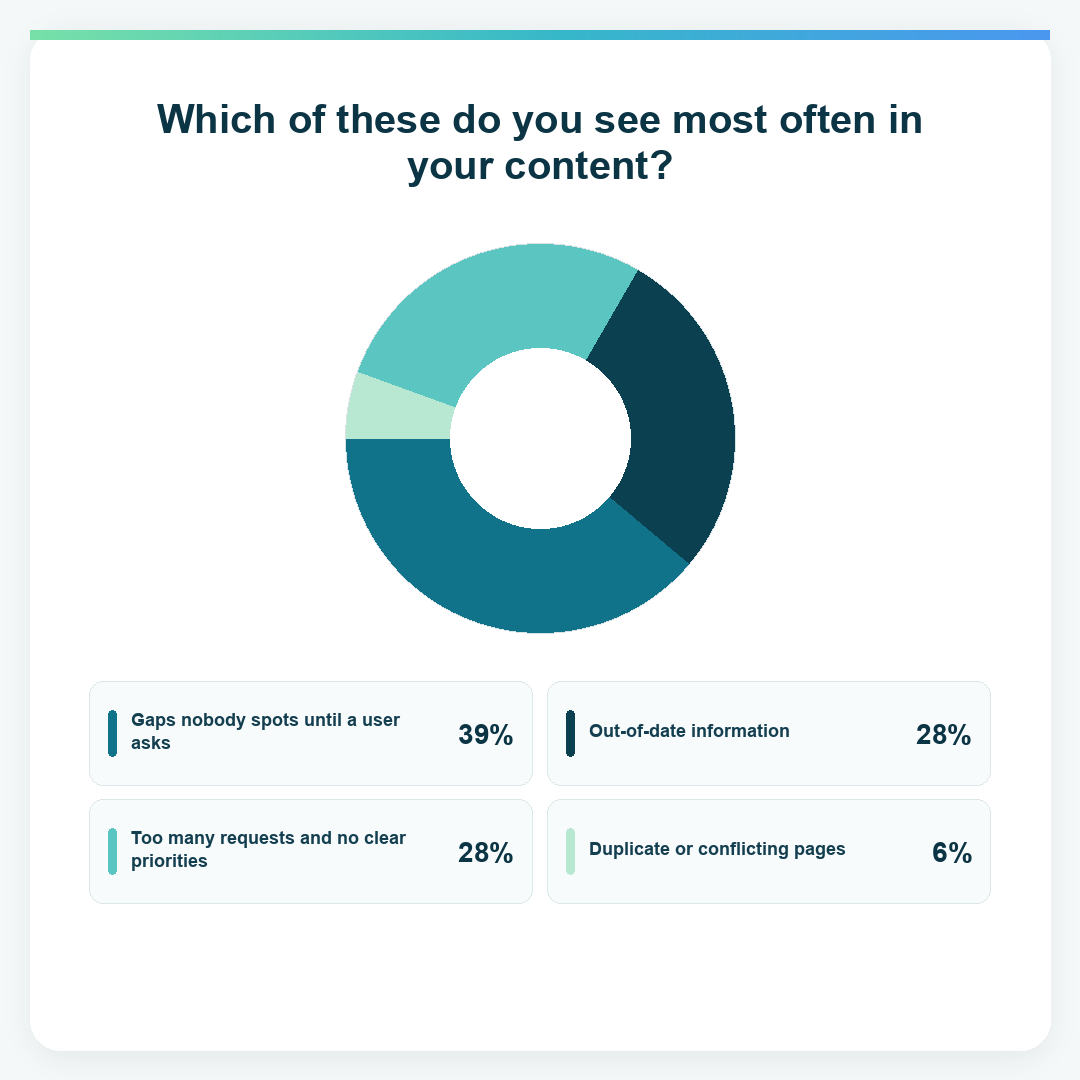
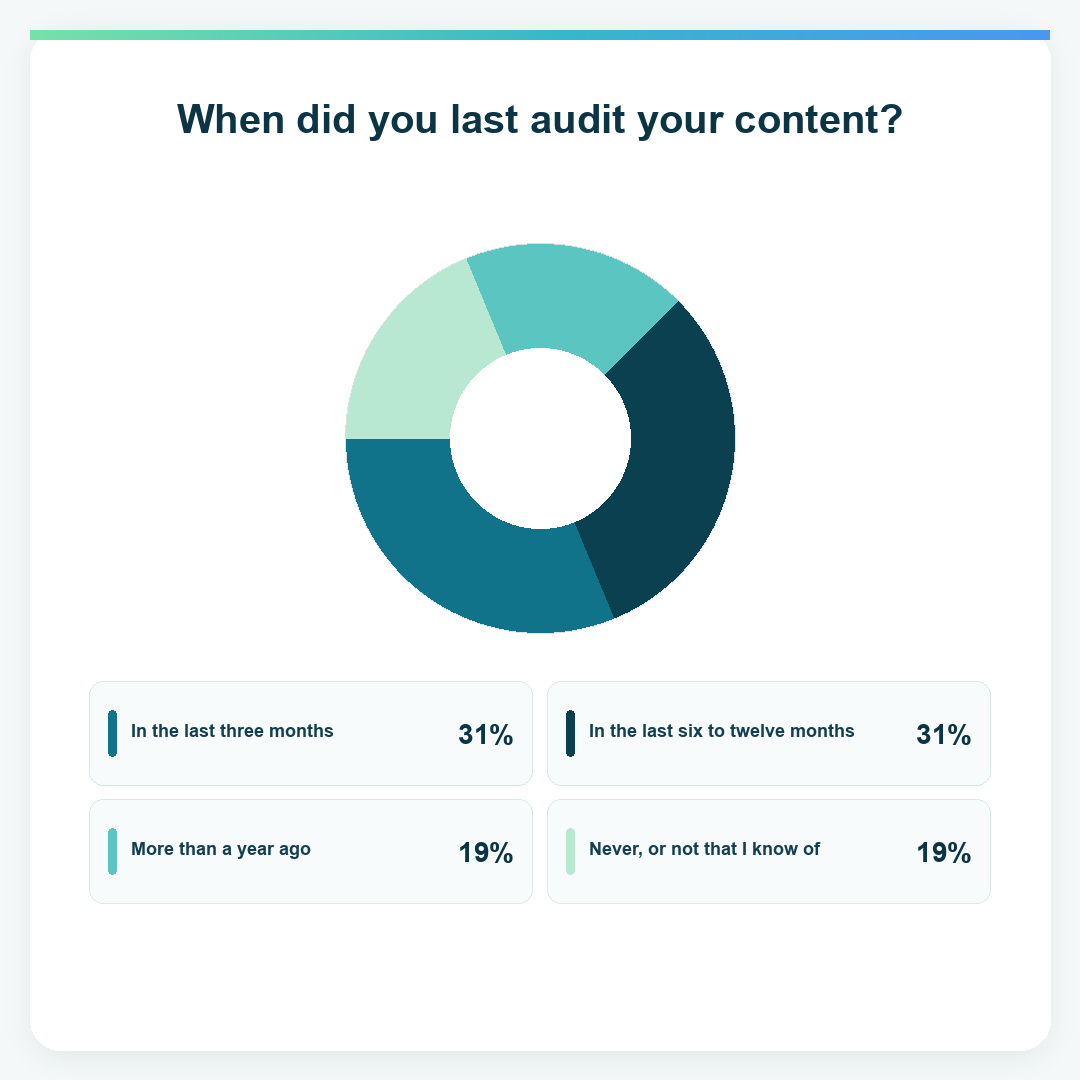
- Gaps nobody spots until a user asks – 39%
- Out-of-date information – 28%
- Too many requests and no clear priorities – 28%
- Duplicate or conflicting pages – 6%
- In the last three months – 31%
- In the last six to twelve months – 31%
- More than a year ago – 19%
- Never, or not that I know of – 19%
Webinar Q&A
Yes. Squiz Funnelback Search includes both Keyword Search and Conversational Search, and the two can appear in the same search experience. Users can continue using keywords and any configured Boolean search options through Keyword Search, while Conversational Search lets them ask natural-language questions and follow-up questions.
The two capabilities run independently. Conversational Search interprets the meaning and context of a question rather than treating it as a traditional Boolean query.
Yes. Squiz Content Intelligence is a standalone, CMS-agnostic product that can be used with non-Squiz websites. It scans a website in much the same way as a search engine, so it does not require Squiz DXP, a CMS migration, a plugin or a direct integration.
Squiz Content Intelligence can also be included with Squiz Funnelback Search, but its core auditing, prioritisation and remediation guidance does not depend on using another Squiz product.
Squiz Conversational Search is designed not to guess. It generates answers from the content approved and indexed for that search experience, uses a built-in validation process to check that answers are grounded in the source material, and shows supporting sources. If the available content does not support an answer, the experience is designed not to invent one.
The quality of the answer still depends on the quality of the source content. If that content is outdated, incomplete or contradictory, the answer may reflect those weaknesses. Healthy content, careful configuration, testing and ongoing monitoring therefore remain important.
Text-based PDFs can be indexed and processed by some search and AI systems, but results vary. Scanned, image-heavy, poorly tagged or complex PDFs are less reliable and can also create accessibility problems.
For important, frequently changing or task-critical information, put the essential answer in accessible HTML page text. Keep the PDF as an optional download when it provides extra detail, a printable record or an official document. This gives people and AI a clear web source without requiring every PDF to be converted immediately.
Start with a manageable slice of the estate rather than reviewing everything alphabetically. Prioritise high-value, high-risk and high-demand topics – for example, pages supporting important user tasks, services, applications, deadlines or revenue.
Then fix repeated template-level issues, improve the most important pages and build a small regular review routine. Squiz Content Intelligence can scan the wider estate, group pages by topic and rank issues by impact, giving the team an evidence-based backlog rather than a large one-off audit.
Match the review frequency to the content’s risk and rate of change. Fees, deadlines, eligibility rules, policies and emergency information may need event-driven updates and frequent checks. Stable background content may only need a six-monthly or annual review.
A useful operating rhythm is a light weekly check of active or high-risk content, a monthly review of priority topics and a broader quarterly check for patterns such as duplication, gaps and unclear ownership. Review immediately when a policy, service, product or source fact changes.
Prioritise by impact, not simply by the number of issues. Consider:
- How important the user task or organisational outcome is.
- The risk of inaccurate or inaccessible information.
- Demand, using traffic, on-site search, feedback and support data.
- Whether the page is a source of truth used by other pages or channels.
- The severity of its content health issues and the effort needed to fix them.
This usually surfaces a small group of pages where improvements will make the greatest difference. Content Intelligence supports this by ranking findings and showing which topics and pages need attention first.
Choose the page with the clearest purpose, strongest authority and most sustainable owner. It should directly answer the main audience need, sit in the most logical location and be capable of holding the complete, current information.
Consolidate the strongest material into that page. Related pages should provide only the context their audience needs and link back to the source, rather than maintaining separate versions of the same facts. Redirect redundant pages where appropriate so existing links continue to work.
Update an existing page when it serves the same audience need and purpose. This preserves its URL, inbound links, search history and established authority, while avoiding another competing answer.
Create a new page when the content serves a genuinely different task, audience or intent, or when combining it with the existing page would make both harder to use. Before creating it, decide how it relates to the source of truth and whether an older page should be redirected or retired.
Consider consolidation when several pages answer the same question, split essential information or provide conflicting versions. Redirect a page when another page now serves the same purpose more completely, especially if the old URL receives traffic or has inbound links.
Retire content when it is expired, redundant, unsupported, inaccurate or likely to be mistaken for current guidance. Historical content can remain when it has a clear purpose, but label and date it clearly so it cannot be confused with the current source of truth.
Separate subject expertise from publishing accountability. Give each important topic or source-of-truth page a named content owner, a subject matter reviewer and a clear review trigger. The content team can manage structure, standards and workflow, while subject matter experts confirm accuracy.
Use shared criteria for what must be checked, record decisions in one place and escalate pages whose owner is missing or unresponsive. A central view of health, ownership and priorities helps distributed teams work from the same evidence instead of running separate audits.
No. A date is a useful signal for people and search systems, but it does not prove that the information was reviewed or materially changed. Confirm the facts, links, examples and related pages first, then update the date to reflect a genuine review.
Where appropriate, use both a visible review or update date and a dateModified value in the page’s structured data. Avoid automatically changing dates when nothing has been checked, as that can create false confidence.
Republishing can help signal that a page has changed, but only when it follows a genuine review. Simply opening a page and publishing it again does not make the information fresher or more useful.
Search and AI systems may detect changes through the page content, a visible update date, structured data such as dateModified, sitemap information, page headers and their own crawl history. They will only see the change after the page is crawled again, and there is no guarantee that every system will notice it immediately. Update the information first, then make the review date clear and ensure the page can be crawled.
There is no fixed timeframe. AI search systems may use live retrieval, search indexes, cached copies and previously processed information, and each refreshes at a different pace. A frequently crawled page may change in days, while a less prominent page can take weeks or longer. Outdated content may continue to appear if it remains accessible and still looks relevant.
When content has been replaced, redirect the old URL to the current source. When it should disappear completely, return the correct removal status, remove it from sitemaps and internal links, and request a recrawl where that option is available. Then test the relevant questions regularly. These steps speed up discovery of the change, but they cannot guarantee an immediate update across every AI service.
Include PDFs in the same inventory, ownership and review process as web pages. Prioritise those that support important tasks, receive significant traffic, change frequently or contain information not available elsewhere.
For each priority PDF, check that it is current, accessible, text-based, clearly titled and linked from an appropriate page. Put the essential answer in HTML, then keep the PDF where it adds value. Remove or redirect obsolete files and links so people and AI do not encounter conflicting versions.
No. You do not need to turn every page into a list of questions and answers. Q&A can work well when it reflects how people genuinely look for information, but forcing every policy, service page or article into that format can make the content repetitive and harder to use.
Keep the format that best suits the content and its audience. Use clear headings, focused sections and direct answers, whether the heading is a question or a short description. Clarity does not require generic writing – keep the organisation’s voice through original expertise, evidence, examples and specific details. Write for people first, as well-structured and authoritative content is also easier for AI to understand.
Establish a repeatable set of real audience questions, then test them in the AI tools your audience uses. Record whether the organisation is mentioned or cited, which pages support the answer and whether the answer is accurate, complete and current. Re-test after important improvements and compare the results over time.
Combine this with content health scores, on-site search results, referral data and conversions where available. Measurement is still less complete than traditional rank tracking because many AI answers do not generate a click, and no content health score can guarantee an external citation.
It can replace much of the slow, manual discovery involved in traditional audits, but it does not replace editorial judgement. A tool can scan at scale, keep the evidence current, identify patterns, test likely questions and rank issues so teams do not have to find everything by hand.
People still decide what the content should achieve, which source is authoritative, whether a recommendation fits the context and tone, and what should be published. The strongest model combines automated auditing and prioritisation with human strategy, expertise and approval.
Setup is straightforward because Squiz Content Intelligence is CMS-agnostic and scans a site in much the same way as a search engine. It does not require a CMS migration, plugin, API access or custom development.
To get started, you provide the website URLs and confirm what you want to audit. The site can then be scanned and organised into topic areas, with findings across AI readiness and accessibility. The initial setup and scope still need to be agreed, especially for large estates or content that is restricted from public crawlers, but there is no lengthy technical integration.
Squiz Content Intelligence assesses whether content is clear, complete, consistent, current, accessible and structured well enough for people and AI to interpret. It can identify issues in page content, headings, metadata and underlying markup, and it tests how well content across a topic answers likely audience questions.
It does not simply apply one format to every page, but it also does not currently score each page against a separate ideal template for every content type, such as a blog post versus an event. The right structure still depends on the page’s purpose. An event needs clear dates, location and registration details, while a blog post needs a clear topic, useful evidence and a logical structure.
Squiz Content Intelligence first analyses the website and organises related content into topics. It then uses AI to generate the questions people are likely to ask about each topic and tests how well the relevant content answers them. The audit is therefore topic-based rather than simply sending one question to a model for every individual page.
The process uses foundation models from Amazon Bedrock within a Squiz-controlled workflow. The value comes from how Squiz Content Intelligence crawls and organises the content, generates and tests relevant questions, identifies gaps and conflicts, prioritises findings and provides guidance for improvement.