






Journey analysis by segment
Break down journey performance by audience segment to understand how different user groups behave and where each segment struggles or succeeds.
Stop guessing what works. Squiz Digital Experience Platform (DXP) captures behavioral data, reveals how audiences interact with your content, and provides the tools to test improvements and measure impact so every decision is backed by evidence, not assumptions.
Marketing teams are under pressure to improve results but often lack the data to act confidently. Content is published without clear impact, journeys are redesigned without proof, and search issues lack visibility.
Squiz DXP changes this by capturing behavioural data, revealing how users interact, and enabling testing and measurement. Teams can identify drop-offs, uncover unmet needs, and validate improvements, replacing guesswork with evidence-based decisions.



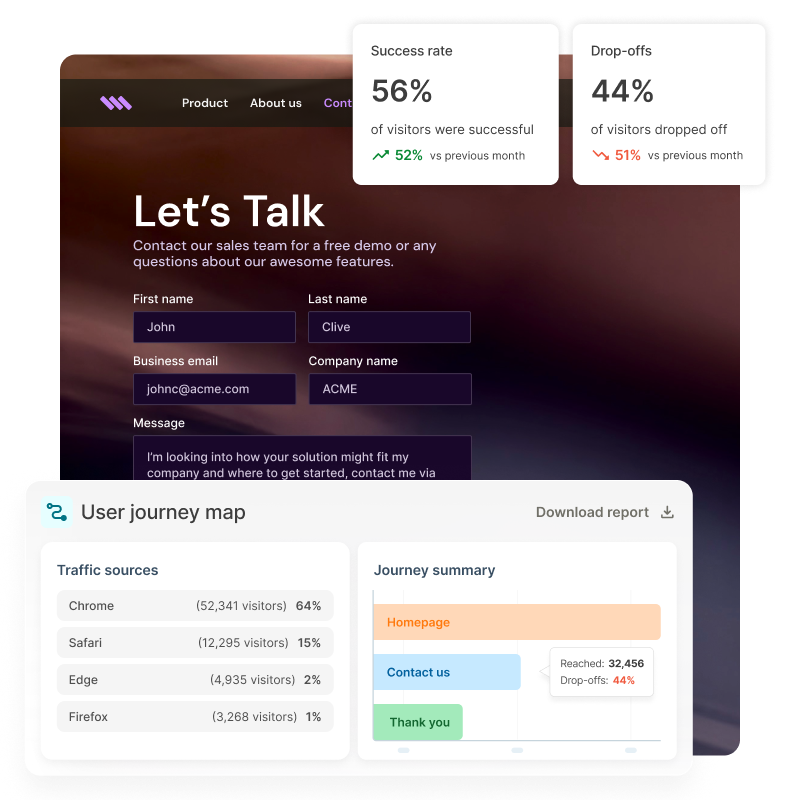
User journey mapping
Track the journeys that matter to your organization, like registration flows or application processes, and pinpoint exactly where users abandon. See which pages have the highest drop-off rates so you know where to focus testing and optimization efforts.
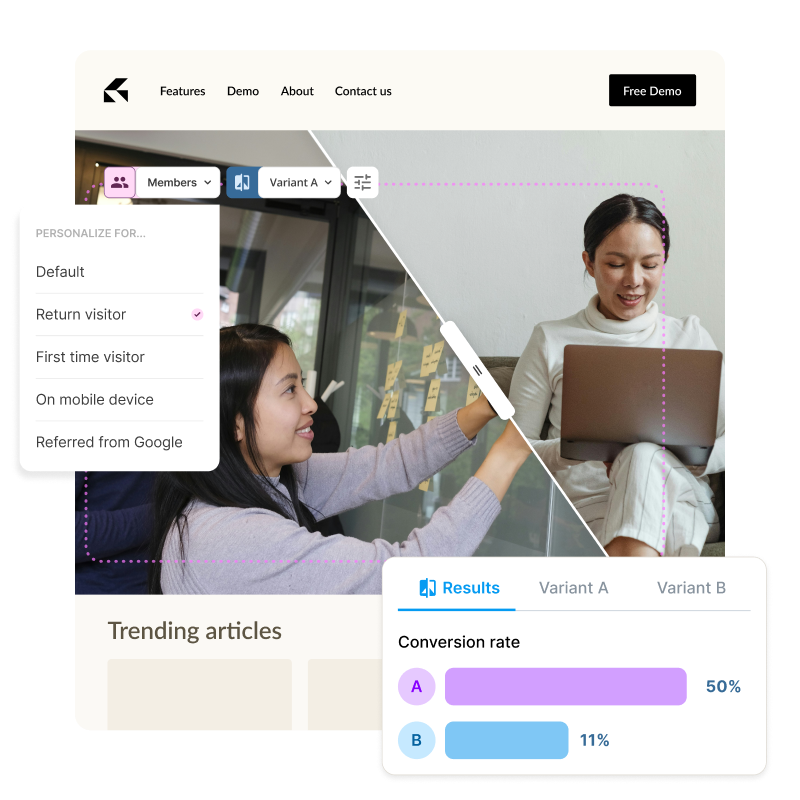
A/B testing
Test different approaches on high-priority pages. Experiment with headlines, CTAs, images, and more using an intuitive visual editor, then implement winning changes with statistical confidence.
Search analytics
See what visitors search for on your site and identify queries that return no results. Spot content gaps instantly and understand what topics matter most to your audience, informing what content to create or improve.

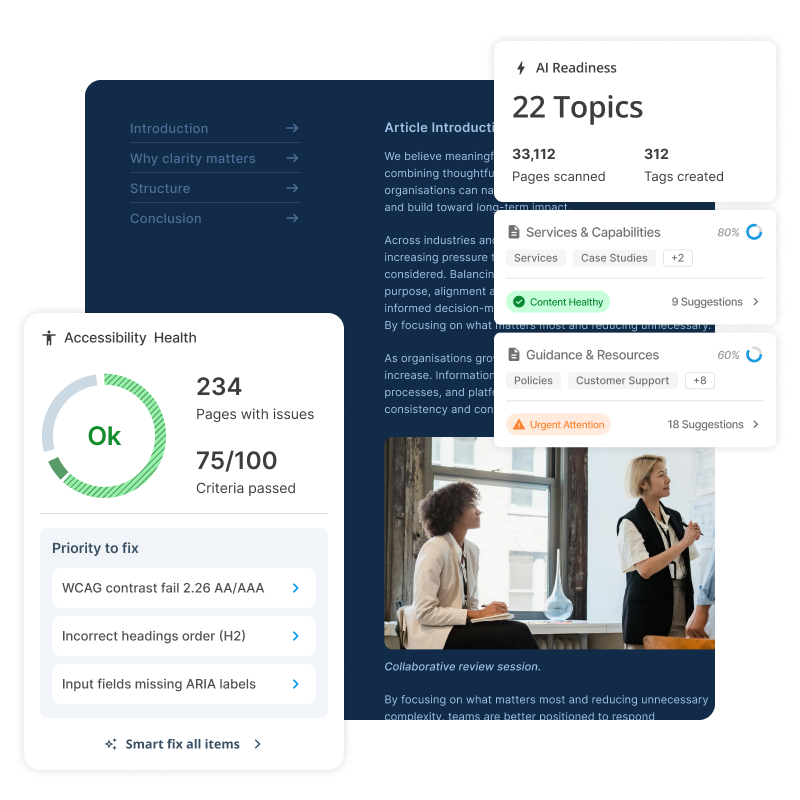
Squiz Content Intelligence
Scan entire sites for accessibility compliance, AI readability, and content quality issues. Get impact-based prioritization and specific guidance around how to fix problems, so you know exactly what to address first.
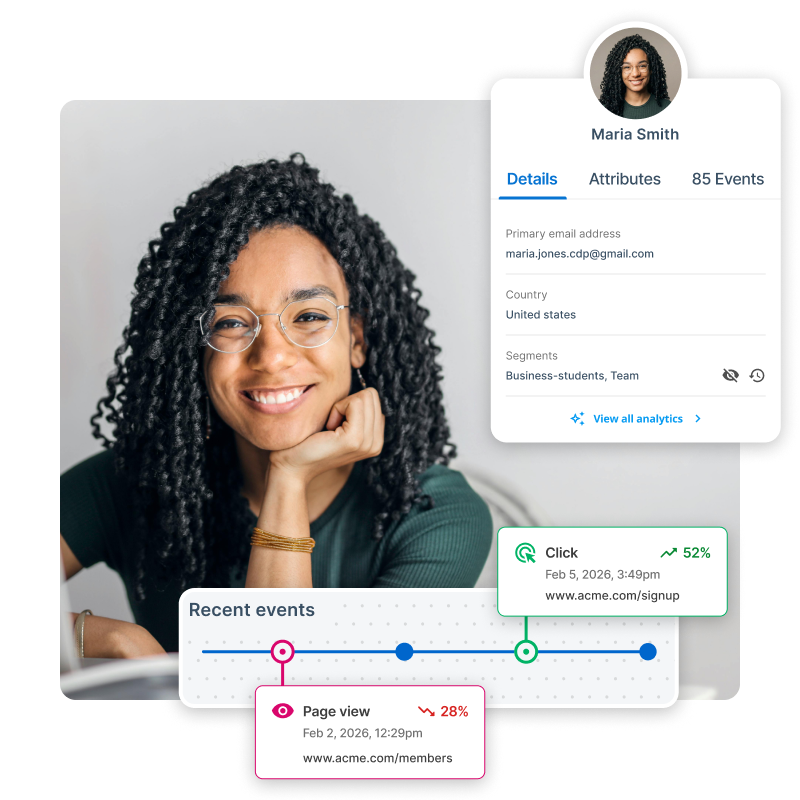
Customer data and integrations
Define what events matter most to your organization - conversions, key actions, content engagement. Capture them in unified profiles, then export insights to the analytics platform of your choice to support further business-level analysis.

"The DXP has given us the inspiration to know that we can redesign our website using GDS-compliant components, track user journeys, enable A/B testing, and then personalize the experience. It's opened up possibilities that weren't available to us before."

Whitepaper
Discover how DXPs unify content, data, and tools to empower teams to move faster.
Squiz DXP provides visibility into behavioral data that most teams don't have. User journey mapping reveals exactly where users drop off in critical flows. Search analytics shows what people are looking for but can't find. Content Intelligence identifies quality and accessibility issues at scale. A/B testing proves which changes actually improve results.
Together, these tools let you answer specific questions with data: "Where should we focus optimization efforts?" (User journey mapping and Content Intelligence show you.) "Does this new CTA drive more clicks?" (Test it with A/B testing.) "What content should we create next?" (Search analytics reveal gaps.) Instead of debating opinions, you make decisions based on actual user behavior.
User journey mapping and search analytics provide valuable insights at any traffic level. Even sites with modest traffic can identify clear patterns in user behavior, drop-off points, and search queries. The insights help you understand where to focus, regardless of scale.
For A/B testing, higher traffic volumes produce faster, more statistically significant results. The built-in calculator recommends ideal test duration based on your traffic and conversion goals. Sites with lower traffic can still run effective tests on high-impact pages like registration flows or key landing pages, they just need longer test durations to reach statistical confidence.
Yes. Most of these tools are designed for marketing teams to use independently. User journey mapping has an intuitive interface for both mapping journeys and visualizing user flows. A/B testing uses the Visual Page Builder to create test variants without code. Search analytics presents data in clear, interactive reports. Content
Intelligence provides straightforward issue lists with AI-powered prioritization.
Initial setup (connecting data sources, configuring integrations, and defining events to track) typically involves developers. But once that foundation is in place, marketing teams handle day-to-day operations: analyzing journeys, building tests, reviewing search data, and prioritizing content fixes. You don't need technical skills for ongoing use.