






User journey mapping
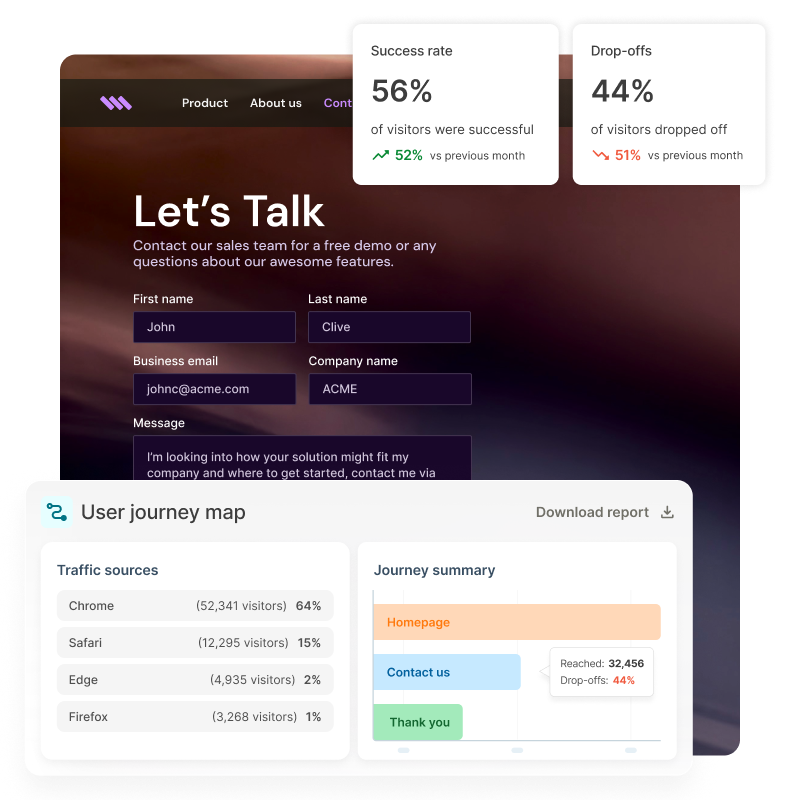
Track mission-critical paths, monitor completion rates, and identify exactly where users abandon key processes.
Move beyond vanity metrics with behavioral data, real-time personalization, and testing that proves what drives results for your organization.
Marketing teams in complex organizations struggle to identify high-intent visitors, understand what drives conversions, and prove ROI - while users receive generic, misaligned experiences.
Squiz Digital Experience Platform (DXP) transforms this by unifying behavioural data, surfacing intent signals through search analytics, and enabling personalized experiences. Teams can test rapidly, measure what works, and make data-driven decisions, grounding strategy in evidence and delivering experiences that genuinely meet user needs.


Behavior insights
Track the journeys that matter to your organization, pinpoint friction points in registration flows or application processes, and focus optimization efforts where they'll deliver measurable conversion gains.
Unified customer data
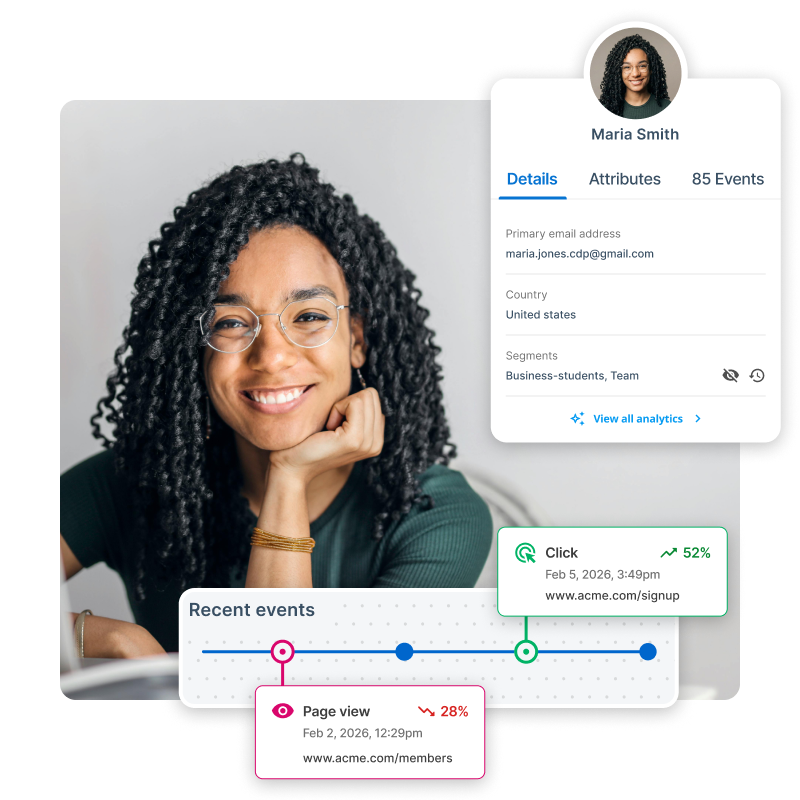
Capture behavioral data across touchpoints, create dynamic segments based on real-time activity, and track segment performance against your goals to understand what's working.
Tailored experiences
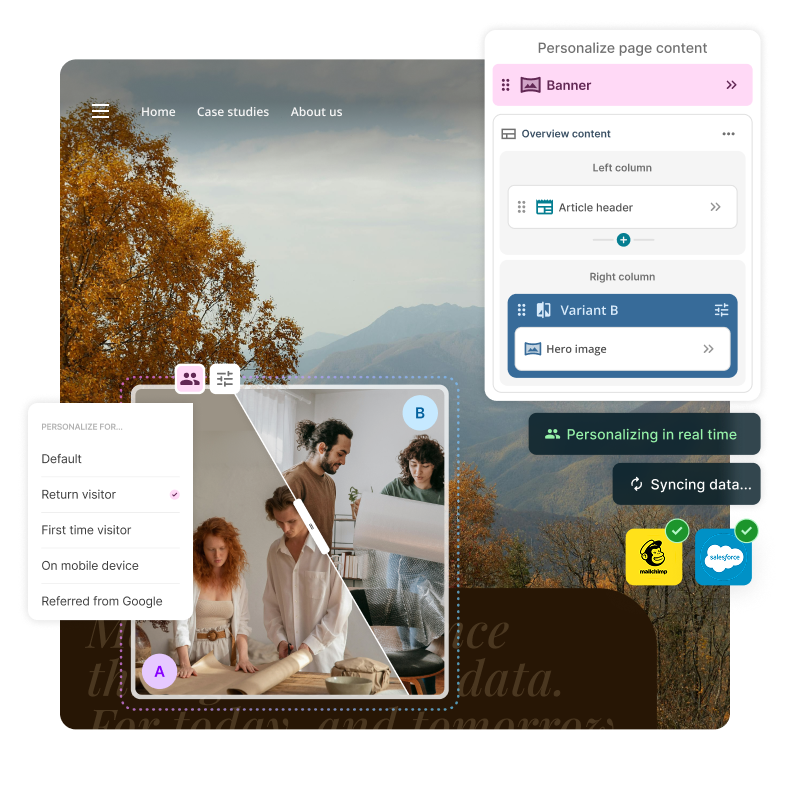
Use customer data to personalize content for specific segments, then test variations to optimize performance without waiting for developer resources.
Whitepaper
Discover how DXPs unify content, data, and tools to empower teams to move faster.
Squiz DXP provides tools to measure and validate your optimization efforts. User journey mapping lets you track key flows like registration or appointment bookings; you can identify drop-off points, personalize or test those pages, and measure whether completion rates improve. A/B testing reveals which page variations perform better with statistical confidence. Segment performance tracking lets you set goals for each audience segment and monitor whether personalized experiences are meeting those targets. Together, these tools help you understand what's working and refine your approach based on evidence rather than assumptions.
The Squiz CDP capability captures behavioral signals across touchpoints, creating unified profiles that track user actions over time. You define what constitutes high intent for your context: repeated visits to specific content, search queries for priority topics, form interactions, or resource downloads. Dynamic segmentation evaluates these criteria in real time, enabling immediate personalization or automated workflows. Squiz Funnelback Search analytics reveal what users are actively searching for, surfacing intent signals that inform both content strategy and personalization approaches.
Yes. Marketers use visual editing tools to create personalized variants of pages, build audience segments based on behavioral criteria, and launch experiences independently. The Visual Page Builder enables drag-and-drop content editing with live preview across different segments. GenAI content tools help create variant copy instantly. A/B testing setup happens through an intuitive interface. The CDP and personalization engine operate natively within the CMS, eliminating complex integrations or separate systems that require technical expertise to configure.
Squiz DXP provides pre-built connectors for platforms like Salesforce, HubSpot, Marketo, Dynamics 365, and others. Once configured, form submissions can trigger data syncs to your CRM with proper field mapping, eliminating manual data entry. The CDP capability can pull data from external sources including CRM, marketing automation, e-commerce, and support systems to enrich customer profiles. You can also push behavioral data out to analytics tools, advertising platforms, or data warehouses. Beyond branded connectors, the integration platform supports low-code API-based connections with any system, working within your existing data stack.
Squiz DXP includes built-in consent management that keeps personal data secure and compliant with GDPR, CCPA, and Australian Privacy Act requirements. You control what data is collected, how it's used, and where it's stored. Data sovereignty options ensure information stays within specific regions when required. The CDP tracks both anonymous and authenticated users, respecting consent preferences throughout the journey. Role-based access controls and approval workflows let distributed teams personalize within central governance frameworks, ensuring compliance doesn't block marketing effectiveness.
Initial technical setup involves developers configuring data sources, establishing integrations, and building reusable components and templates. Once this foundation is in place, marketing teams take over day-to-day operations. The platform includes templates for common use cases, visual editing tools that require no coding knowledge, and calculators that guide testing duration for statistical significance. Marketing teams can create segments, build personalized variants, launch A/B tests, and analyze results independently. Squiz provides education and training resources via Squiz Academy, with ongoing support available when teams need it.