The power of connected digital experiences
In this webinar
Your digital experience is only as strong as the connections behind it. When your content, search, and digital channels work together, your website users find what they need more easily, journeys feel seamless, and conversion is quicker.
In this practical session, we explored what a “truly connected” digital strategy looks like in practice, the benefits for your teams and web visitors, and where to start.
Video: Watch the webinar. Captions and transcript available on playback.
Watch the webinar
Press play to watch the webinar on demand.
Transcript: Watch the webinar
1
00:01:03.860 --> 00:01:07.390
Will Noble: Good morning, everyone. Welcome to today's webinar.
2
00:01:07.900 --> 00:01:10.760
Will Noble: It is 25th of June.
3
00:01:10.990 --> 00:01:15.869
Will Noble: Very hot day here in London. How are you dealing with it, Pets? You okay?
4
00:01:16.740 --> 00:01:25.320
Pez Perry: Well, I'm a few degrees cooler up here in Newcastle, so, I'm managing a little bit better than I think people in the south of the UK are today.
5
00:01:25.490 --> 00:01:43.820
Will Noble: Oh, nice. And, very cliched of me to start with that, as this is now an international webinar, because, our friends in the Southern Hemisphere and North America will be, scoffing at all of our, our chats with. Well, we're just gonna give ourselves 30 seconds for folks to join the call live.
6
00:01:43.980 --> 00:01:47.630
Will Noble: And, we're gonna get started with the, with the meat of the topic.
7
00:01:49.440 --> 00:01:59.279
Pez Perry: I think the, those in other parts of the world just want us to live up to our British reputation of immediately talking about the weather. I think they'll be, happy for the stereotype to continue.
8
00:02:00.920 --> 00:02:02.270
Will Noble: Do you have a cup of tea with you?
9
00:02:03.040 --> 00:02:08.280
Pez Perry: I have coffee? Yeah. I mean, that was possibly a bad idea as well, in this heat.
10
00:02:13.999 --> 00:02:18.439
Will Noble: Wonderful. Okay, well, we've been a couple of minutes now, I think we can, we can get started.
11
00:02:18.939 --> 00:02:34.859
Will Noble: And of course, as every webinar, we will know, everything is recorded, and you'll be sent the recording, and we'll cut this up and send out the best bits after this. If you do have questions, there is a Q&A box in Zoom, so please file those in there.
12
00:02:34.859 --> 00:02:48.739
Will Noble: And, if you do have any other technical issues, please head to the chat, and, our illustrious colleague, Emily, will be, will be monitoring that. But my name is Will, and I'm a Strategy Director. I've been here coming up to 11 years now.
13
00:02:48.739 --> 00:02:57.909
Will Noble: And, it's a double whammy. Two individuals with direct strategy in their, in their title, and I'm pleased to say that, my colleague Pez is joining us. Hello, Pez.
14
00:02:58.850 --> 00:03:22.790
Pez Perry: Hi, Will, yes, hi everyone, I'm Robert Perry, everyone just calls me Pez, so yeah, I'm a strategy consultant here at Squiz. I've not been here anywhere near as long as Will, been here for about a year or so, but, I have spent most of my career working on content strategy, digital strategy, and so on for large organizations. And, yeah, it's always interesting to see how this changes, and that's one of the things we're going to be looking at today.
15
00:03:26.090 --> 00:03:38.630
Will Noble: Wonderful, cool. So, for those of you who don't know, Squiz is a digital experience platform provider, been around for the last 28 years. We help service-led organizations create rich online experiences, and that could be,
16
00:03:38.630 --> 00:03:49.920
Will Noble: customer-focused websites, could be client-focused portals, or things like, your staff-focused intranets. The basis of what we do is really you have a suite of technology to enable you to do that. We've got content management.
17
00:03:49.920 --> 00:04:04.380
Will Noble: personalization and optimization technology. A lot of the folks on this call will know us for our enterprise search engine, Funnelback, which now includes conversational search. And most recently, we've spent a lot of time working with what we call content intelligence, which is
18
00:04:04.380 --> 00:04:11.909
Will Noble: Making sure that all of our web content is easily accessible for answer engines, with this new paradigm.
19
00:04:12.190 --> 00:04:24.860
Will Noble: But today, we're really covering a topic about connected experiences, and that's quite a nebulous title for today, so I'm sure everyone's a bit curious about what we're going to go into. But we're going to start by talking about
20
00:04:24.960 --> 00:04:40.470
Will Noble: what makes an unconnected journey? Where are the fragmentation points? And we've kind of split down the topic here into three phases, which we're going to explain, and then why those three phases matter, and how you guys can take some frameworks to utilize them.
21
00:04:40.600 --> 00:04:47.359
Will Noble: And when you build a connected experience, what that user journey looks like at the end, and we'll leave with some, some actionable takeaways.
22
00:04:50.100 --> 00:04:52.429
Pez Perry: Yeah, sure as well. So,
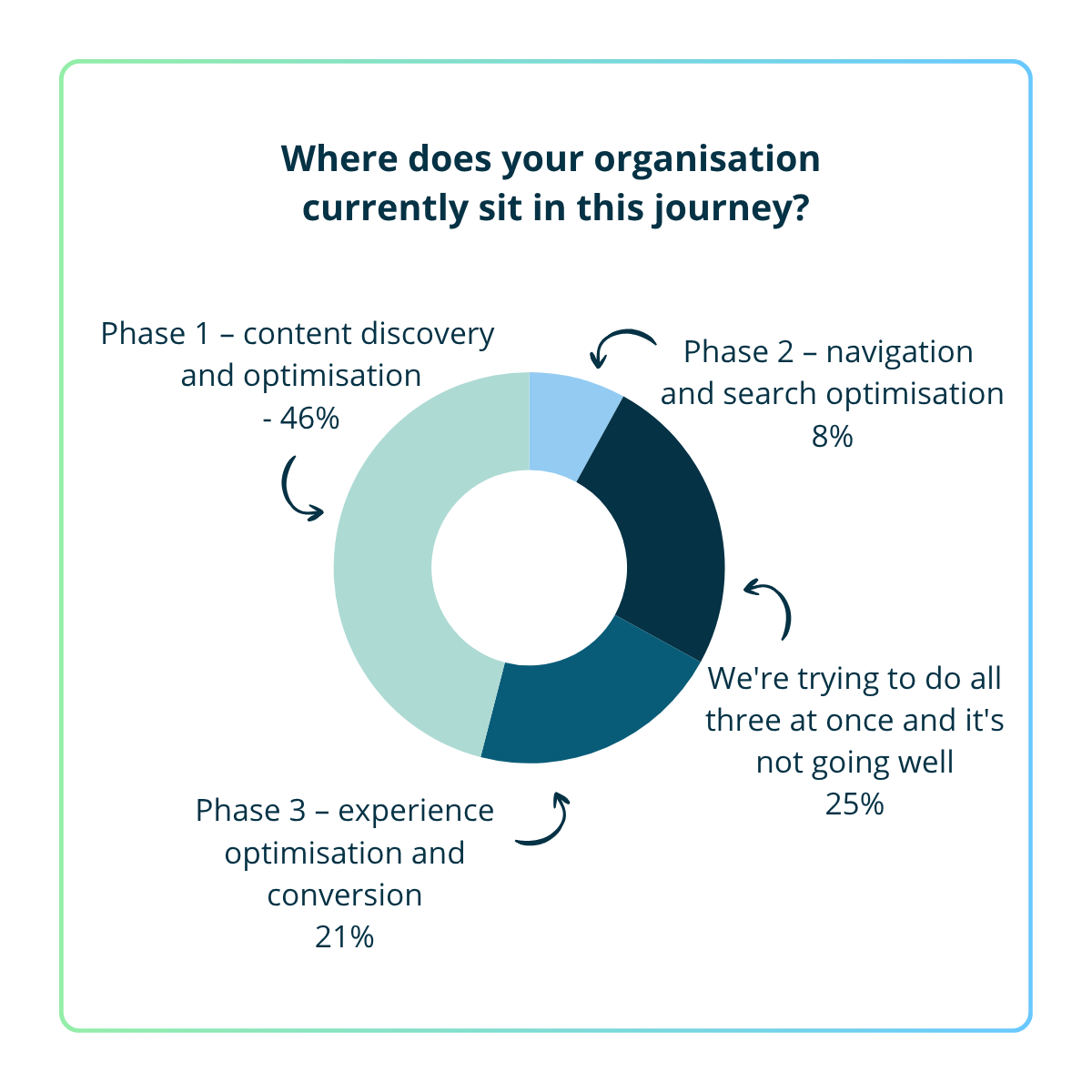
23
00:04:53.090 --> 00:04:54.729
Pez Perry: We all know that, like, the…
24
00:04:54.730 --> 00:05:14.860
Pez Perry: AI search is the big thing. Like, Will's already mentioned, this is something that we've already been looking into. We're, we're doing some work on, kind of, content intelligence and optimization to understand exactly how, kind of, AI visibility actually works. Like, we've run webinars on this. In fact, Will and I did one a couple of months ago. Some of the people on this call may even have, sat through these kind of things.
25
00:05:14.860 --> 00:05:22.109
Pez Perry: But sometimes the bit that's missing from that conversation is kind of what happens next. So, content discovery, AI visibility, that kind of thing.
26
00:05:22.130 --> 00:05:41.630
Pez Perry: they don't exist in isolation. It's part of a journey, it's part of a digital ecosystem that all has to work together, so that somebody does that search, then, you know, they get through to your site. What do they do next? All of that has to flow together naturally. So if we spend all our time thinking about the AI visibility piece, then we sometimes forget what happens next.
27
00:05:42.350 --> 00:05:47.280
Pez Perry: And then… what happens next is exactly the issue here. So…
28
00:05:48.170 --> 00:06:07.580
Pez Perry: this is a little illustration of, I guess, how a journey might work nowadays, and I think work is possibly the wrong word here, because there's so much potential for fragmentation along this kind of journey, and particularly with that initial starting point being what a lot of us do now, which is to start with some kind of AI search.
29
00:06:07.580 --> 00:06:14.659
Pez Perry: You know, whether it's in ChatGPT or a Google search that gives you a little AI summary at the start.
30
00:06:15.210 --> 00:06:17.809
Pez Perry: That's where a lot of people start their journeys now.
31
00:06:18.320 --> 00:06:38.799
Pez Perry: And when we start there, what you don't see behind the scenes is all the little questions that an AI tool asks to try and understand exactly how to pull that answer together. So if you ask that question, an AI tool goes and generates a whole load of additional sub-queries, it's like fanning out and asking all those different questions around pricing, or doing comparisons, or…
32
00:06:38.800 --> 00:06:49.879
Pez Perry: Getting alternatives to you. And it searches for all of those at once, and if the content that you're supplying to that question doesn't explicitly answer that, you're not going to show up.
33
00:06:49.880 --> 00:06:56.510
Pez Perry: Like, somebody else will show up who actually does answer that question, and so that visitor never even knows you exist, so they're not even going to come to you.
34
00:06:57.220 --> 00:07:04.249
Pez Perry: And that's just the first drop-off point on this journey now, is, like, that lack of visibility before they even come to your site.
35
00:07:04.580 --> 00:07:06.090
Pez Perry: So let's say they do get better.
36
00:07:06.150 --> 00:07:07.570
Pez Perry: And then…
37
00:07:07.620 --> 00:07:27.529
Pez Perry: they might, like, they're trying to find their way around your site, and they might try and use the site search again, and particularly because now they're starting to expect that same kind of experience that they get on something like ChatGPT or Google, where they're going to put in a search term and get some kind of conversational response. And if they don't get that, they might drop off there.
38
00:07:27.760 --> 00:07:52.579
Pez Perry: if they do get through further into the site, and then the experience, again, is not what they expected, because the site doesn't necessarily remember who they are, it doesn't necessarily remember the kind of research term they put in earlier, it doesn't kind of personalize the journey for them, and they're getting the same experience that everyone else does, and that's not what they expect nowadays. And then underneath all of that, there's the lack of, kind of communication between all the different data sources that are
39
00:07:52.580 --> 00:08:16.169
Pez Perry: on our sites. You know, all those diff… all that information is in different platforms, different silos across the systems that we're using, and it's not talking to each other, and it's not bringing it together, and it's not feeding it to you, as the website owner, to be able to make use of it. So all this… all of these different stages in the journey, there's potential for, for the user to just drop off and go somewhere else for a better experience.
40
00:08:20.020 --> 00:08:29.899
Will Noble: Nice. I think that's a quite lovely lineage there of all of those fragmented points and areas of friction, Pez, so good slides, good slides there.
41
00:08:29.900 --> 00:08:39.619
Pez Perry: I mean, it's, yeah, I don't want to shame anyone into thinking, you know, that they're not providing this already, but it's just that there's possibility for all of this at every stage.
42
00:08:39.620 --> 00:08:40.309
Will Noble: Hmm.
43
00:08:40.620 --> 00:08:50.459
Will Noble: So we feel that though that fragmentation causes a number of different challenges, but there are also some macro challenges that are happening that we've referenced in previous webinars.
44
00:08:50.530 --> 00:09:06.210
Will Noble: One of those is just lost traffic, so we've all seen a drop of around about 30% into site traffic, and so we're just getting fewer individuals actually landing on our web estate, because all of that informational searching
45
00:09:06.210 --> 00:09:12.949
Will Noble: It's happening elsewhere, and we're in this paradigm now of trying to fight for citations rather than fighting for clicks.
46
00:09:12.950 --> 00:09:24.609
Will Noble: And if content isn't well-structured, then you're never going to be in that conversation. And then the smaller amount of traffic that does reach the site, as Pez mentioned, if there is friction points with
47
00:09:24.610 --> 00:09:36.729
Will Noble: poor navigation, so maybe the Mega Menu is somewhat confusing or antiquated, or you're using terminology that your audiences don't particularly understand. Maybe the internal search function, as you called out.
48
00:09:36.730 --> 00:09:44.670
Will Noble: Doesn't have particular smarts, or it's not very forgiving. Then you lose another cohort of traffic, so that's another… another challenge.
49
00:09:44.690 --> 00:09:54.389
Will Noble: And then with the small amount of traffic that you, smaller amount of traffic that you do have, is there any ability to understand what's going on? Like.
50
00:09:54.390 --> 00:10:05.360
Will Noble: We all have GA set up in our ecosystems, but are we actioning with that information, or are we using that to inform different decision-making
51
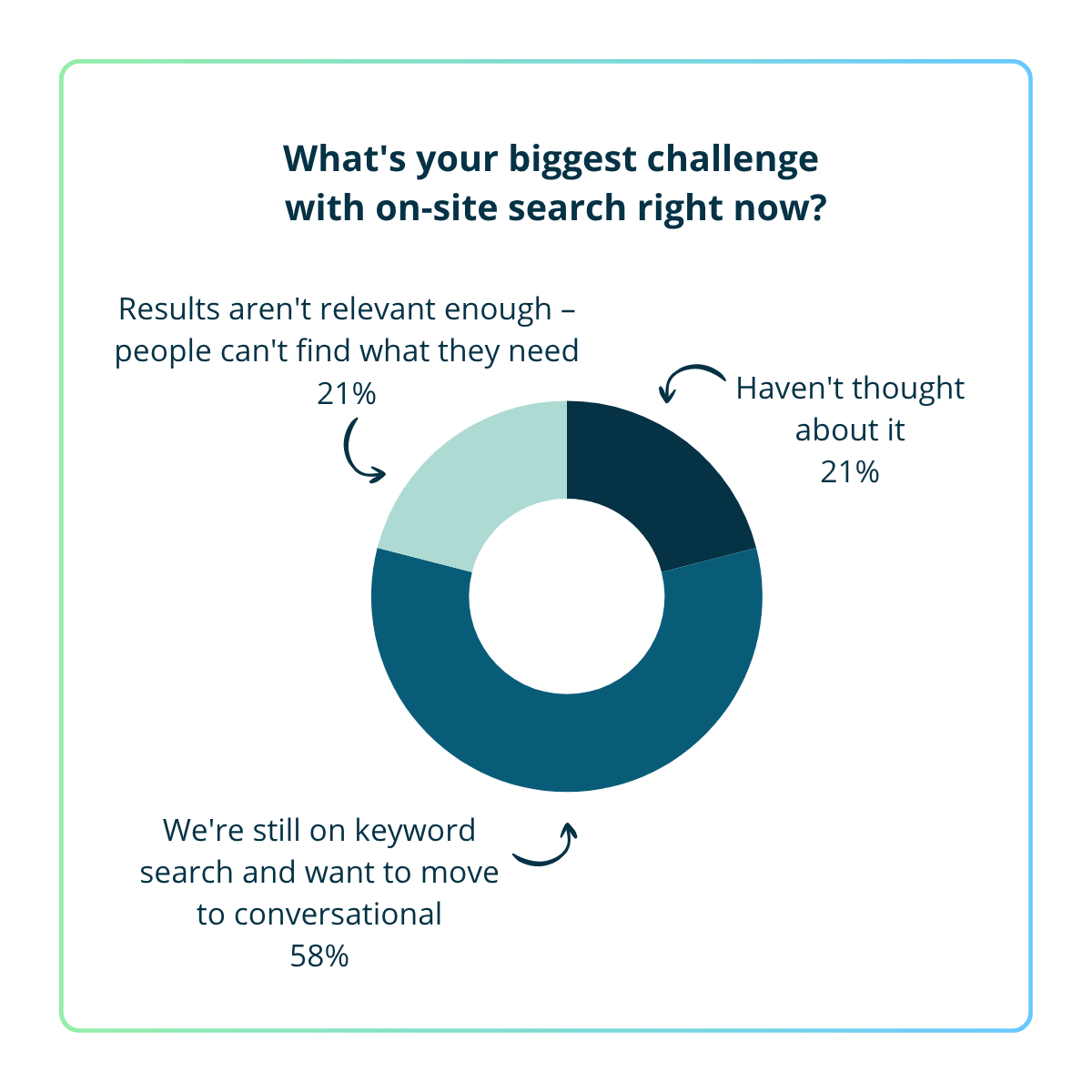
00:10:05.690 --> 00:10:12.200
Will Noble: And most of the time, most of the companies that I speak to, that data is somewhat invisible.
52
00:10:13.640 --> 00:10:24.390
Will Noble: So to counteract that, we've kind of, come up with… there are kind of three phases to look at when you're trying to build next-generation digital experiences. So, before you can…
53
00:10:24.390 --> 00:10:33.969
Will Noble: optimize the experience, you really have to look at how individuals find your website and find your content. So we call that the first phase, so it's all about content discovery and optimization.
54
00:10:34.070 --> 00:10:43.039
Will Noble: So this is really all about making sure that your content is well-structured for search engine optimization, as well as answer engines.
55
00:10:43.070 --> 00:10:57.389
Will Noble: And, also includes that your markup is well-structured for those with accessibility issues. So that's really the first phase, and it's quite sequential, all of these areas. Once you've got your content in good shape.
56
00:10:57.670 --> 00:11:11.240
Will Noble: then you can make… look… look to make improvements to the navigation, right? So, how are visitors finding information once they come onto the website? Is there areas that we can make improvements? And then, once we've…
57
00:11:11.240 --> 00:11:15.480
Will Noble: Got the baseline of good navigation, then we can look at,
58
00:11:15.480 --> 00:11:35.140
Will Noble: making optimization to the actual experiences. So, this is looking at ways to A-B test certain different experiences, or taking a look at the user journey and think, how could we optimize this to drive better outcomes? And so, the whole course of today is to dive into all of these three phases and give you some frameworks to
59
00:11:35.150 --> 00:11:36.180
Will Noble: Let's take a look at.
60
00:11:37.350 --> 00:11:45.719
Will Noble: This is an interesting point, a subsection to talk about the idea of digital experience platforms as just a… as an industry itself.
61
00:11:45.830 --> 00:11:47.350
Will Noble: So…
62
00:11:47.400 --> 00:12:03.759
Will Noble: the phrase DXP is used a lot by the, by technologists, but it's probably less well-known in the industry. But effectively, that's what a digital experience, the value proposition of a digital experience platform does. It connects ability to understand your content and make, improvements to it.
63
00:12:03.760 --> 00:12:09.240
Will Noble: It gives you the ability to improve the navigation experience and the digital experience as a whole.
64
00:12:09.240 --> 00:12:16.949
Will Noble: To improve conversion rates, and then gives you the ability to understand what's going on to optimize the experience.
65
00:12:19.240 --> 00:12:22.599
Will Noble: But I think we're going to do a poll piss, haven't we?
66
00:12:22.600 --> 00:12:32.980
Pez Perry: Yeah, now that you've outlined those, those different stages, I think we're going to try and see where people actually sit in that journey, yeah.
67
00:12:34.390 --> 00:12:36.689
Pez Perry: But like… like I mentioned before, it's…
68
00:12:36.710 --> 00:12:56.999
Pez Perry: this kind of thing changes quite quickly, so we're not trying to shame anyone into thinking that they should have done any of this already, but particularly with the advent of things like AI search and improvements in technology for how you can kind of track and understand what's happening on your website, you know, it may be that some of this is something you're coming back to revisit, and you may have done it previously.
69
00:12:57.000 --> 00:13:00.099
Pez Perry: 5 years ago, but it's time to refresh it, so…
70
00:13:00.100 --> 00:13:06.070
Pez Perry: Yeah, it'd be interesting to see where everyone actually sits, in that… in that alone.
71
00:13:08.310 --> 00:13:11.789
Pez Perry: I'll give you a moment to… Put a lot in.
72
00:13:12.260 --> 00:13:13.680
Pez Perry: We'll see what the response is now.
73
00:13:19.770 --> 00:13:24.540
Will Noble: I'm waiting with bated breath. I'm waiting for Emily to hit the poll results.
74
00:13:35.190 --> 00:13:36.159
Pez Perry: So, basically.
75
00:13:38.190 --> 00:13:56.159
Pez Perry: Okay, content discovery and optimization. I think that's… that's understandable, I think, given that, you know, there has been this big shift in the past few years towards, AI search and, you know, thinking we'd previously all thought about SEO and, that as our kind of way of getting people in, but, yeah, that's interesting.
76
00:13:59.450 --> 00:14:02.130
Pez Perry: I do feel sorry for the people who answered D.
77
00:14:03.640 --> 00:14:04.740
Will Noble: The fourth option.
78
00:14:04.910 --> 00:14:05.670
Pez Perry: Yeah.
79
00:14:06.390 --> 00:14:11.299
Will Noble: Yeah, so 25% said we're trying to do all three at once, and it's not going so well.
80
00:14:11.700 --> 00:14:18.689
Will Noble: That's, that's quite a large cohort. That's quite, quite interesting, and makes sense to try and capture all three at once.
81
00:14:19.590 --> 00:14:20.270
Pez Perry: Absolutely.
82
00:14:21.580 --> 00:14:22.380
Pez Perry: dove.
83
00:14:22.950 --> 00:14:23.470
Pez Perry: But…
84
00:14:23.470 --> 00:14:24.400
Will Noble: Right.
85
00:14:24.400 --> 00:14:46.660
Pez Perry: Yeah, for all three of those phases, we are going to go into a bit more detail on all of them, and give you a bit of an understanding of what they all are. And throughout all of this, we'll be explaining a bit more about why that connected layer that Will was talking about with a digital experience platform can make… have a real benefit to it as well, like, in terms of making improvements and developing on everything. But we're going to start with Phase 1.
86
00:14:47.260 --> 00:15:00.889
Pez Perry: Which is, a foundation that we have… we've talked about previously. I mentioned we've done previous webinars on this, so you can go and look at those if you want to, get a bit more information on this. But the main thing is that before you do anything else, like, to…
87
00:15:00.890 --> 00:15:24.490
Pez Perry: getting people to your site is the important thing. Like, your content has to be findable, and the way that we think about that now is around not just search engines, that's still really important, but it's the AI tools. They're sitting between your content and the audience. They are making use of it, they're pulling it out and showing it to them, but they're not necessarily sending the audience to your site in the same way. So if your content's not structured correctly, you just won't be found.
88
00:15:24.700 --> 00:15:49.530
Pez Perry: if you're not found, then pages 2 and 3 become, you know, much more tricky, because people aren't coming to your site. So, we've got a little bit of a framework, to explain, so I'm not going to go into masses of detail, because, like I say, there are other webinars for this, but we do have a SAD framework to talk about, which is a terrible acronym, but I have actually come to like it, because the way I try and think about this now
89
00:15:49.530 --> 00:15:52.869
Pez Perry: is if you follow the SAT framework, then you won't be as sad.
90
00:15:52.880 --> 00:16:07.119
Pez Perry: So, we start with the S, which is structure. This is, like, the first bit we need to think about in terms of AI visibility, which is, you know, the organization of our content. Can the AI actually get the answers out of it in a way that works?
91
00:16:07.410 --> 00:16:25.559
Pez Perry: A lot of this is, kind of good basics for general content design and content strategy anyway. Like, having, like, one kind of topic on a page, making sure you're clearly talking about one particular thing, making sure you've got, headings and paragraph text, like, broken up in a way that can be easily understood,
92
00:16:25.830 --> 00:16:42.040
Pez Perry: like, text that actually answers questions when it's written, using the same kind of terminology across the site. We work with a lot of HE and local government organizations, and sometimes there's jargon that can creep in, and if you're not talking in a way that works for the audience, the AI tools are going to get confused as well.
93
00:16:42.100 --> 00:16:53.279
Pez Perry: making sure you've got the right kind of, schema markup on the page as well, like, for the kind of content that you're writing. So, having the structure sorted is, is, like, the first step of this.
94
00:16:53.720 --> 00:17:11.749
Pez Perry: The A in SAD is accessibility. Like, can the AI actually read your content? Now, accessibility is hugely important from a human perspective, like, we want to make sure that all our content is, both meeting the accessibility requirements that, you know, that a lot of us have legal obligations to meet, but also it's just the right thing to do for humans.
95
00:17:11.750 --> 00:17:25.090
Pez Perry: But also, having done that, means that AI tools can access the content easily as well. So, make sure you've got your alt text in place, that you've got, like, a proper heading structure there, and that you're using semantic HTML to make sure that, again, that all of this is properly understood.
96
00:17:25.190 --> 00:17:29.880
Pez Perry: And then the last piece of, the slide is the D, is discovery.
97
00:17:29.880 --> 00:17:52.929
Pez Perry: And this is where it ties into knowing what your content is. Like, are you actually explaining your content in a way that works for somebody asking a question? Like, you're providing a full answer to the kind of question that people are likely to ask, and that you're using, you're being very clear in your language that you are addressing particular questions. So having all of that in place is the kind of thing that is going to make it so much easier for
98
00:17:52.930 --> 00:17:55.940
Pez Perry: AI tools to actually read and understand your content.
99
00:17:58.410 --> 00:18:15.240
Will Noble: I love the acronym too, piss, don't worry about it. And interesting as well that the discovery section, looking at the complete answers and explicit language, that's kind of new paradigm for what we've been doing for content audits, which is a… something that we're professionals we've been doing for decades, and
100
00:18:15.450 --> 00:18:31.160
Will Noble: Just to bring it to life a bit, we were working with a, I think it was an education client of ours, thousands of web pages, large web states, and they realized that I needed to run audits about 18 months ago to make an analysis of, is our web copy
101
00:18:31.320 --> 00:18:43.090
Will Noble: following the brand guidelines that we've got, does it have the right structure? Do we have the right, schema markup on all of these areas? Because we know if we can clean up this, run this governance initiative.
102
00:18:43.090 --> 00:18:52.619
Will Noble: It's going to improve on our visibility into the large language models, and increasingly Google's answer engine, which is now where 80% of people will be interacting with.
103
00:18:52.710 --> 00:19:03.840
Will Noble: And they created the, you know, without a connected platform, you go down and you build spreadsheets, right? Huge, enormous monsters that turn into, almost like content inventories.
104
00:19:03.840 --> 00:19:15.050
Will Noble: And it's a lot of manual effort. Team has to work through all of those, all of those IDs. Well, first, they have to make those analysis of that page, find out what's fixed, and build a backlog.
105
00:19:15.330 --> 00:19:25.870
Will Noble: And, that's a very meaningful, rewarding piece of work, although a little bit laborious for going page by page. And once you apply those fixes.
106
00:19:26.080 --> 00:19:34.649
Will Noble: Six months down the line, you… with a devolved content authorship model like this client had, you're then in the same situation where people aren't following best practice.
107
00:19:34.760 --> 00:19:47.050
Will Noble: Whereas looking at something with a platform with a connective layer, you can then fix and measure and audit all of those pages on a more automated basis.
108
00:19:47.510 --> 00:19:53.149
Will Noble: So really, the, the idea here is that when you're running these content orders.
109
00:19:53.240 --> 00:20:10.170
Will Noble: leverage technology to your advantage. There is systems out there on the market that help provide continuous auditing and build a backlog of fixes that you can then go and action on, because doing it the manual way is very time-consuming.
110
00:20:10.880 --> 00:20:21.170
Pez Perry: Yeah, and then the… having one of those auditing tools that then ties directly into your CMS that can… you can just make those edits straight away through the same system, so much more straightforward.
111
00:20:24.630 --> 00:20:29.490
Pez Perry: And… This then takes us into Phase 2, because…
112
00:20:30.070 --> 00:20:44.839
Pez Perry: you've got your content in shape, you've got a whole load of, like, what you hope is really good content. It's feeding, the AI tools that are out there, people are, coming to your site as a result of what they're, what they're seeing on an AI tool. But…
113
00:20:45.150 --> 00:20:51.480
Pez Perry: what then happens is that when they come to the site, they're expecting a very similar experience. Like.
114
00:20:52.070 --> 00:21:13.089
Pez Perry: if you think about a search that you might have done recently, you probably got an AI summary as the answer to your question, or to your, you know, the information that solved your query. You don't have to scroll through, like, the 10 blue links on Google anymore, that's not a thing that we kind of expect, and it's a really quick change that has happened.
115
00:21:13.230 --> 00:21:32.629
Pez Perry: we're almost expecting this conversational interface on the, the website experience that we now, that we're now engaging in. Because that's what ChatGPT, that's what Gemini do. They give you a kind of conversational response. They give you, like, a paragraph, they give you bullet points, they give you something a bit more, kind of.
116
00:21:32.690 --> 00:21:55.860
Pez Perry: discursive in the responses. And people do expect a similar experience when they come to websites now. You know, that's the kind of thing that they want to be able to do. They want to, you know, put something that's maybe a longer search string, maybe an actual query, a question. And at the moment, most websites don't provide that kind of experience. Their search might be really good for dealing with
117
00:21:55.920 --> 00:22:01.249
Pez Perry: keywords, but when somebody puts in something slightly longer, it starts to get a bit more confused.
118
00:22:01.310 --> 00:22:25.310
Pez Perry: And we kind of indicate that with where we put search on the site as well. It's usually hidden in, like, the top right corner of the site, and there's a little magnifying glass indicating that that's the search box. And we don't make it the core of their experience. You know, if you've got a really good navigation in place, if you've got an information architecture that really works for the user, then that's brilliant. That's great, and that can get people to the right place, but there are still going to be people who want
119
00:22:25.310 --> 00:22:36.419
Pez Perry: want to use search, and who want to get directly to what they want. And a conversational layer to this provides them with the experience that they're already expecting from other online engagements.
120
00:22:39.080 --> 00:22:49.840
Will Noble: Yeah, interesting paradigm you mentioned as well there, because, if we're of the assumption that all of the informational searching, kind of top-level browsing, is happening outside of our sites.
121
00:22:49.840 --> 00:22:59.739
Will Noble: the traffic that is still coming is much further down that decision-making process throughout the consideration phase. And so there, you actually do have more specific questions that you kind of want to answer.
122
00:22:59.740 --> 00:23:04.730
Pez Perry: That's exactly it, yeah, but they've had that, they've done their initial kind of filtering early on, and they've got the.
123
00:23:04.730 --> 00:23:05.230
Will Noble: just to…
124
00:23:05.230 --> 00:23:13.880
Pez Perry: They've chosen you as a place for more information, so they want to ask something that's more detailed, they want to ask something that goes into more depth, and that's what they're…
125
00:23:16.450 --> 00:23:24.319
Will Noble: And this is where the connected experience really does come in, because that Phase 1 is all about getting your content in shape.
126
00:23:24.680 --> 00:23:32.509
Will Noble: Clearly has a direct correlation to how helpful something like a conversational search experience can be on a site.
127
00:23:32.680 --> 00:23:45.350
Will Noble: we were all, like, when ChatGPT first came out, you know, we played around with it, we go, this isn't going to go anywhere, look at all these hallucinations, it's, and it's based on old data that, like, this is… I can't see many use cases for it.
128
00:23:45.350 --> 00:23:53.319
Will Noble: And you'll probably notice that the level of hallucination has gone down somewhat over the last few years, and then the advent of
129
00:23:53.480 --> 00:24:01.600
Will Noble: retrieval augmented generation to get real-time data into LLMs also helps. But from your own web perspective.
130
00:24:02.090 --> 00:24:12.330
Will Noble: If your content is well-structured, it's rich, it's complete, and it's specific enough, that helps your visibility in the large language models.
131
00:24:12.430 --> 00:24:19.949
Will Noble: For information searching, but it also has a secondary benefit of improving the conversational search experience on your internal site.
132
00:24:20.020 --> 00:24:32.910
Will Noble: Because it builds, builds better answers. And that old adage of garbage in, garbage out, you know, has never been truer, which has obviously been around for, for many years. And,
133
00:24:33.450 --> 00:24:43.939
Will Noble: What you sometimes find when you make strides in this area is that there's probably quite a lot of content on your site that you didn't know existed, that is now out of date or incorrect.
134
00:24:44.070 --> 00:24:49.920
Will Noble: So that's where we really feel like this is the… these are the sequential steps that you, that you need to take.
135
00:24:52.430 --> 00:24:54.380
Pez Perry: That's right, and then… and then…
136
00:24:54.380 --> 00:25:12.889
Pez Perry: there's also a way that this then connects to that kind of underlying layer of understanding what people are doing when they're on the site as well, because, like we've said already, they're putting in these kind of longer search terms, and they're providing us with more information when they engage with something like a conversational search. They're giving us more information about them.
137
00:25:12.890 --> 00:25:34.349
Pez Perry: And if we have one of these, like, if we have systems that talk to each other in a better way, then we're able to make use of that information to provide a better experience for them, and more information for us as the people running the site. So, the example here, is, yeah, for universities, are a really good example of how this kind of thing can work. So, if you've
138
00:25:34.350 --> 00:25:50.069
Pez Perry: about a prospective postgraduate student, who is shortlisting universities, things or places they might want to study. They've already done that bit of, kind of, choosing which ones they're going to explore in more detail. They go to a university website and put in a question on the search.
139
00:25:50.070 --> 00:26:02.080
Pez Perry: If they get that conversational response to a question about, you know, they want to know whether they can actually study this course, whether they have the right qualifications to do it, they want to know how they're going to fund it, and, you know, and then
140
00:26:02.120 --> 00:26:08.430
Pez Perry: Putting that search in means that they've given us quite a bit of information about what they are interested in, and
141
00:26:08.630 --> 00:26:33.250
Pez Perry: If we have a way of kind of connecting all of that up, that means we can provide a more personalized experience at the next stage of the journey. So, we can send them to, say, a course page that has entry requirements and fee information at the top, rather than, say, you know, module details or whatever. We're providing them with the bit that they are interested in by funneling that information and personalizing the
142
00:26:33.250 --> 00:26:36.080
Pez Perry: course page to their requirements.
143
00:26:36.080 --> 00:26:55.250
Pez Perry: if we don't have a connective layer that uses all that information, it uses that search insight and connects it to the CMS in a way that personalizes it for them, then that insight just goes into, you know, into an analytics platform. Somebody has to go in and dig it out and use it later to get the information, but we can't use it immediately to personalize it.
144
00:26:55.250 --> 00:27:07.730
Pez Perry: And so that's the advantage of having something that does… that brings all this together and allows these systems to talk to each other. It's going to improve it for that user coming through the site, and it means that we know more about them when they get there.
145
00:27:11.150 --> 00:27:14.759
Will Noble: That's incredible. Let's do our second poll of the day.
146
00:27:15.930 --> 00:27:20.829
Will Noble: I'm curious for anyone who's joining, what's the biggest challenge with on-site search right now?
147
00:27:21.080 --> 00:27:31.440
Will Noble: So the options that we have, results aren't relevant enough, people can't find what they need, or it could even be worse, we don't have visibility of what people are actually searching for.
148
00:27:31.510 --> 00:27:49.340
Will Noble: Very common if you're using maybe one of the free technologies, like Google Custom Search, or, certain content management systems, have some sort of simple keyword search available. Third option, we're still on keyword search and want to move to conversational, and then the fourth option is haven't thought about it.
149
00:27:52.450 --> 00:27:56.329
Pez Perry: See what people, people flag up as a search issue.
150
00:27:57.060 --> 00:28:01.409
Will Noble: We do have quite an interesting cohort of existing clients here at PES, so.
151
00:28:01.410 --> 00:28:01.990
Pez Perry: This is true.
152
00:28:02.860 --> 00:28:09.880
Will Noble: If, if we got to fourth, then, let me two weeks ago.
153
00:28:09.880 --> 00:28:14.290
Pez Perry: Yes, we have a lot of tunnelblack customers here who, who haven't thought about a search.
154
00:28:14.890 --> 00:28:15.570
Will Noble: man.
155
00:28:15.570 --> 00:28:16.750
Pez Perry: Let's see what happens.
156
00:28:19.160 --> 00:28:20.670
Pez Perry: Opening ourselves up here.
157
00:28:21.230 --> 00:28:22.350
Will Noble: Yeah.
158
00:28:25.320 --> 00:28:26.620
Pez Perry: Okay, interesting.
159
00:28:27.570 --> 00:28:29.170
Pez Perry: So, we have,
160
00:28:29.410 --> 00:28:37.900
Pez Perry: 21% saying that results aren't relevant enough, people can't find what they need. I think that's, you know, that's understandable, that's a common experience, and I think particularly if
161
00:28:38.090 --> 00:28:56.190
Pez Perry: sometimes this comes down to the language that's being used on the site doesn't correspond with the kind of things people would actually search for, so that's… that's understandable. We don't have visibility of what people are actually searching for. No one has clicked on that, so that's interesting. So, actually, people are making use of the analytics, they know they're there, and they're able to make use of our information. That's good.
162
00:28:56.190 --> 00:29:11.230
Pez Perry: But the biggest one here is 58% for, we're still on keyword search and want to move to conversational. So, there's a kind of… people are in that place, understanding what they're doing, and you know, they've got the data, but it's about how you move to the next step, about making sure
163
00:29:12.360 --> 00:29:19.189
Pez Perry: That kind of… the more advanced experience that people are maybe expecting from other, other places on the.
164
00:29:19.190 --> 00:29:19.870
Will Noble: Whatever.
165
00:29:22.350 --> 00:29:26.520
Will Noble: I think that's, yeah, really interesting. I'm really pleased that,
166
00:29:26.620 --> 00:29:42.620
Will Noble: it's not a complete black box for everyone. There is an understanding of it. And the move to conversational, I think, is a sign of the times about how our interactions with the internet is developing. And, one of the amazing things about working in digital, right, it never stands still.
167
00:29:42.980 --> 00:29:45.390
Will Noble: Thanks to, that's a brain, too.
168
00:29:48.030 --> 00:29:49.420
Will Noble: Cool, okay.
169
00:29:49.580 --> 00:29:52.849
Will Noble: Thank you for all your input, let me get my mouse back in there.
170
00:29:52.980 --> 00:30:00.799
Will Noble: Dream. Okay, so, phase one, get content ready. Phase two, make sure it's discoverable, optimize the navigation.
171
00:30:00.890 --> 00:30:19.320
Will Noble: But we now can move to what we're describing as Phase 3, which is all about learning about what's happening on your site to drive, ultimately, better outcomes. So, what could be a better outcome? If you're servicing citizens, it's enabling them to complete that task.
172
00:30:19.320 --> 00:30:30.519
Will Noble: get that information that needed. If you're servicing students, it's the same drive. Maybe that could be a better outcome about increasing the number of cohorts that come to an open day, or…
173
00:30:31.110 --> 00:30:44.920
Will Noble: request a prospectus. And if you're in professional services is driving better outcomes in terms of how many of your partners are contacted, through the site, based on a seamless, seamless user journey.
174
00:30:45.980 --> 00:30:54.109
Will Noble: But I will caveat that to really get the most out of this third phase, experience optimization.
175
00:30:54.150 --> 00:31:06.179
Will Noble: There is some foundational things that you need to do. You need to have the ability to understand what's going on with your site. So, we talked about the fragmented journey at the beginning, at the top of this call.
176
00:31:06.240 --> 00:31:24.710
Will Noble: It's very hard to improve on something that you can't see, because you're kind of just making, making some, some bets on where you see the friction areas. And to really make the most of optimizing of experience, you really need to start to track what those behavioural signals are, so…
177
00:31:24.980 --> 00:31:28.789
Will Noble: What pages individuals visit? What do they download?
178
00:31:28.800 --> 00:31:34.920
Will Noble: How much time do they spend in a certain section of the area? And once you have that behavioral signals.
179
00:31:34.920 --> 00:31:48.960
Will Noble: You can then feed that back to improve on content, understand drop-off points, you can improve your internal search function. It sounds like everyone is… has search analytics, and increasingly we're going to start to see more long-tail
180
00:31:48.960 --> 00:31:59.130
Will Noble: questions in that data, feeding that information back to what content we do create is really, really valuable. But through this behavioral data as well.
181
00:31:59.270 --> 00:32:08.950
Will Noble: We can then start to use that to do some progressive profiling to segment audiences to drive, kind of, high-level personalization.
182
00:32:08.980 --> 00:32:25.910
Will Noble: Now, personalization was a very big word. We've talked about it for many years. There's a whole spectrum. You've got… what's the holy grail? Individualization. You know, we all have banking apps that tell us, you know, information about us that's very, very personal. From a web perspective.
183
00:32:25.910 --> 00:32:32.209
Will Noble: And in the service industry, we kind of have to infer segments based on browsing behavior.
184
00:32:32.720 --> 00:32:41.329
Will Noble: But, just even simple things like looking at the location of someone, or, you know, if they're an international student, it's clear
185
00:32:41.330 --> 00:33:00.019
Will Noble: through that information that we should drive a more contextually relevant experience, or maybe, if in a professional services capacity, maybe are they a private client or a B2B client, right? That's really easy to ascertain that information. We can then drive a more contextually relevant experience from it.
186
00:33:00.020 --> 00:33:07.179
Will Noble: So that's, the first thing, and if you can't, see all this, this data, then that's something to,
187
00:33:07.550 --> 00:33:08.599
Will Noble: to look into.
188
00:33:10.140 --> 00:33:18.779
Pez Perry: That's exactly right, and I think the… one of the examples I like to use for, this kind of experience is, is to think about.
189
00:33:19.180 --> 00:33:20.570
Pez Perry: interactions with
190
00:33:20.770 --> 00:33:29.790
Pez Perry: with government, with local… with particularly, I'm thinking here, like, we've got councils, I know, on the, the call, but, like, local government is a great example of this, and I think it's… it's almost…
191
00:33:29.980 --> 00:33:36.880
Pez Perry: It's unfortunate for, for anyone who's working in, kind of, public sector, local government services, the…
192
00:33:37.120 --> 00:33:54.959
Pez Perry: it's unlikely that anyone's coming to our websites to enjoy themselves. You know, as great as those sites might be, like, people are usually there to do a task, they've got something that they want… that they need to complete. They're not there to kind of browse and experience it in that way, so we want to get them to the information they need as quickly as possible.
193
00:33:54.960 --> 00:33:58.010
Pez Perry: And we can help that with personalization.
194
00:33:58.230 --> 00:34:13.960
Pez Perry: And being able to kind of connect all our understanding about who they are, so that we can streamline their journey and make it as frictionless as possible. So, the example I'm thinking of here is one that I spoke to a local council about, a couple of weeks back, was around,
195
00:34:13.960 --> 00:34:19.000
Pez Perry: The experience of, making applications to, to change school.
196
00:34:19.000 --> 00:34:38.889
Pez Perry: In the middle of a school year. So if a parent is coming to a council website to try and change which school their child is attending, that is probably quite an emotional journey that they're going through, because they're choosing that they're trying to change how their child is experiencing education, and there's probably a reason behind that that is making this potentially quite fraught for them.
197
00:34:39.120 --> 00:34:55.459
Pez Perry: So, it's, like, they're in a quite intense period of their lives when they're doing this. And so, if we have that information about them, you know, they've come to the website a couple… a few times over a couple of weeks to look at the information about changing schools. You know, we know that they've read the information about what
198
00:34:55.600 --> 00:35:19.719
Pez Perry: what reasons you can have for this kind of thing. We know that they've downloaded a document about, you know, how to go through this, and then they've gone through and they've filled in a form and submitted that information about, you know, that they actually want to do this. They will expect, at each stage on that journey that the site has remembered who they are, that they've looked at this kind of thing before, it pre-fills information in a form for them. That's the kind of expectation that people have now.
199
00:35:19.720 --> 00:35:42.849
Pez Perry: And with a DXP to connect our personalization efforts together, it means that we can actually make that happen, and that we have sight of that journey. Like, we can see each step along the way, and we can provide them with information along the way to make that easy. We can send them, you know, whether it's sending them an email that encourages them to take the next step, or, you know, when they maybe, they book a
200
00:35:42.850 --> 00:35:53.799
Pez Perry: meeting or an interview to talk about this, like, we have the information about them in advance, so that they're not having to go through the same steps each time. So, it makes a better experience for the user,
201
00:35:53.820 --> 00:36:03.890
Pez Perry: but then it also makes things much more streamlined for the organization who's doing this as well. So, it's a really kind of… it's got advantages on both sides, making sure that we're connected in that way.
202
00:36:07.380 --> 00:36:08.800
Will Noble: That's a really nice example.
203
00:36:09.500 --> 00:36:23.880
Will Noble: So I think that's the very high-level top of the… of that third phase. And I suppose the red thread that goes through all of this is that, digital experiences are better when you can connect the dots.
204
00:36:24.090 --> 00:36:35.520
Will Noble: Effectively. If you're not asking individuals to resubmit data they've already provided to you, or if you're providing a one single experience for every audience type.
205
00:36:35.670 --> 00:36:40.690
Will Noble: That adds to bad outcomes and adds to lots of challenges.
206
00:36:40.820 --> 00:36:47.600
Will Noble: And maybe we don't have to… this is a busy slide, so maybe we don't have to go through, through some of these,
207
00:36:48.340 --> 00:36:49.340
Will Noble: as if you had it towards the.
208
00:36:49.340 --> 00:36:50.500
Pez Perry: Cool.
209
00:36:50.570 --> 00:37:06.310
Pez Perry: Yeah, I just… I mean, for me, the content is always the big thing that I'm interested in, and I think that kind of, you know, we know that people in large organizations have multiple, potentially multiple CMSs to deal with, multiple systems that they then have to talk to to make changes to the site, different…
210
00:37:06.310 --> 00:37:20.690
Pez Perry: having something that brings all that together and streamlines the process just means you've got more time to spend on actually doing the interesting and important stuff you want to do, rather than dealing with, like, little fixes that are going to, slow you down. So I just think that's a hugely important piece of this.
211
00:37:22.490 --> 00:37:31.410
Will Noble: Yeah, this… maybe I can talk a little bit about continuous data flow. So we were… this is,
212
00:37:31.830 --> 00:37:44.999
Will Noble: Yeah, we talk about… a lot about this, is that everyone has all of this really rich information, and it can become from website analytics, or it could live in your CRM, or maybe it lives in your email automation platform.
213
00:37:45.000 --> 00:37:52.090
Will Noble: But quite rarely do you have a view of where all of that information's stitched together, and then what you can action off it.
214
00:37:52.240 --> 00:38:07.290
Will Noble: And this idea of data silos is, is a real issue for businesses, right? And, like, there's… it's never been easier to capture information about our audiences, but it's probably a bit harder to actually bring… put a single view and action on it, and
215
00:38:07.290 --> 00:38:14.909
Will Noble: When you can, connect all that into, things like a digital experience platform, then it, it helps you make better decisions.
216
00:38:15.630 --> 00:38:16.540
Pez Perry: Absolutely.
217
00:38:16.910 --> 00:38:26.469
Pez Perry: does bring it all together, like, having that connective layer does make a huge difference for even just people's day-to-day, the time that they have to be able to understand all this.
218
00:38:26.700 --> 00:38:27.909
Pez Perry: make a big difference.
219
00:38:29.060 --> 00:38:29.910
Pez Perry: Oops.
220
00:38:30.140 --> 00:38:31.859
Pez Perry: If we have a look at,
221
00:38:32.340 --> 00:38:41.360
Pez Perry: thinking back to that, that fragmented user journey that, that I took you through earlier, with all those different potential drop-off points.
222
00:38:42.020 --> 00:38:56.879
Pez Perry: if we have that kind of, that connected layer working really well, if we have joined all of this up, then things start to become much more straightforward for both the users and for us as the people, like, managing these sites. You know, if someone
223
00:38:56.880 --> 00:39:09.190
Pez Perry: does that AI search, and they immediately bind your website, because you've optimized your content, so we know it's now appearing, in the AI search platforms, so people are more likely to then come through to your site.
224
00:39:09.190 --> 00:39:28.060
Pez Perry: But as we discussed, they then, they then probably have further questions, and they want to go deeper into your site to get the answers to those questions. Something like conversational search will guide them to the right pages. And we know that your content will be in good shape to answer conversational search questions, because you'll have got it ready for AI earlier, so at each point of this, it's joining everything together.
225
00:39:28.310 --> 00:39:29.310
Pez Perry: And then…
226
00:39:29.590 --> 00:39:34.410
Pez Perry: Maybe that person gets the answer to a question, they leave the site. But then they come back a week later.
227
00:39:34.410 --> 00:39:57.610
Pez Perry: But because you've got some kind of personalization enabled, they're able to understand… well, the site understands that this person has been before, we know what they've looked at, we know what their search terms they've used, we're able to present them with a more personalized experience. It's connecting everything together. And then that gives you the opportunity to then intervene, whether it's to get in touch with them separately, whether it's to provide them with a piece of content that works for them.
228
00:39:57.670 --> 00:40:14.139
Pez Perry: whatever it is, you know enough about them through the use of the DXP and the information that you have to be able to send them with, to send them to the next bit of information that they need on their journey. And that's that connective journey, that's what brings it all together.
229
00:40:18.540 --> 00:40:29.989
Will Noble: Very nice. So clearly at Squiz, we're very bullish on these three phases, and, we've created technology, to help organizations counter each one.
230
00:40:30.060 --> 00:40:42.050
Will Noble: And and that's what we call, like, our connected layer. So, for phase one, we've developed technology called Content Intelligence. So, it scans, any content, no matter where it lives,
231
00:40:42.280 --> 00:40:52.760
Will Noble: and gives you some interesting analysis about how well structured it is for accessibility compliance, but also throws, through that question and answering section, part of the SAD framework.
232
00:40:52.800 --> 00:41:01.110
Will Noble: It can then make an analysis on where you have content gaps, or where content is incomplete, or missing certain sequences, or maybe…
233
00:41:01.110 --> 00:41:15.179
Will Noble: your H2 doesn't connect to the paragraph underneath it, and gives you that… gives that insight, helps you build a backlog of fixes, and leveraging artificial intelligence also gives you suggested fixes to save you on the effort.
234
00:41:15.200 --> 00:41:31.009
Will Noble: And once your content's then in good shape, we've made some big strides into improving that generative answering, conversational search experience. So built on all the foundational work of the Funnelback search engine, that many on this call might be… might be familiar with.
235
00:41:31.010 --> 00:41:40.030
Will Noble: And then that turns just 10 blue links into actual generative answers. And if we think about the future of websites in general.
236
00:41:40.080 --> 00:41:54.730
Will Noble: I strongly believe that we'll move more into kind of, like, an orchestration experience for search. So it's not only helping you discover information and get me to find that answer, I could also leverage it to carry out tasks, right? So…
237
00:41:54.730 --> 00:42:05.170
Will Noble: the buzzword of the day is agnic future, but that, for most people, that doesn't mean… mean much, unless you work in technology. But that's… that's effectively what we're… what we're thinking of here.
238
00:42:05.170 --> 00:42:15.620
Will Noble: And then the third area of the sequence, what we call experience optimization, is the platform that ties all this together is having the ability to understand that behavioural data
239
00:42:15.620 --> 00:42:30.170
Will Noble: and to capture it, enable you to A-B test different journeys, create user journey maps, connect to your CRM and other analytics tools, and then that gives you the complete picture to start optimizing those
240
00:42:30.500 --> 00:42:31.630
Will Noble: those journeys.
241
00:42:34.510 --> 00:42:40.919
Will Noble: Cool. So you're probably thinking, that was a lot. Where am I going to, where am I going to start? So, for Phase 1,
242
00:42:41.000 --> 00:42:45.249
Will Noble: Talking about how well our content is, that was quite a high ER.
243
00:42:45.310 --> 00:43:03.100
Will Noble: high number of folks in the, in the poll there, Pes, I can't remember the exact, that number. But if you would like a correct… to get a picture of where you stand, how well is your content structured for AI search, then we're offering a free visibility report. So if you scan that QR code on the… on the screen right now.
244
00:43:03.110 --> 00:43:11.510
Will Noble: Someone from the team will, will generate that report and reach out to you to go through the findings, so you know where to, where to start.
245
00:43:12.700 --> 00:43:21.269
Pez Perry: Yeah, it was, it was 46% who were on that phase, so, we're expecting 46% of attendees to, to get in touch.
246
00:43:21.280 --> 00:43:30.449
Pez Perry: That will be, yeah, we can, we can help you out. Just to, to kind of bring everything together again at the end, I think the, the…
247
00:43:30.450 --> 00:43:42.320
Pez Perry: the thing to remember with all of this is that it is a, like, it's… it's a journey for you as well as for the, for the users you're trying to help. It's, you know, we want to think about getting the content found first.
248
00:43:42.320 --> 00:44:04.880
Pez Perry: And then want to help people navigate it, and then you want to kind of personalize that experience to help them along the journey. And each one kind of builds on what came before, so having the foundations in place for getting your content found helps with helping people navigate it, and then having that good content in place means you can provide that personalized experience. So making each one better makes the next one better.
249
00:44:04.880 --> 00:44:07.800
Pez Perry: So that's that… and that's what makes it connected.
250
00:44:07.880 --> 00:44:22.060
Pez Perry: you add the connective layer on top of that, the, the… something like a DXP, and it'll bring it all together, and, you know, it is, you know, it's… it's within reach, basically. It's something that can be done, you just have to kind of start with the right foundation.
251
00:44:22.360 --> 00:44:27.690
Pez Perry: So… If you want to get in touch about the, what state your content's in, please do.
252
00:44:31.430 --> 00:44:43.959
Will Noble: Thank you, Paz. Great wrap-up. Top marks. So now I think we've got a couple of minutes for questions. I know that we only try and do these webinars for a few more minutes, so let me open up the Q&A box and see what we've got.
253
00:44:43.960 --> 00:44:53.939
Will Noble: Okay, interesting one. First question. We already do Accessibility Audience. Is the Phase 1 work really anything new, or is it the same thing under a different name?
254
00:44:55.700 --> 00:45:00.070
Pez Perry: So… Right, I'll take this. I think,
255
00:45:00.360 --> 00:45:23.460
Pez Perry: I think it's a good question, because we do, like, accessibility is a big part of it. Like, that kind of making sure the fundamentals of accessibility are in place, is really important. So it's, it's absolutely something that needs to be done, but it's not the only thing. The main thing is the content itself. Is the content answering the questions that people are asking in those, those external platforms?
256
00:45:23.460 --> 00:45:41.930
Pez Perry: In things like ChatGPT, Gemini, whatever. So that's why it's really important to kind of go back and take a look at this, like, do that audit from a content perspective, from a question and answer perspective, and make sure that that's all working properly alongside the accessibility piece. So, yes, it is a step beyond accessibility.
257
00:45:42.040 --> 00:45:44.620
Pez Perry: Yeah, so you do need to pay a bit more attention to that.
258
00:45:44.960 --> 00:45:45.620
Will Noble: Mmm.
259
00:45:47.890 --> 00:46:00.330
Will Noble: There's another question is, like, what's the biggest mistake organizations make when they deploy conversational search? I can say this one, it's they skip phase one. They just roll out…
260
00:46:00.330 --> 00:46:16.119
Will Noble: I've seen this for, a few times, where it's like, we're gonna add a conversation or a chatbot-like functionality on the website. It's just gonna index all our data, and then we'll just throw it out to the web. And then, quickly found that the responses that they get
261
00:46:16.140 --> 00:46:28.740
Will Noble: aren't right, or they, reference things that are incorrect, because that foundational work on, making sure that the content is, is accurate and up-to-date, didn't, didn't happen. So that's…
262
00:46:28.790 --> 00:46:37.400
Will Noble: ultimately, that's where most of those projects fall down. I think at the beginning of the industry, like, there's… you could… people were rolling out just using the…
263
00:46:37.540 --> 00:46:45.769
Will Noble: ChatGPT API, and it would grab content from your competitors and other parts of the web, and seed those into the, the answer.
264
00:46:45.770 --> 00:46:57.749
Will Noble: Definitely don't recommend doing that, because you have no control over of what that response is, and it may start referencing your, your other clients, and open yourself up to litigation. So that's secure.
265
00:46:57.980 --> 00:47:07.470
Pez Perry: even just the outdated and incorrect content on your own website that you didn't know was there, it'll start drawing that kind of stuff in if you're not doing that auditing piece beforehand. So, yeah.
266
00:47:07.920 --> 00:47:08.960
Pez Perry: Big difference.
267
00:47:13.050 --> 00:47:16.839
Will Noble: I think we've probably got time for… For one more.
268
00:47:20.780 --> 00:47:28.509
Will Noble: How does the platform connect anonymous visitor behaviour to a known profile, and when does that happen?
269
00:47:29.220 --> 00:47:47.709
Will Noble: So I can have a go with that one. So, as part of the digital experience platform, there, through the use of, anonymous cookie personalization and cookie personalization, we've dropped a, basically a visitor ID on that individual's browser.
270
00:47:47.710 --> 00:47:55.580
Will Noble: And so when they come onto the site, when they start interacting with content, we can start to build an anonymous view of that individual.
271
00:47:55.610 --> 00:48:13.770
Will Noble: And then, if they start to, say they leave that session, and then two days later, they come back onto your site, and they click on a few more pages, and they download that form, we then, because of that unique identifier, we have a referencesable point to then connect that individual's previous browser behavior
272
00:48:13.800 --> 00:48:26.270
Will Noble: With now the… the information that they've provided to you, and their name and contact details, so that then gives you a view of their interactions prior to them giving you, giving you their details.
273
00:48:29.610 --> 00:48:41.079
Pez Perry: I've just seen that we got a question from Rachel about the data on people wanting to search conversationally on websites, like the experience they want to have. I can dig that out for you and send it to you, Rachel.
274
00:48:41.200 --> 00:48:46.250
Pez Perry: off the top of my head, but we've got data on that, so I will send that. We will find that and get in touch.
275
00:48:50.330 --> 00:48:57.959
Will Noble: So I think, there's some… there's an interesting topic, and even, if you read the Google I.O. from last month.
276
00:48:58.060 --> 00:49:10.430
Will Noble: They've seen a 60% increase in people using long-form questions for Google. And I think for generations, we were kind of taught to use search operators and use as few different keywords as possible.
277
00:49:10.470 --> 00:49:20.839
Will Noble: But we're seeing a change in behavior about how we search, and our expectations of that are increased, that it just has to be this, you know, all singing, all dancing.
278
00:49:21.360 --> 00:49:29.109
Will Noble: Oracle of, of information. So, yeah, we'll, maybe we'll share that with the group, Pis. That's a, that's a good one to get out to.
279
00:49:31.350 --> 00:49:48.479
Will Noble: Okay, well, I think then that brings us to the end of today. Any questions that we haven't answered in the Q&A box, we will build a landing page for this event and answer those questions in there. Thank you so much for joining, and enjoy the rest of your day.
Poll results

- We're still working on Phase 1: content discovery and optimisation - 46%
- We're into Phase 2: navigation and search optimisation - 8%
- We're working on Phase 3: experience optimisation and conversion - 21%
- We're trying to do all three at once and it's not going well - 25%
- Results aren't relevant enough, people can't find what they need - 21%
- We don't have visibility of what people are actually searching for - 0%
- We're still on keyword search and want to move to conversational - 58%
- Haven't thought about it - 21%
AI visibility report
Is your content invisible in AI search platforms?
Get a free AI visibility report of your content. See where you stand today and get clear recommendations on next steps.
Webinar Q&A
Hang in there – we're working on getting all your questions answered and will update this section as soon as possible.
Your answer wll be here soon.