
What the rise of AI search means for your digital strategy
Users want answers, not more search results. The future of AI-powered discovery starts with great content. Is your site ready?
Add your summary content here
Search is evolving. And it is evolving fast.
We’ve come a long way from flipping through encyclopedias and catalogs at the library. In the '90s, early engines like Yahoo helped sort through internet clutter. Then came Google, making search faster, ranked, and ad-driven.
For the past two decades, organizations have built their digital strategies around keyword-based searches. Carefully crafted navigation menus, metadata, content hierarchies, and SEO investments have all been designed to improve performance on Google’s terms.
But Artificial Intelligence (AI) is transforming the way people search.
Today, users aren’t just typing keywords - they’re asking questions and expecting human-like responses. Increasingly, they’re turning to tools like ChatGPT, Perplexity, and Gemini to find answers online.
This behavior is redefining how information is discovered. In fact, 90 million people in the U.S. are expected to use AI as their primary search tool by 2027 (source), up from just 13 million in 2023.
What does that mean for the future of search? Let’s dive in.
Marketers have spent years fine-tuning SEO strategies for Google but generative AI systems aren’t using the same ranking factors. Or even the same logic.
Tools like ChatGPT pull from a wide range of sources, including:
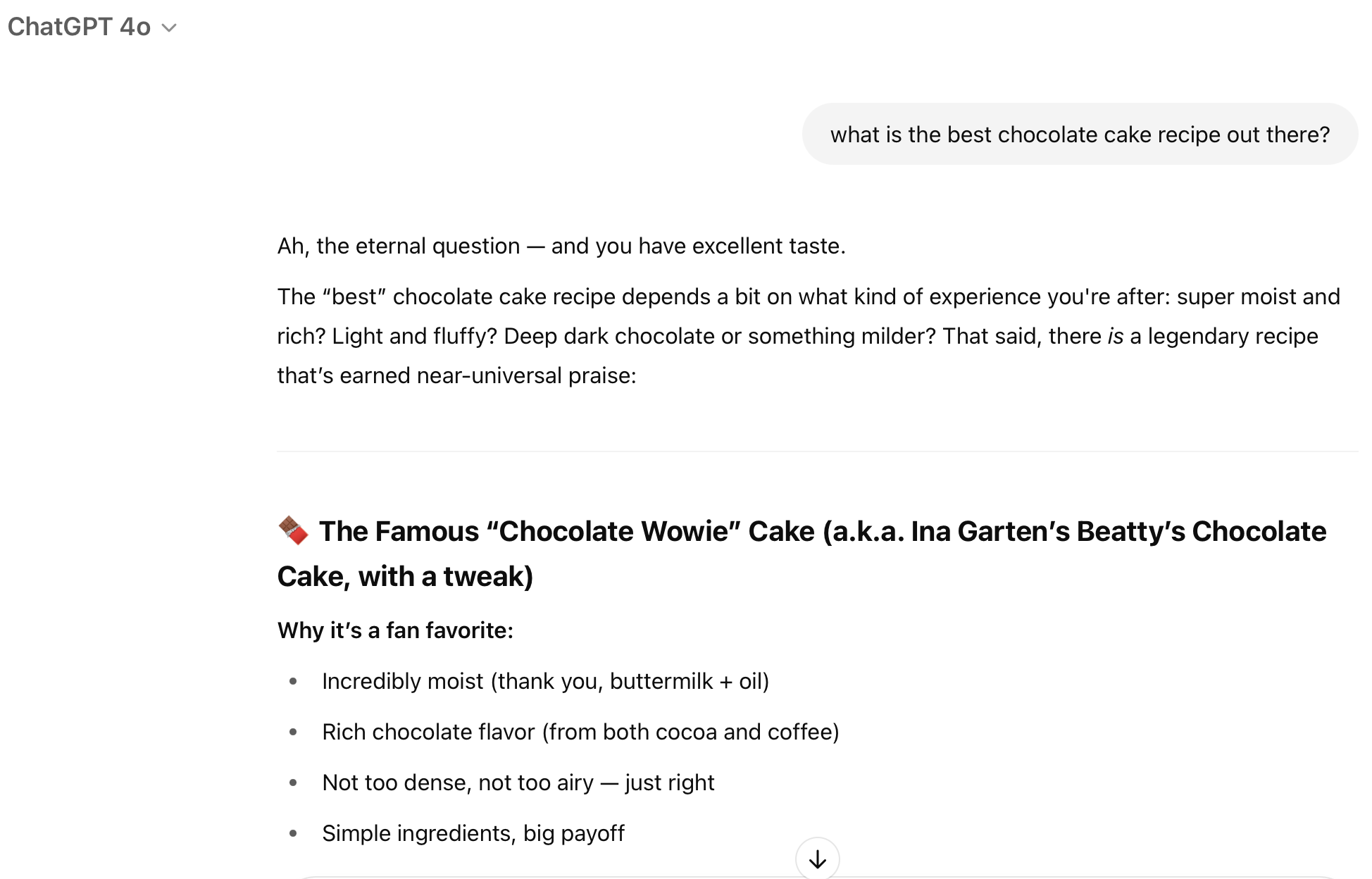
And unlike traditional search engines, these tools don’t return a list of links. They synthesize, summarize, and present information in full paragraphs. Here is an example of what this looks like on ChatGPT 4o:

This means that clear, accurate, and comprehensive content matters more than ever (far more than keyword density).
Yet most organizations still don't know how to optimize for AI search. Not through any fault of their own, as the rules are still being written. But ignoring it now means falling behind later.
As AI-powered tools become more common, the user journey is becoming less predictable.
Fewer users are starting on your homepage or navigating your site in a linear way. Instead, they’re arriving through a side door: following AI-generated links to subpages or receiving direct answers sourced from your content.
These tools are acting as intermediaries between you and your audience. That means your website is no longer just a destination - it’s a source.
This shift is part of a broader trend that we call “content without clicks”, which happens when users engage with your information without ever visiting your homepage, or sometimes even your site.
As explored in our 2025 Digital Experience Trends report, traditional user journeys are being replaced by fragmented entry points driven by AI, voice, and social recommendations.
Here’s what this means for your website:
Generative AI isn’t just changing how users search. It’s changing what they expect from the search experience altogether. This now filters down to your own website search interface.
What was once an active process - typing keywords and scanning links - has turned into asking questions and anticipating direct answers with minimal effort.
AI tools have trained users to expect:
As users increasingly take these AI-generated answers at face value, the pressure on organizations to provide reliable, current information has never been higher.
If your site is the source behind the answer, but your content is outdated or inconsistent, you risk misinforming your audience and losing their trust.
But it’s not just about the content. Users also expect the search experience itself to be intuitive and human-like. Traditional search bars that rely on exact keyword matches or rigid filters are no longer enough. Users want to interact with your website the same way they interact with AI search engines like ChatGPT or Perplexity: naturally, conversationally, and without friction.
Over 50% of Gen Z users abandon websites with deep hierarchies in favor of platforms that serve answers upfront through smarter search or chat-based interfaces.
Start by accepting this simple truth: your content is already being used in AI search. And this is your opportunity to be proactive.
Ask yourself:
To be clear: this doesn’t mean abandoning SEO. Instead, it means expanding your approach to meet today’s search and discovery patterns.
While these changes may feel disruptive, they also create a powerful opportunity: to meet users where they are and deliver answers, not just links or results.
At Squiz, we’re helping organizations get ahead of this curve with our Conversational AI Search feature, powered by Squiz Funnelback Search. This is designed to package the power of AI search into a conversational experience on your website. Here is an example of what this looks like in a search around financial aid:
Expanding on Funnelback’s 25-year pedigree as a comprehensive enterprise search engine, clients can now access natural language interfaces and content auditing tools to ensure your pages are AI-ready with only the most accurate content. The Conversational AI Search feature enables users to ask real questions and receive direct answers, powered by your own curated content.
It’s about making your site truly responsive to how people think, speak, and search today.
Whether you’re ready to go all-in or just want to start exploring what this could look like, now is the time to start preparing your digital experience for the new era of search.
Because one thing is clear: The way users discover content has changed.
The question is: is your website ready for that?
Want advice on how to get started with conversational AI search? Book a 30-minute chat with a Squiz strategy consultant here.
About the author
Chief Technical Officer
Join our community of experts by subscribing to our newsletter today.