Is your content ready to be found by AI?
In this webinar
Search has changed. AI-powered tools are now the first stop for many users looking for answers – and if your content isn't structured, signalled, and optimised for how AI retrieves and surfaces information, it simply won't be found. In this session, we dive deep into what it means to be found in an AI-powered world.
Video: Watch the webinar. Captions and transcript available on playback.
Watch the webinar
Press play to watch the webinar on demand.
Transcript: Watch the webinar
1
00:00:38.300 --> 00:00:47.040
Kat Barrow: Alright, hello everybody. Welcome to today's session, where we're going to be talking about, is your content ready to be found by AI?
2
00:00:47.930 --> 00:01:03.839
Kat Barrow: So, before I jump in, a little bit of housekeeping. My name is Kat, I'm going to be one of your hosts today, and I'm joined by my amazing co-host, Megan, who I'm really looking forward to doing this with, because it's been a little bit of a… been a while since we've done this, hasn't it?
3
00:01:04.150 --> 00:01:05.740
Megan Andrews: It has, yeah.
4
00:01:06.390 --> 00:01:17.960
Kat Barrow: So, we have a really good session ahead for you today. Before we dive into that, just so that you know, there is going to be, a recording available after the session, so we will share that through to your email.
5
00:01:17.960 --> 00:01:33.370
Kat Barrow: If you do have questions, we'd love questions. Please take a minute to put those in the Q&A box, and we will keep an eye on those and answer them at the end of the session. If you have any issues, just head over to the chat. We are monitoring that, and we'll see what we can do, to help you out.
6
00:01:35.000 --> 00:01:53.930
Kat Barrow: So, before we dive into the session, just a little bit of background about Squiz for those of you who might not be working with us currently. So we are an AI-powered suite of products, and we are really designed to help make it really, really easy for you to create great content, to make that content discoverable and easy to find.
7
00:01:53.930 --> 00:02:06.250
Kat Barrow: And ultimately to make it easy to act on that content as well. And in today's session, we're going to be talking specifically about the second point there, which is how do we make your content really, really easy to find?
8
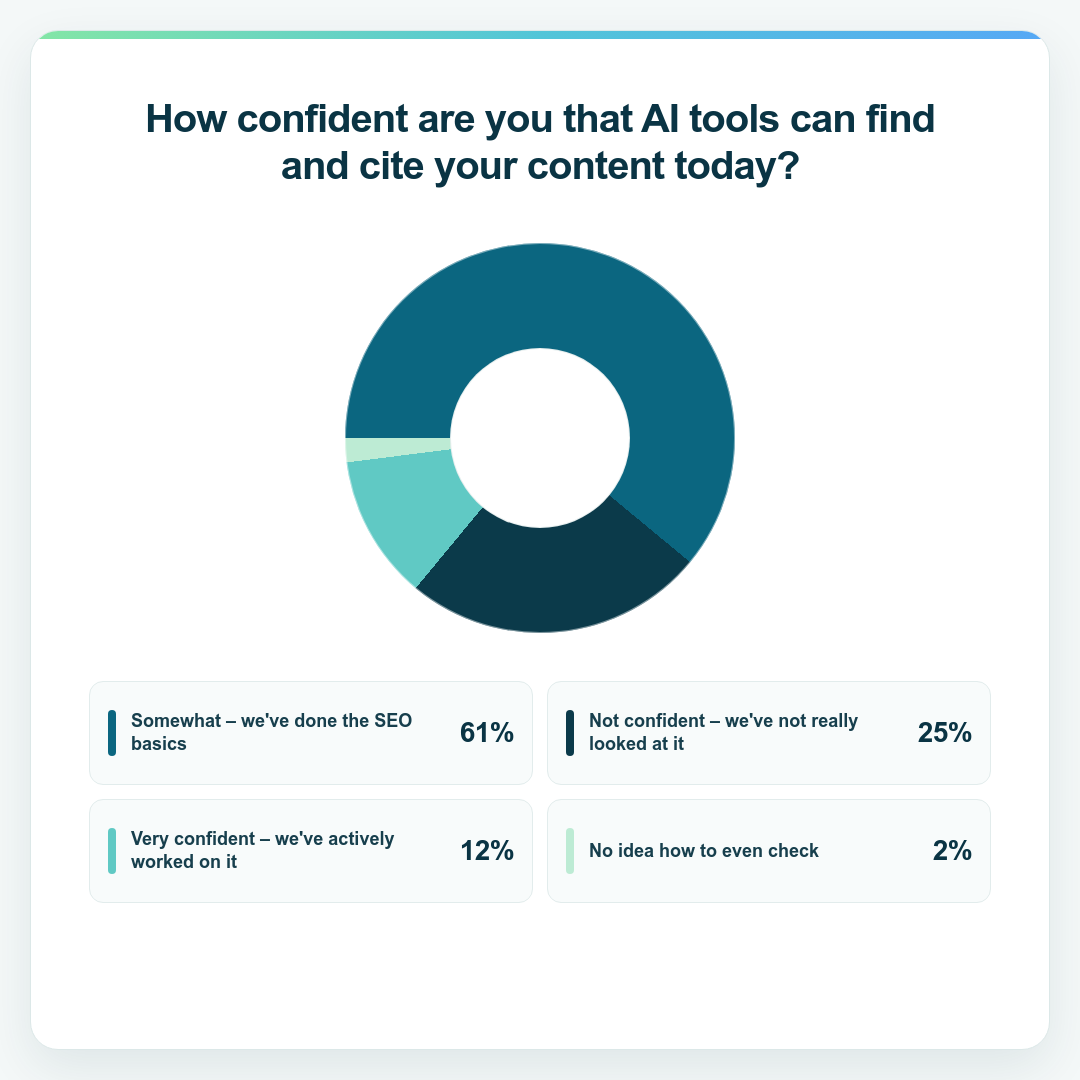
00:02:07.550 --> 00:02:12.570
Kat Barrow: Now, the goal for today's session is to really help you build a mental model around
9
00:02:12.570 --> 00:02:36.689
Kat Barrow: how AI is actually finding your content and understanding your content, and making decisions about whether to cite it or not. So we're going to talk a little bit about the background and what's happening behind the scenes from an AI perspective, and then we're going to talk about the four signals that we see really moving the needle in terms of the discoverability of your content when it comes to AI environments like ChatGPT or
10
00:02:36.690 --> 00:02:38.100
Kat Barrow: Claude or Gemini.
11
00:02:38.290 --> 00:02:48.690
Kat Barrow: Lastly, we're going to talk a little bit about an auditing approach that you can take to really understand where your content is at currently, and how you can get it ready for AI.
12
00:02:49.160 --> 00:02:53.660
Kat Barrow: So, without further ado, I'm going to hand over to Megan, to kick us off.
13
00:02:55.770 --> 00:03:03.229
Megan Andrews: Awesome. Yeah, it's interesting, right? If you've been in the content world, and you take pride in your site and the content you've been building.
14
00:03:03.230 --> 00:03:26.289
Megan Andrews: It is a new era, it's a new world. It's entirely possible that you've got good content on your site, but it might not be findable the same way we've been used to, with the practices and everything we've gotten used to with SEO. So, we're gonna talk through how that looks currently. So, if we think about a user and how they're gonna go search
15
00:03:26.290 --> 00:03:29.139
Megan Andrews: the internet today.
16
00:03:29.240 --> 00:03:33.740
Megan Andrews: That's all good. It's a little different, right? So we used to be used to this,
17
00:03:33.810 --> 00:03:42.879
Megan Andrews: this scenario on the left, traditional SEO. You're gonna pop up, maybe your browser, type it into Google, and you're gonna get that standard set of results and blue links.
18
00:03:42.880 --> 00:03:56.869
Megan Andrews: So it's up to you, to find, you know, choose your own adventure through those links, and hopefully you've gotten the right one, right? And if you're trying to get listed there, hopefully you're not on the next page of results, because you know that first page and those top results are so important.
19
00:03:56.950 --> 00:04:19.190
Megan Andrews: So we've gotten used to that model, but it's really different now. Whether you're getting a Gemini summary, like we see on the right, or you're already dropped into the interface of something like ChatGPT or Claude, any of those, it's all very summary and conversational-based, right? You're not digging through with keywords and then trying to find links.
20
00:04:19.200 --> 00:04:32.500
Megan Andrews: you're going to get a paragraph in natural language, it's going to give you an answer. And you're hoping, as both a user and wherever that's content coming from, that that answer is correct, and it's going to send you to the right place.
21
00:04:32.540 --> 00:04:40.240
Megan Andrews: So, very different sort of, like, dialogue right now, instead of, clicking… clicking different links and hoping for the best.
22
00:04:40.900 --> 00:04:56.220
Megan Andrews: There's a lot going on behind the scenes when a search goes into a large language model, and it's helpful to break this down so you can start to understand better ways to keep surfacing your content, for those results.
23
00:04:56.220 --> 00:05:09.159
Megan Andrews: Now, that user's gonna ask a single question, right? And then there's this iceberg analogy that can be helpful, because it's one question at the top, but really, what's happening in the back end is a set of questions, of sub-queries.
24
00:05:09.160 --> 00:05:20.740
Megan Andrews: It's called Subquery Fanout, where the large language model is asking itself the same type of question lots of different ways, and trying to retrieve content that's relevant across all the dimensions of that question.
25
00:05:21.020 --> 00:05:32.989
Megan Andrews: So, as it's retrieving those sources, it's gonna go to the sources that are really clear and trustworthy. So a lot of those signals that we're gonna be talking about, they're gonna help you surface to the top.
26
00:05:33.290 --> 00:05:56.280
Megan Andrews: And then it's going to take all of those, take a look at them, almost like reading an article on its own, and summarize what it sees in that little succinct answer, right? So, if the content that you're hoping will get there doesn't get surfaced because it's not clear, or not trustworthy to the large language model, and it doesn't get surfaced, then it's not going to be part of the set of results or the answer that the user sees.
27
00:05:56.600 --> 00:06:00.639
Megan Andrews: So there's a lot of pieces to figure out along the way, right?
28
00:06:01.060 --> 00:06:02.570
Kat Barrow: Yep, absolutely.
29
00:06:04.500 --> 00:06:19.739
Megan Andrews: So here we go. This is the test, our first question for all of you, and don't feel bad if you aren't as confident, but how confident are you in your content right now? And that AI tools can find and cite your content today.
30
00:06:21.320 --> 00:06:31.080
Megan Andrews: Kat, I know you talk to a lot of customers and clients across lots of different things. Generally, how are people feeling right now? Are they confident? What are you seeing out there?
31
00:06:31.570 --> 00:06:34.560
Kat Barrow: I think people are…
32
00:06:34.590 --> 00:06:59.539
Kat Barrow: probably cautiously optimistic, but certainly not necessarily confident across the board. Part of that is this is just such a new and emerging space, right? We're learning daily around what really moves the dial, what makes a difference from a content visibility perspective, and there is also a lot of, missing visibility. You know, at the moment with SEO, you've got a lot of insight and information in terms of how your content is performing from an SEO perspective.
33
00:06:59.540 --> 00:07:12.190
Kat Barrow: of where you're ranking on Google, or whatever the case may be. Because this is so new and emerging, it feels like there's a real gap in visibility there, and that means that people don't have that sort of strong sense of confidence
34
00:07:12.190 --> 00:07:15.670
Kat Barrow: That they are being cited, and that they are, performing well.
35
00:07:16.560 --> 00:07:22.690
Megan Andrews: Yeah, great point. We'll see what people have come up with here. This is always my favorite part.
36
00:07:25.810 --> 00:07:29.220
Megan Andrews: Do we have those results? Yes. Okay.
37
00:07:29.780 --> 00:07:30.910
Kat Barrow: Some more. All right.
38
00:07:31.640 --> 00:07:43.720
Megan Andrews: Yeah, 61%, somewhat. That's… that's great. I think that probably lands with what you were saying. Cautiously optimistic. You've done some good SEO principles, but what's the extra gap you're not looking at, right?
39
00:07:43.720 --> 00:07:59.929
Kat Barrow: Yeah, yeah, absolutely, and I think the understanding the difference between SEO and GEO as well, like, what do we need to do in addition to our standard SEO practices, to really adapt to this new environment that we're in? So yeah, that absolutely tracks with what I'm seeing across the board.
40
00:08:00.260 --> 00:08:01.010
Kat Barrow: What about you?
41
00:08:01.010 --> 00:08:01.550
Megan Andrews: Great.
42
00:08:02.550 --> 00:08:20.129
Megan Andrews: Same thing. I'm… yeah, I'm U.S.-based, but we all work across, you know, different customers in different regions and very similar. So it is really a question of, like, how are you equipping your team to be familiar and have these frameworks, right? And that's why we're hopefully giving you guys some good tidbits today to take away with you.
43
00:08:20.360 --> 00:08:33.470
Kat Barrow: Yeah, absolutely. So, on that note, what we wanted to talk about next is what's happening behind the scenes in terms of the journey that your content actually has to go through in order to be cited.
44
00:08:33.470 --> 00:08:42.980
Kat Barrow: So, you know, we talk about this a little bit in terms of a gauntlet that your content has to run. I don't know if any of you ever watched that TV show, Gladiators,
45
00:08:42.980 --> 00:09:06.869
Kat Barrow: But, you know, if you think about the gauntlet, right, it was a whole bunch of different obstacles, and if you failed at any of them, you didn't get to the end and hit the buzzer, and you didn't win. I went to a live taping of that when I was a kid, so it's very… deeply ingrained in my brain. But so this is the gauntlet that your content has to run, right? And if it fails at any of these hurdles, it's not going to be cited. So the first one is really talking about
46
00:09:06.870 --> 00:09:27.339
Kat Barrow: Can the AI even access your content? Because if it can't access it, none of the rest of this is even relevant. So that's looking at, is your content locked behind a sign-in? Is it locked behind a download? Or is it being… is the AI crawler being blocked, for example? All of those are going to prevent your content from even being considered in the first place.
47
00:09:27.810 --> 00:09:52.770
Kat Barrow: If you pass that crawl stage, the next part is passing. So, can the AI actually analyze your content effectively? And it's important here that your content is in a structure and a format that the AI can understand. So, good, clean HTML, you want to avoid having, you know, text built into images, you want to avoid things like PDFs, for example. All of that is going to make it much easier.
48
00:09:52.770 --> 00:09:58.689
Kat Barrow: for the AI to actually analyze your content, which is critical for the remaining stages of the gauntlet.
49
00:09:58.690 --> 00:09:59.900
Kat Barrow: From there.
50
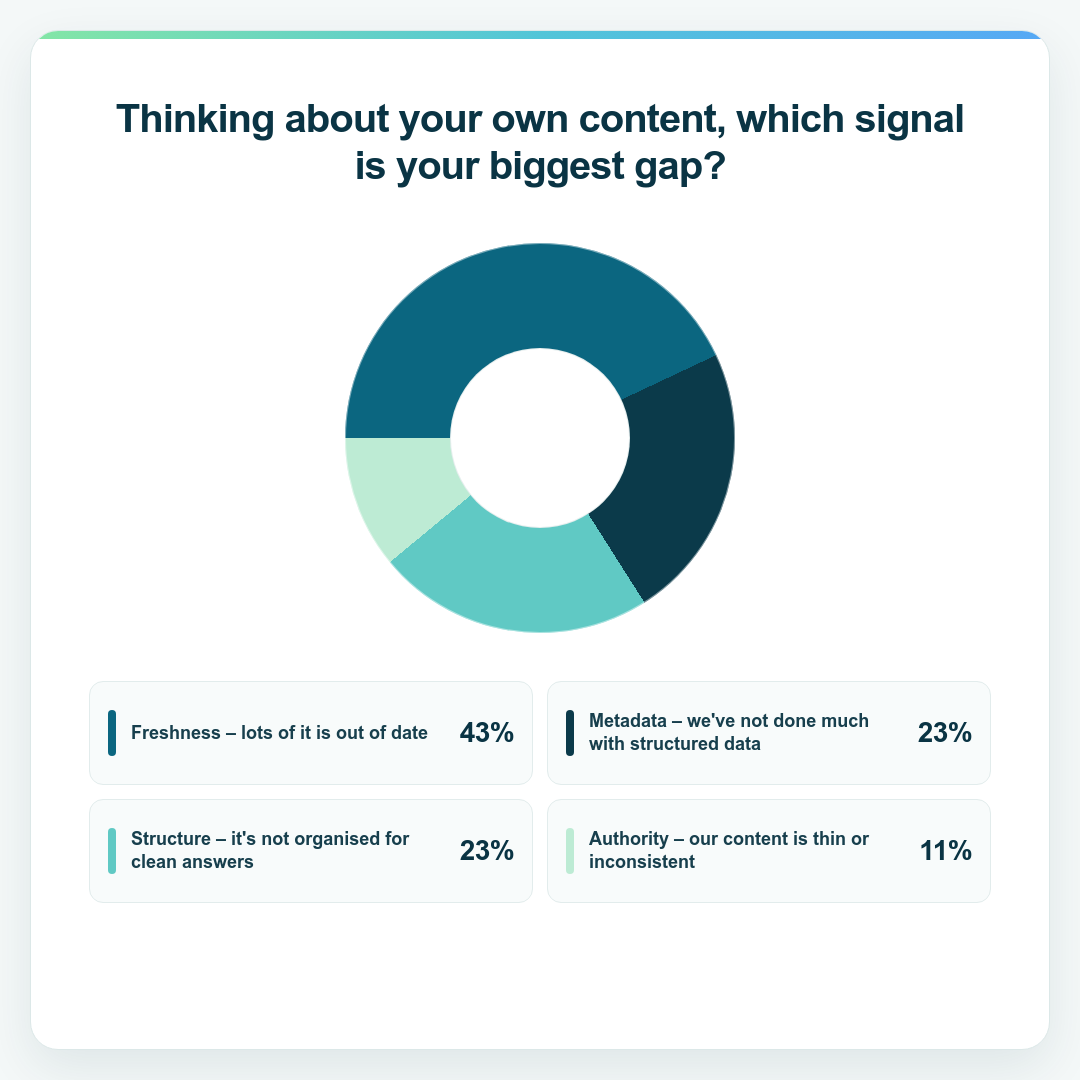
00:09:59.900 --> 00:10:16.290
Kat Barrow: It's analyzed it, we're good to go, now we need to be able to understand it. So this is really looking at how clear is this content? Is it a nice, clear, well-structured piece of content around a single topic? Is it obvious what it's about, and is it easy for the AI to make sense of it?
51
00:10:16.600 --> 00:10:34.159
Kat Barrow: Thirdly, we're looking at trust. So, is this credible? So, AI wants to make sure that it's going to give you a good answer. In order to do that, it wants to understand, is this information that I'm looking at right now coming from a credible source? Is there a reason that I should be trusting this content over someone else's content?
52
00:10:34.510 --> 00:10:51.640
Kat Barrow: And then finally, if you've passed all of those four stages, that's when you're going to be cited, if your answer is better than all the other answers. So, we often talk about AI still being a very competitive environment, right? In the same way that SEO has been a competitive environment in the past.
53
00:10:51.640 --> 00:11:02.750
Kat Barrow: AI is a competitive environment, and it's only the content that runs this entire gauntlet and hits the buzzer at the end that's going to be cited, and therefore part of the conversation.
54
00:11:03.730 --> 00:11:19.550
Kat Barrow: So, the reality is that all of your content is out there running that gauntlet as we speak. So, as we sit here right now, regardless of whether you've done a heap of GEO work or no GEO work, your content is out there running the gauntlet over and over.
55
00:11:19.550 --> 00:11:32.730
Kat Barrow: And chances are, there may be some hurdles that it's tripping over. The good news is that you're not alone in that. There are gaps that we are seeing across all of our customers globally that come up again and again and again.
56
00:11:33.010 --> 00:11:35.329
Kat Barrow: And I've got a few of them on screen here.
57
00:11:35.330 --> 00:11:58.859
Kat Barrow: The first one, which I see really, really frequently, is content locked in PDFs. Particularly with some of our government customers, for example, or local council customers, where they've got policy information in PDFs, or they've got forms in PDFs. They've got guides on how to apply for passports, or whatever the case may be, all really valuable, valuable, and actionable content, locked away in PDF format.
58
00:11:58.860 --> 00:12:05.550
Kat Barrow: Which, if you remember, in our gauntlet, is that second stage of can the AI actually pass your content?
59
00:12:05.550 --> 00:12:15.060
Kat Barrow: So this is a gap that we see really frequently. The second one, Megan, I know we were talking about this the other day, this is one that you come across a lot, the sort of vague and clever titles.
60
00:12:15.850 --> 00:12:30.439
Megan Andrews: Oh yeah, definitely. And I see this a lot with more of our higher education, you know, universities, where they're, look, I've got a brand and marketing background, you know, and all of that's structured around content as well, but sometimes you get into those places where you're making something sound a little…
61
00:12:30.440 --> 00:12:50.880
Megan Andrews: more exciting or glitzy, and it's not very specific. So when you get into that either marketing language or just, even just a heading that doesn't quite connect to the supporting content around it, that's a great opportunity for a large language model to either skip it or get confused. So this is one that I do see come up quite a bit, right?
62
00:12:51.060 --> 00:12:59.719
Kat Barrow: Yeah, yeah, absolutely. Some of the other ones, not having enough structured data, so it's really hard for the AI to pass and understand your content.
63
00:12:59.720 --> 00:13:11.120
Kat Barrow: Having duplicate or contradicting pages, this is one that happens a lot, especially for our larger customers, whether that's government or higher education or professional services who have a lot of content.
64
00:13:11.120 --> 00:13:25.120
Kat Barrow: Chances are, buried in there somewhere, are some contradictions where your policies have changed, or the information has changed. As soon as AI sees contradicting pages, that starts to affect your credibility and trustworthiness, and so it pushes you down that list.
65
00:13:25.280 --> 00:13:48.970
Kat Barrow: Stale figures, dead links, you know, eroding trust, as we have there. And then the last one, again, kind of comes back to the point I was making earlier, is there's a real gap in visibility, and the ability to see at scale how your content is performing, to identify all of these gaps at scale, is really, really tricky, particularly if you've got tens of thousands or even hundreds of thousands of pages of content.
66
00:13:50.460 --> 00:14:10.160
Kat Barrow: So, what we want to talk about today is, some of the insights that we're seeing in terms of what does move the needle from a GEO perspective. What does help your content be more discoverable by AI? And there are four key signals that we're going to talk to, being structure, metadata, authority, and freshness.
67
00:14:10.160 --> 00:14:15.729
Kat Barrow: And so, to kick us off, Megan, did you want to take us through some insights on structure and what that signal looks like?
68
00:14:16.540 --> 00:14:33.079
Megan Andrews: Yes, definitely. I still have that image of the gauntlet, so I'm, you know, competitive spirit here, let's think through what these are. And it is good to break it down, you know, sometimes there are clear owners over these areas as well. I often think of really strong content teams where sometimes
69
00:14:33.230 --> 00:14:56.630
Megan Andrews: this… there's gonna be a clear person to own this area of structure, and then there'll be someone else who's really gonna own the metadata piece, or maybe some of the more technical pieces. So, maybe start thinking about that as you look at this with your own teams. But first, structure. So, this… this is very simply, can AI even get the clean answer that it needs? So, this is where I put on maybe a marketer's hat, and also, like, a journalist. If you're writing an article.
70
00:14:56.630 --> 00:15:01.610
Megan Andrews: And it's front and center, what does it need to… what are the elements it needs to have? So…
71
00:15:01.610 --> 00:15:26.529
Megan Andrews: this one clear topic per page. Don't try to consolidate a bunch of topics that don't make sense all in one place together. And then answer first, or don't bury the lead, right? Answer first writing. You know, summaries with really clear points up top, are really helpful, not just for large language models, but for humans. What am I getting into here? What should I expect on this page? Don't bury the most important information further down.
72
00:15:26.780 --> 00:15:37.850
Megan Andrews: And a little bit, we talked about this with those, you know, don't get too clever with your headings. You know, a great example also, even not getting clever, but if you were to just say something like, renewals.
73
00:15:37.850 --> 00:15:51.339
Megan Andrews: well, what kind of renewals? Is it a driver's license renewal? You know, is it your tuition fees and renewals? Sometimes really simple language fixes can help with connecting content and surfacing it well.
74
00:15:51.380 --> 00:16:11.729
Megan Andrews: Semantic HTML, so, you know, these are some of the little detailed things that we can often skip over if we're not careful, making sure our lists and tables, are accurate and structured the correct way, and that you're not, you know, embedding a bunch of important information layered in an image that can't even be readable by screen readers or large language models.
75
00:16:11.730 --> 00:16:20.559
Megan Andrews: So, there's a question that came in that I think we might as well just jump to here. What are your thoughts on, using actual questions for headers?
76
00:16:20.560 --> 00:16:41.930
Megan Andrews: Sure. You know, that's a lot like an FAQ. There's… especially right as we move into these natural language models, that's sort of a format they can tend to prefer. I think there's… and I know, Kat, if you have ideas about that too, but I don't see any reason, if it's a natural fit for asking a question, why you might use that in your structure, in your pages, but what are your thoughts?
77
00:16:41.930 --> 00:17:04.500
Kat Barrow: Yeah, I mean, I think that's a great format, and you know, to your point earlier, a lot of these improvements are going to improve the experience for end users as well as AI. I think it's always really important that we balance those two audiences. At some point in the future, we're probably going to have, you know, data that is just being created for AI and not even surfaced through our human-facing experiences, but at the moment.
78
00:17:04.500 --> 00:17:23.830
Kat Barrow: We have to balance both of those. So yes, love the idea of having, you know, your headings are questions, but also just think about, you know, if you've got a page of, like, 40 headings and they're all questions, what's that experience going to be like for an actual human? Reading it might be a little bit, a little bit clunky, so I think it's about getting that right, sort of, balance.
79
00:17:25.089 --> 00:17:50.079
Megan Andrews: That's great, because Isabel just had a question that was directly related to that, bouncing AI-friendly question format headings and user-friendly, yeah, non-question. So it's, it's a… keep the human in the loop, including your content team. You are there for a reason. People will still be browsing your site. There are also some other things we'll talk about in a couple different, slides from here of just technical things you can do on the back end that are going to be readable and really helpful and clear for large language models that
80
00:17:50.079 --> 00:17:54.069
Megan Andrews: won't even be surfaced or visible for users. So, you can always keep that in mind.
81
00:17:54.069 --> 00:17:57.319
Megan Andrews: The last point here is just consistent terminology.
82
00:17:57.409 --> 00:18:11.239
Megan Andrews: saying the same thing. I wouldn't say necessarily the same way, but a similar way. So you, you know, you can imagine you've created a really great paragraph, and if you copied and pasted it across your entire website, sure, that's great for consistency, but
83
00:18:11.239 --> 00:18:16.749
Megan Andrews: it might feel a little bit stiff from a user perspective. So I think…
84
00:18:16.749 --> 00:18:31.759
Megan Andrews: doing things, with language that is all consistent, when you're answering questions, is great for humans and, doesn't confuse them, just like it would in large language models. So, saying, similar things a similar way.
85
00:18:33.879 --> 00:18:37.279
Megan Andrews: I think the next one, too… yep, very related.
86
00:18:37.279 --> 00:18:58.809
Megan Andrews: So this is where we get to make sure we're crossing our T's and dotting our I's. That's what I think of with our metadata. Sometimes we have, you know, our CMS will help us and do things on the back end that make things really easy, and sometimes we just need to make sure, go over this in a way, as an editor, where we know those things are in place. Missing metadata haunts all of us at times.
87
00:18:58.809 --> 00:19:13.429
Megan Andrews: So just making sure you've got those descriptive page titles and summaries, so it's easily understood from screen readers and humans, what might be happening on that page if it's pulled into a search result.
88
00:19:13.429 --> 00:19:30.469
Megan Andrews: This is an area I think people can learn a little bit more with schema.org markup. So this is what I was referring to earlier, is there are things you can do on the backend that will tell a large language model what exactly is on that page that the user won't see.
89
00:19:30.469 --> 00:19:38.439
Megan Andrews: So it's labeling in a specific way, and using that structured data to your advantage, where you're not going to muck up the visual of the page itself.
90
00:19:38.739 --> 00:19:42.549
Megan Andrews: And then, you know, alt text on images.
91
00:19:42.559 --> 00:19:55.089
Megan Andrews: you know, a lot of CMSs are coming up with, you know, suggested alt text. I know everyone's thinking of this as a best practice, but just making sure that's meaningful enough, the description itself is meaningful enough.
92
00:19:55.089 --> 00:20:10.439
Megan Andrews: Those URLs, you know, they've got to have enough information to be unique and descriptive, without getting too long, so there is a sweet spot, and it is something still to pay attention to, and it's certainly something that large language models will be looking at to get a sense of content as well.
93
00:20:10.669 --> 00:20:20.789
Megan Andrews: And content types, you know, are you really clear on what they are? There's a time and a place for an FAQ. You don't want an entire website full of FAQ pages, right? So…
94
00:20:20.789 --> 00:20:31.899
Megan Andrews: Know when to use them, and try to leverage actual questions that you know are coming up. Take a look at your search data, understand what a lot of your users are looking for, and build content around that.
95
00:20:31.899 --> 00:20:43.799
Megan Andrews: And just be really explicit about what type of content is on each page. Again, using either markup on the back end, but also, you know, with the way you're writing it and your headings and things on the front end.
96
00:20:44.140 --> 00:20:44.800
Kat Barrow: Hmm.
97
00:20:44.980 --> 00:21:03.300
Kat Barrow: Awesome. Yeah, and the great thing about that as well is improving that metadata and structure actually improves the experience from an accessibility perspective as well, right? Because your screen readers are using that same structure. So again, you see that sort of balance between, you know, improving the human experience and improving the AI experience. They're really tightly coupled.
98
00:21:04.220 --> 00:21:08.680
Megan Andrews: Yeah, we do talk about that a lot. It's a great point, Kat, and we've actually had a webinar about that, where it is just, like, this.
99
00:21:08.680 --> 00:21:09.040
Kat Barrow: Yeah.
100
00:21:09.040 --> 00:21:14.090
Megan Andrews: bonus, right? The better you are with accessible content, the more helpful it is for large language models, too.
101
00:21:14.300 --> 00:21:15.760
Kat Barrow: Yeah, absolutely.
102
00:21:15.860 --> 00:21:40.400
Kat Barrow: All right, so moving on to signal three is authority, and I did see a question come through from Julie around how does AI know which sources are trustworthy? This is how, so we'll talk about that in a little bit of detail. But this is really, you know, how do we make our content, or how do we create signals in our content that tell AI that this is trustworthy content, that this is reliable and credible content, and you should cite us above
103
00:21:40.590 --> 00:21:58.620
Kat Barrow: other competing sources of information. So the first thing we're looking at is clear authorship and expertise. So, AI wants to be right, like I said earlier. It wants to give you the right answer, right? So, the first thing it's going to look at is who wrote this information, and are they a credible source, for this type of content?
104
00:21:58.640 --> 00:22:09.249
Kat Barrow: The second thing they're going to look at is depth and specificity, which, again, you know, Megan touched on earlier around the titles, but this is looking more broadly. If you think about,
105
00:22:09.380 --> 00:22:31.090
Kat Barrow: say you're a university, and you've got a page that is about campus life, right? If your page says things like, you know, campus life at our university is really great, and it's vibrant, and we're really inclusive, and it's an environment where people can thrive and, like, realize their future potential, great, right? Sounds fantastic, sounds exciting, but…
106
00:22:31.090 --> 00:22:43.319
Kat Barrow: there's no specificity in there, so AI is going to look at that and go, this is not telling me, really, anything, it's just kind of giving me some fluffy words that aren't giving me any real depth or specificity.
107
00:22:43.320 --> 00:22:45.530
Kat Barrow: On the other hand, if you have a page that goes.
108
00:22:45.530 --> 00:23:09.970
Kat Barrow: campus life is great, we're really inclusive. Here is a list of all of our, programs around inclusivity. Here is a list of all of our clubs and societies and how you can join in. Here's some information on the campus facilities and the benefits of being a student here. The more specific you can be, the more authoritative your content is, because it's showing that you have that information and you
109
00:23:09.970 --> 00:23:10.960
Kat Barrow: sharing it.
110
00:23:11.590 --> 00:23:24.069
Kat Barrow: So that is a really, really critical one, particularly if your website does have more of that sort of marketing slant. There can be some of that fluffy content in there, and the more detail we can add, the better.
111
00:23:24.570 --> 00:23:48.950
Kat Barrow: The third thing it's looking at is consistency, and again, we did touch on this a little bit earlier, but really making sure that you have the same information across your site, that you're going through and auditing and tidying up old content and removing, you know, out-of-date information, because the minute that it encounters something where it's got two conflicting pieces of information, the AI doesn't necessarily have a way to decide which of those is correct and which one isn't.
112
00:23:48.950 --> 00:23:52.790
Kat Barrow: So it's going to just discount that information and move on to a different source.
113
00:23:53.780 --> 00:24:00.219
Kat Barrow: The fourth one is corroboration, so looking at whether this has been cited and referenced and linked to from other places.
114
00:24:00.260 --> 00:24:05.949
Kat Barrow: while this may sound similar to backlinking from an SEO perspective, it is actually
115
00:24:05.950 --> 00:24:30.250
Kat Barrow: different, and it's different in an important way, because it's looking at the credibility of where it's being cited. It's looking at the context of where it's being cited. So with SEO, you know, there was a tendency to just be like, oh, lots of backlinks to your site is good, you know, that shows that this content is important. AI is going to look at, where is this being cited? Is it just being cited in a random list of links somewhere, or is it being cited in a really detailed Reddit post where they're talking about the content
116
00:24:30.250 --> 00:24:42.720
Kat Barrow: and showing that this is an authoritative source. So, you know, making sure that your content is good enough and quality enough that people are citing it and sharing it is going to drive up, that authority.
117
00:24:43.130 --> 00:24:48.270
Kat Barrow: And then the last thing is a single source of truth per topic. So again, this is really about
118
00:24:48.270 --> 00:25:04.779
Kat Barrow: getting on top of your content, understanding the full breadth and scope of the content that you have, and consolidating where you can. So rather than having 25 pages that talk to the same topic from slightly different angles, can you consolidate that information into one really great page?
119
00:25:04.780 --> 00:25:15.949
Kat Barrow: And there's many benefits to that. I mean, it's gonna make, you know, your content more authoritative, but it's also gonna make it easier for you to maintain and keep up to date. You know, a lot of our customers deal with content sprawl.
120
00:25:15.950 --> 00:25:23.489
Kat Barrow: Where they just have tens of thousands of pages all over the place. They don't really have a good understanding of what information is actually on those pages.
121
00:25:23.490 --> 00:25:41.339
Kat Barrow: And it makes it really difficult to implement all of these signals that we're talking about when you've got tens of thousands of pages. So, looking at consolidating that information gives you the opportunity to create an authoritative source of information, but also makes it easier to keep that up-to-date and keep it high quality moving forward.
122
00:25:42.800 --> 00:25:55.939
Megan Andrews: Yeah, we have some questions that are related to authority, if we wanted to stop there for a moment, because this is interesting. I'll, the first one was just around, who wrote this? What does AI use to answer this question?
123
00:25:55.940 --> 00:26:14.310
Megan Andrews: There's a couple ways to think about that, in terms of actually having an author field in your metadata and, like, making that really clear can sometimes be part of that. But sometimes it's just the domain itself, understanding where the information came from. Do you have other ideas around how AI looks at that question, like, who wrote this material?
124
00:26:14.520 --> 00:26:26.029
Kat Barrow: Yeah, I mean, I think it comes into that sort of, sub-questions that the AI is asking as well, you know? So if you go and look into how AI actually, goes out and finds information.
125
00:26:26.030 --> 00:26:46.569
Kat Barrow: it's gonna go, where can I find this information? It's gonna ask questions 62 different ways. It's gonna find a source, and then it's gonna go, who is this? What is this organization? Is this organization relevant to the question that's been asked? So there's a, almost exponential number of questions that it asks itself. It does a full research project, really, in, like, a very brief period of time.
126
00:26:46.570 --> 00:27:03.969
Kat Barrow: And as a part of that, it's gonna go, who wrote this? Oh, it comes from this particular university. Is this university associated with this course that this person is asking about? And so on and so forth. And so it fans out, and it does that really deep kind of analysis to understand if this is a credible source of information.
127
00:27:04.930 --> 00:27:13.809
Megan Andrews: Right, and this is related, so Scott is asking if there's a question… let's say a user's asking a question on a university. They're asking, you know, when is…
128
00:27:13.810 --> 00:27:32.369
Megan Andrews: When is the admissions deadline for this specific university? Would AI give more weight to, option one, a website that does all these signals really well, but it's like a general website? Or, option two, the university themselves, even if they do the signals a little less well, or quite badly?
129
00:27:32.460 --> 00:27:34.329
Megan Andrews: What are your thoughts on that, Kat?
130
00:27:34.330 --> 00:27:45.599
Kat Barrow: That is a great question. My thoughts on that are there's probably no definitive answer to that. I think it's going to be sort of somewhat of a case-by-case basis.
131
00:27:45.600 --> 00:28:00.839
Kat Barrow: I do think it would upweight… if you're asking a question about, you know, when is the open day for Monash Law, for example, I do think it would upweight the credibility of an answer directly from the source, that you're asking about.
132
00:28:00.840 --> 00:28:13.960
Kat Barrow: However, if your content was really bad, and there was a lot of conflicting information, and was finding it hard to kind of just find the right answer, that would knock that scoring down, and you might end up in a situation where that content is coming from somewhere else.
133
00:28:13.960 --> 00:28:24.360
Kat Barrow: And this is a real risk, and something that we talk about a lot, particularly with higher education, and particularly with government as well. You know, we have anecdotal,
134
00:28:24.400 --> 00:28:48.069
Kat Barrow: stories from some of our government customers, where people are querying parking fines using AI-generated responses that are referencing some random website that isn't the official government website, and so they're trying to, you know, query parking fines on grounds that don't exist, because they're getting them from the wrong place. So it is a very real risk that that could happen, but I do think there would definitely be an upweighting,
135
00:28:48.140 --> 00:28:54.360
Kat Barrow: for, you know, this is from the horse's mouth, so to speak. I don't know what your thoughts are on that, Megan. Have you come across this before?
136
00:28:55.110 --> 00:29:03.460
Megan Andrews: Yeah, well, I agree with you, and I think that reinforces the importance of auditing your site. So, here's how I think about it. If…
137
00:29:03.780 --> 00:29:13.620
Megan Andrews: large language models are really only running because they have websites to, get information from. You are the data source. So…
138
00:29:13.740 --> 00:29:25.029
Megan Andrews: If you have the domain already, make sure you take advantage of that, that you're reinforcing your authority by providing content that's not ambiguous.
139
00:29:25.180 --> 00:29:37.539
Megan Andrews: that is organized well. To your point, it will skip over it. Just, you know, it'll drop you points. So, I think you're right. Option 2 wins, the university himself, if the content's organized well.
140
00:29:37.540 --> 00:29:39.210
Kat Barrow: Yep, yep, I agree.
141
00:29:40.880 --> 00:29:51.459
Kat Barrow: Cool, alright, I love these questions, keep them coming. So the fourth signal is freshness. So, you know, once your content has made it through all of these, these other steps.
142
00:29:51.620 --> 00:30:16.390
Kat Barrow: what the AI is finally going to look at, say it's got two equally great answers, they seem equally credible, they've been equally well-structured, the metadata is equal, all things are equal, what it's finally going to look at is which of these is more recent. So, while, you know, freshness doesn't mean that you should be out there just creating content, because as we've talked about, you want to really control your content sprawl, you don't want to become
143
00:30:16.390 --> 00:30:25.349
Kat Barrow: creating heaps and heaps of new content, you do want to make sure that you're keeping your content up to date, and that you are making sure that you've got the newest, most relevant information available.
144
00:30:25.390 --> 00:30:45.730
Kat Barrow: So, yeah, making sure that you've got visible and accurate, last updated date, so it's really clear to the AI when that information was last updated. Making sure that you're just doing good, sort of, hygiene stuff, you haven't got dead links, you haven't got out-of-date figures, or, expire, you know, old dates, or whatever the case may be, those are all removed.
145
00:30:45.810 --> 00:30:51.679
Kat Barrow: And making sure that for your really, really critical pages, you've got a regular review cycle.
146
00:30:51.810 --> 00:30:54.259
Kat Barrow: And I think this is something that's so important.
147
00:30:54.260 --> 00:31:15.260
Kat Barrow: And that we come across a lot is, you know, sometimes it's easier if you've got a short time frame, you need to get a campaign page out, or whatever the case may be. Sometimes it's easier to just create a new one. You're like, oh, we'll just quickly work together something, you know, we'll put it out there, it'd be great, yay. And the reality is that that's how you end up with that proliferation of multiple pages.
148
00:31:15.260 --> 00:31:21.010
Kat Barrow: That are all out of date, that, you know, haven't been updated in ages, and that are all talking about the same topic.
149
00:31:21.010 --> 00:31:37.199
Kat Barrow: And so, you know, it's really… I think the key takeaway with freshness is thinking about your content in terms of it being a long-term asset. How do you keep it up-to-date and keep it optimized, rather than just creating new content every time, you know, the urge arises?
150
00:31:37.200 --> 00:31:55.600
Kat Barrow: And so, by doing that, it means that, again, you've got a much more consolidated approach to your content, so you're not managing hundreds of thousands of pages, and you're also giving that sort of freshness signal, because it's up-to-date, and you feel confident that you've got the right information on there, the AI is going to be confident that that information is correct, too.
151
00:31:57.060 --> 00:32:04.410
Megan Andrews: I have a trick I think of. If you're embarrassed to put the last updated date visibly somewhere on the page, it probably means…
152
00:32:04.540 --> 00:32:07.759
Megan Andrews: You should consider whether you need that page still.
153
00:32:08.170 --> 00:32:09.830
Kat Barrow: I love that.
154
00:32:12.300 --> 00:32:18.450
Kat Barrow: Absolutely, yeah. Cool, alright, so, next we have…
155
00:32:18.480 --> 00:32:36.969
Kat Barrow: Another little poll, so with this one, we're keen to hear, thinking about those four signals that we've just talked through, structure, metadata, authority, and freshness, which of these do you think is your organization's biggest gap? And I'm curious, Megan, to hear, if we're taking bets, what do you think?
156
00:32:37.080 --> 00:32:39.370
Kat Barrow: Might be the biggest one.
157
00:32:40.400 --> 00:32:44.050
Megan Andrews: You know, I have a sense… that…
158
00:32:44.500 --> 00:32:49.760
Megan Andrews: especially in the world of AI, like we spoke about earlier, there's not a real…
159
00:32:49.800 --> 00:33:10.879
Megan Andrews: there's not great visibility right now into authority, right? We kind of know freshness, structure, and metadata, they feel a little bit more controllable. I think authority is a little harder to measure. Like, are we checking all the right boxes? There's a set of best practices, can be a little hard to actually measure out in the wild, so I'm wondering if that's going to come up for folks.
160
00:33:11.300 --> 00:33:13.150
Kat Barrow: Yeah, yeah, absolutely.
161
00:33:13.540 --> 00:33:15.020
Kat Barrow: I think,
162
00:33:15.530 --> 00:33:26.469
Kat Barrow: I'm curious about freshness as well, and I did just see a question come through there around why is it specifically preferable to refresh an existing page versus creating a new one. I suppose
163
00:33:26.470 --> 00:33:40.150
Kat Barrow: to clarify what I meant there, just to make sure that we're all on the same page, so to speak, is, you know, when I talk about not creating new ones, I mean not proliferating your content. So, if you've got an existing page about a topic.
164
00:33:40.150 --> 00:33:58.779
Kat Barrow: rather than just creating more pages on that topic, it's better to update the existing one. That's not to say you couldn't create an entirely new one and retire the old one, if that made sense for whatever it was that you were doing, but also keep in mind that, you know, there are other signals that speak to credibility, like we talked about, you know, citations outside of,
165
00:33:58.820 --> 00:34:19.439
Kat Barrow: you know, your website than being linked to from Reddit, or linked to from other credible sources. And so retiring a page entirely can affect those other signals as well. But yes, you could totally create a new page on that topic, it's just about being deliberate about it and going, okay, I'm creating a new page over here, I'm gonna retire this old one so I don't have duplicate information.
166
00:34:20.239 --> 00:34:34.409
Kat Barrow: Anywho, alright, let's have a look at the poll, and yeah, freshness, interesting. Just nudged out the others, as the leading gap, followed by tie between structure and metadata.
167
00:34:34.739 --> 00:34:39.470
Kat Barrow: Yeah, I mean, that tracks with what I thought was gonna be the case. What about you, Megan?
168
00:34:39.880 --> 00:34:56.680
Megan Andrews: Well, it's the opposite of what I thought, so I guess authority's not in everyone's mind, but no, it's… and there was another question in the chat here, why spec… er, let's see, should we have update dates visible at the front end, for front-end users, or is it sufficient to have those in metadata, structured data? Either way.
169
00:34:56.940 --> 00:35:11.369
Megan Andrews: You know, if you want to list it at the very end of every page, where it's not super visible, or if you just wanted to put it in a back-end view, but there needs to be some indication, for large language models if you want to
170
00:35:11.370 --> 00:35:19.970
Megan Andrews: keep, ensuring that there is this, oh yeah, they pay attention to their content, this isn't been sitting here for 15 years, and it's not relevant, you know, that does matter.
171
00:35:20.830 --> 00:35:22.250
Kat Barrow: Yeah, absolutely.
172
00:35:23.110 --> 00:35:28.610
Kat Barrow: Alright, so Megan, I think this next one is you, talking us through a little bit of an example.
173
00:35:29.200 --> 00:35:34.539
Megan Andrews: Yeah, okay, so let's think about this. If, there's a page you've got.
174
00:35:34.860 --> 00:35:38.640
Megan Andrews: And it's an important one these days, a lot of folks working from home.
175
00:35:38.680 --> 00:35:53.340
Megan Andrews: Are there working from home tax deductions to be had? Plenty of folks might be looking for information about this, and where are they going to look? Well, a lot of them are going to just pull up Google, type something in, and Gemini's gonna go to work for them.
176
00:35:53.340 --> 00:36:05.810
Megan Andrews: So if that were the scenario, if they were to just open the Gemini, chat box, and type this query, here's one way to think about it. You want to make sure your content is getting pulled in, right?
177
00:36:06.010 --> 00:36:29.950
Megan Andrews: So, going back to all these principles we just discussed, something that would be invisible to AI, you might think about the structure of that page. Is some sort of hourly rate that's important to this tax deduction, is that not easily visible? Or is it in a table that's not, structured well, and the content's not legible in that way? Or is it, oof.
178
00:36:29.970 --> 00:36:40.780
Megan Andrews: in a downloadable PDF. That is really what usually gets people and organizations. It's like, oh, it's so easy to put it all in one PDF, then we can just upload that here, download link here.
179
00:36:41.030 --> 00:36:50.169
Megan Andrews: large language models are going to skip right over that. So if it's important enough to be in a PDF, it should be important enough to be in HTML on your page. Think about it that way.
180
00:36:50.200 --> 00:37:04.209
Megan Andrews: Also, that metadata, if, again, you know, if that rate only exists for a full table of all rates, download this PDF. You know, that's just a missing piece of information. A large language model can't connect those dots.
181
00:37:04.320 --> 00:37:24.220
Megan Andrews: On the authority piece, think about this, you know, that, there's some guidance around this, but maybe there's 3 pages that were created over the last 6 years, and they all say slightly different things, instead of updating one page with the latest policy. That's gonna be a confusing signal, to these
182
00:37:24.220 --> 00:37:28.839
Megan Andrews: To AI, and it's not gonna know which one to reference, so it probably won't at all.
183
00:37:28.840 --> 00:37:47.109
Megan Andrews: And then that freshness date, you know, let's say you did do your work on this, but you haven't looked at it in 2 years, and so there could be a question around whether it's still relevant, if that policy's still relevant. It's always good for the most important, especially for high-traffic pages, right?
184
00:37:47.110 --> 00:37:55.140
Megan Andrews: Go back in, it's kind of… think of it as… it has to be as fun as the, like, 10 best restaurants of 2025, where it's like, you know people are coming to look.
185
00:37:55.390 --> 00:38:03.080
Megan Andrews: So if they're coming and the eyeballs are there, have a practice in place where you're updating that and you're publishing it with a new, fresh date every year.
186
00:38:03.360 --> 00:38:11.589
Megan Andrews: So that's sort of the invisible AI. I mean, Kat, do you want to walk us through what that might look like after, if we were to do things a little bit more optimized?
187
00:38:12.230 --> 00:38:35.669
Kat Barrow: Yeah, sure. So, you know, in our ideal future state, you know, where we are being surfaced and we are being cited in those responses, from a structured perspective, we've got our answer-first summary at the top, so, you know, as Megan was talking about earlier, this principle you can take from journalism around, you know, the upside-down pyramid, if you're familiar with that, but, like, starting with all the facts at the beginning, so the AI
188
00:38:35.670 --> 00:38:43.430
Kat Barrow: the very first thing it sees is the answer that it needs, essentially. And clear question-led headings, or writing your questions as headings, I mean.
189
00:38:43.540 --> 00:38:47.129
Kat Barrow: No? Writing your headings as questions is what I meant there.
190
00:38:47.270 --> 00:38:48.030
Megan Andrews: There you go.
191
00:38:48.030 --> 00:39:06.549
Kat Barrow: As we were talking about earlier, so that makes a big difference from a structure perspective. From a metadata perspective, having a really clear, specific title, having an FAQ schema added in your structure of your code, which specifically tells the AI, hey, look over here, these are all the FAQs that you're looking for.
192
00:39:06.550 --> 00:39:11.970
Kat Barrow: And having your rate in readable HTML as opposed to locked away in your downloadable PDF.
193
00:39:12.320 --> 00:39:25.220
Kat Barrow: From an authority perspective, having one definitive authoritative page, and then just having all the other pages retired and redirecting towards that one means that you've got that one single source of truth.
194
00:39:25.270 --> 00:39:38.540
Kat Barrow: And lastly, having your clear last updated date, your rate is correct, and you've got a clear cycle of review as well, and that is so critically important, and we'll touch a bit on it, later on as well, but…
195
00:39:38.540 --> 00:39:55.650
Kat Barrow: this idea of, you know, what are your BAU processes that you have in place around your content? Because more than ever, being on top of your content and having a clear cycle of reviewing and updating it is going to be critical to how you perform in this new world that we're in.
196
00:39:58.900 --> 00:40:14.019
Megan Andrews: So, there was a question that came in. Is AI just really looking at a date? What's stopping people from just updating the date and not the content? Nothing is stopping people from just updating the date and not the content. But it does show that you have some system in place where you are
197
00:40:14.330 --> 00:40:30.110
Megan Andrews: actively auditing and keeping this content up to date. So, it might be that you have evergreen pages that don't change significantly at all year over year. So that's reasonable, but just make sure you go in there, take a look, and republish it, to make sure that freshness signal indicates.
198
00:40:30.610 --> 00:40:32.160
Kat Barrow: Yep, absolutely.
199
00:40:36.390 --> 00:40:42.389
Megan Andrews: How do we audit for AI discoverability, Kat? What would you do if you were sitting down right now and you were in charge of that?
200
00:40:42.880 --> 00:40:48.180
Kat Barrow: I mean, look, there's a few things that we would, look at here, and
201
00:40:48.530 --> 00:40:56.510
Kat Barrow: As I said, you know, one of the big challenges we have is that for a lot of the organizations we're working with, they've got huge, huge, huge amounts of content.
202
00:40:56.510 --> 00:41:20.070
Kat Barrow: So the first thing I would do is prioritize, because you can't possibly go and audit all of your content in one go, it's just not feasible. And so the first thing I'd be doing is looking at what is my highest value page? What are the pages that are core to who I am as an organization? What are the pages that are highest traffic? So, in other words, are high value to the end users who are visiting my site?
203
00:41:20.070 --> 00:41:21.939
Kat Barrow: And I prioritize those first.
204
00:41:23.250 --> 00:41:43.270
Megan Andrews: Yeah, I think that's the most important piece. Put a little strategy around it, right? Before you get into this thing, because it can be overwhelming. So, great point, you know, take a look at those metrics, understand where you want to focus your attention, and then take this framework, right? So you've got some four different signals that you know are really important to scoring with these AI tools.
205
00:41:43.270 --> 00:41:46.900
Megan Andrews: Structure, metadata, authority and freshness.
206
00:41:46.900 --> 00:41:56.689
Megan Andrews: And then you've got to ask some questions. You've got to know, you know, based on searches that you see on your own site, understanding what users are typically asking,
207
00:41:56.690 --> 00:42:06.069
Megan Andrews: you've got to go test it, understand how an AI tool is going to answer it, what information they're going to surface. The big piece then is just understanding where the gaps are.
208
00:42:06.260 --> 00:42:29.389
Megan Andrews: So, why isn't certain information getting to the top? Which signal is it that's lacking there? Is there something easy we can do with our content, or is there a more technical approach we need to take in terms of our page structures and designs and components and that sort of thing? So, I do think this is a great opportunity for technical and content teams to work hand-in-hand, to tackle this together.
209
00:42:29.400 --> 00:42:51.730
Megan Andrews: And then there's, you know, this idea that we've… it's gotta be a continued practice. It's never a check it off the list and we're done. Just like creating a new website, right? Whenever a redesign happens, it's so tempting to just think, ugh, okay, we did the thing, it's a big thing, and now we… we can hang out for a second. It really is just a constant practice, and getting those,
210
00:42:51.730 --> 00:43:03.220
Megan Andrews: those repeatable processes in place for your team, so that you're… you're never getting too far of a gap, right? Of losing that… the… the content and losing your grip on… on what's actually out there on your site.
211
00:43:03.450 --> 00:43:07.450
Kat Barrow: Yeah, absolutely. And also, you know, this is such a new…
212
00:43:07.570 --> 00:43:14.120
Kat Barrow: thing, right? Generative engine optimization is a very new space that we're operating in, and it's changing.
213
00:43:14.120 --> 00:43:38.760
Kat Barrow: daily, if not hourly, right? So that's why, again, it comes back to this having that cycle, because A it means that, you know, you're keeping your content up to date, and you're reviewing it, but also we're learning daily about what those signals are that shift the needle, and what the things are that we should be doing that are best practice. That's very much an emerging space. And so, to fix, you know, so to speak, all of your content now, and then leave it for 6 months is probably
214
00:43:38.760 --> 00:43:46.820
Kat Barrow: not going to be performing at an optimal level 6 months from now, because all of the algorithms and all of the AI kind of technology is changing so frequently.
215
00:43:47.960 --> 00:43:49.880
Megan Andrews: Yep, buckle your seatbelts, right?
216
00:43:51.390 --> 00:43:56.320
Kat Barrow: Yeah, absolutely. So, the last thing we wanted to touch on was, you know.
217
00:43:56.320 --> 00:44:10.169
Kat Barrow: All of this that we've just been talking about, the auditing, the checking your signals, the asking, you know, questions and seeing how your content is performing, the cycle of kind of repeated content optimization, all of that can be done
218
00:44:10.170 --> 00:44:19.520
Kat Barrow: manually, by hand, if you want to. But it's not particularly scalable to do it that way, especially if you have a lot of content.
219
00:44:19.520 --> 00:44:37.670
Kat Barrow: And so what we've been doing at Squiz is thinking about how do we create tooling that is actually going to help you do this at scale? Because most of our customers are fairly large, and they've got a lot of content, and to be able to do this manually, is going to take significant resource and significant time, and it's not going to be particularly efficient.
220
00:44:37.670 --> 00:44:50.940
Kat Barrow: So what we've created is Squiz Content Intelligence, which is a very exciting tool that basically ticks all of those boxes for you. So you can go in and prioritize what content you want to start with. It's going to help you understand
221
00:44:50.940 --> 00:44:55.740
Kat Barrow: What questions people are asking and how your content is actually performing against those questions.
222
00:44:55.740 --> 00:45:20.419
Kat Barrow: And my favorite part is it gives you really clear and actionable next steps. So it doesn't just give you a report that tells you, hey, here's everything that's wrong with your content. It actually goes into the detail of, these are the things that you should improve to make the biggest impact, and this is how you should improve them. So it really, really scales that auditing process for you. It focuses on accessibility, because as we talked about, there's a lot of overlap between
223
00:45:20.420 --> 00:45:22.550
Kat Barrow: accessibility and AI readiness.
224
00:45:22.560 --> 00:45:28.209
Kat Barrow: And then it also looks at how ready is your content, how AI ready is your content.
225
00:45:28.210 --> 00:45:44.450
Kat Barrow: So, for this webinar today, we actually have a really exciting offer, which is that we have a one-month free trial of Squiz Content Intelligence available. So, if a lot of this has resonated for you, if you're thinking, absolutely, I need to be out there auditing my content, but I don't know how I'm going to do it at scale.
226
00:45:44.570 --> 00:45:57.190
Kat Barrow: maybe, scan that QR code, click through to the form and register your interest for the one-month free trial, and see if this is going to be a tool that's really going to move the needle for you.
227
00:45:57.190 --> 00:46:21.750
Kat Barrow: If you're still kind of thinking, you know, I might just want to dip my toe in the water, I'm not quite ready, for the full trial yet, we do also have our AI visibility report, which is available if you just scan the QR code there. That's going to give you some really great insight into, you know, is your content structured in a way that it's going to perform well from an AI search perspective? Are there any issues or gaps that you might not know about?
228
00:46:21.750 --> 00:46:29.230
Kat Barrow: And what are a couple of quick ones that you could implement right now, to make a good impact in terms of your AI readiness?
229
00:46:29.960 --> 00:46:33.870
Kat Barrow: So… To recap,
230
00:46:33.870 --> 00:46:54.310
Kat Barrow: We've covered off a few things today. I think the four biggest takeaways here are, one, that the way that we're being found has changed. And I think, you know, if you operate in the digital space at all, you're probably aware of that, right? AI has fundamentally changed how people are discovering content, how they're finding information, and how they're interacting with your websites.
231
00:46:54.430 --> 00:47:17.099
Kat Barrow: The second thing we covered off is this concept of, you know, search query fanning, and how AI fans out, and keeps only the content that it's going to be able to extract and understand and trust. And I think we have talked quite a lot about trust in particular today. There's been a lot of questions that have come up about that. I think it's one of those elements of AI readiness that is, perhaps
232
00:47:17.230 --> 00:47:36.029
Kat Barrow: the least, immediately understandable. It takes a little bit of kind of thinking to go, okay, what makes my content authoritative? And so that's something that we've covered off quite a bit today. We've shared with you the four signals, that we have seen moving the needle, being structure, metadata, authority, and freshness.
233
00:47:36.030 --> 00:47:49.009
Kat Barrow: And then lastly, we talked about the importance of how do you actually get started? What is a practical way to approaching this? Particularly in terms of prioritizing, not overwhelming yourself and trying to do everything at once.
234
00:47:49.010 --> 00:47:57.339
Kat Barrow: Starting small, and then thinking about how you're going to scale your ways of working to support that ongoing cycle, of content auditing.
235
00:47:57.620 --> 00:48:05.629
Kat Barrow: So, with that, I think we have some time for questions, so I'll stop sharing my screen so we can see you all.
236
00:48:06.130 --> 00:48:08.739
Kat Barrow: And we'll have a look and see if you have any questions.
237
00:48:09.400 --> 00:48:28.649
Megan Andrews: I think we might only have time for one, maybe two questions, because we answered throughout. So, there's a couple that came in that could be quick hits we can do here. So, what about flipbooks? What if you've linked something from your website, like a zine, or something like that, that goes to another URL? Is that visible?
238
00:48:29.180 --> 00:48:43.220
Kat Barrow: That's an interesting one. It will probably somewhat depend on the tools, but I will say, as we were talking about earlier, the way that AI understands your website is it looks at the code, so it's not looking at the interface.
239
00:48:43.220 --> 00:49:06.140
Kat Barrow: So if you have anything on your website that's sort of JavaScript-y, or whatever the case may be, where you have to click on it, and then it's kind of generating content as it goes, the AI is not going to interact with that. It's just scanning through your code. So if you've embedded some kind of a zine or something that's got one of those JavaScript kind of interfaces, and the little, like, shh, kind of sound effects when you turn pages and things like that, chances are
240
00:49:06.140 --> 00:49:15.159
Kat Barrow: that the content that's in there is not actually embedded in the code of the page as it's being rendered, it's not embedded in the HTML. If that's the case.
241
00:49:15.160 --> 00:49:18.860
Kat Barrow: I would say 99% sure that the AI will not see it.
242
00:49:18.860 --> 00:49:37.669
Kat Barrow: Also, if it's been exported as some kind of image or PDF, and all the text is actually not text that's embedded in that kind of, magazine layout, that will stop AI from seeing it as well. So, yeah, that's a really, really good question, but yeah, I would say probably chances are it's not seeing it. I don't know what you think on that one.
243
00:49:38.390 --> 00:49:42.879
Megan Andrews: Totally agree with you, yep. And, I think, you know.
244
00:49:43.040 --> 00:49:54.300
Megan Andrews: there's a lot of… it's kind of a rule of thumb. If it's not in the HTML, it's probably not being seen. So if there's any other way that it's being delivered, PDF, JavaScript, you're gonna have to think about
245
00:49:54.450 --> 00:50:13.370
Megan Andrews: is this visible? I think that's a good usual rule of thumb, and it ties into another question we've got. We'll wrap up very shortly here, but same with, something like accordions. If… click to expand, sure, just make sure that HTML is visible, even if just on the presentation layer, right?
246
00:50:13.370 --> 00:50:20.160
Megan Andrews: rolls up. It's gotta be content on the page, when it's, yeah, a permanent content on the page.
247
00:50:20.170 --> 00:50:24.019
Megan Andrews: And then same with videos. There was a question about videos.
248
00:50:24.180 --> 00:50:35.200
Megan Andrews: Videos are not readable in the sense that, just by pushing play, or not, that a large language model is going to know what's in there. You need to have a transcript that goes with the video, right?
249
00:50:35.380 --> 00:50:37.259
Kat Barrow: Yep, yep, absolutely.
250
00:50:37.700 --> 00:50:57.230
Kat Barrow: All right, that's probably all we have time for today, but thank you so much. Again, we will share the recording through, along with those links that we mentioned, and any of the questions that we didn't get to, we will answer and send through with that recording as well. So yeah, thank you everyone for joining us. Thank you, Megan, and we'll see you next time.
251
00:50:57.910 --> 00:50:58.500
Megan Andrews: Okay.
Poll results
- Check back later for more information.
AI visibility report
Is your content invisible in AI search platforms?
Get a free AI visibility report of your content. See where you stand today and get clear recommendations on next steps.
Webinar Q&A
The Q&A is being answered internally. Check back later for more information.
Coming soon.
Coming soon.