Is your content ready to be found by AI?
In this webinar
Search has changed. AI-powered tools are now the first stop for many users looking for answers – and if your content isn't structured, signalled, and optimised for how AI retrieves and surfaces information, it simply won't be found. In this session, we dive deep into what it means to be found in an AI-powered world.
Video: Watch the webinar. Captions and transcript available on playback.
Watch the webinar
Press play to watch the webinar on demand.
Transcript: Watch the webinar
1
00:01:16.650 --> 00:01:17.660
Tom Noble-Sabokbar: Morning!
2
00:01:18.150 --> 00:01:19.760
Will Noble: Hey, Tom, how you doing?
3
00:01:19.760 --> 00:01:22.020
Tom Noble-Sabokbar: Yeah, good, thanks, Will, how are you?
4
00:01:22.990 --> 00:01:32.959
Will Noble: Very, very well. Sun is shining, and we get to spend the next 45 minutes talking about AI. So, and welcome to the webinar series, your first one.
5
00:01:33.350 --> 00:01:42.210
Tom Noble-Sabokbar: Yeah, thanks very much, Will, I'm really excited. So, I think we've got quite a few participants… No.
6
00:01:43.550 --> 00:01:46.089
Tom Noble-Sabokbar: I think we can probably get started.
7
00:01:46.290 --> 00:01:51.539
Tom Noble-Sabokbar: hopefully people have had enough time to scan that QR code and request their first…
8
00:01:52.080 --> 00:01:56.640
Tom Noble-Sabokbar: or second AI visibility report.
9
00:01:57.010 --> 00:02:00.849
Tom Noble-Sabokbar: Alright, let's jump into the welcome slide.
10
00:02:01.640 --> 00:02:02.129
Will Noble: There we go.
11
00:02:02.130 --> 00:02:15.540
Tom Noble-Sabokbar: bits of housekeeping today. There'll be a recorded version available post this session. If you have questions, great. Please put them in the Q&A box, and we'll do our best to answer them at the end.
12
00:02:15.710 --> 00:02:31.789
Tom Noble-Sabokbar: And yeah, if there's any issues at all, please head over to the chat. So, I'll introduce myself. My name's Tom, and I am in the Squiz Edinburgh office. As you can tell, I'm not Scottish, but my wife is, I promise. I'm a senior consultant at Squiz, and I help
13
00:02:31.820 --> 00:02:37.119
Tom Noble-Sabokbar: Customers and prospects get the most out of their digital experiences.
14
00:02:37.590 --> 00:02:39.449
Tom Noble-Sabokbar: Will, do you want to introduce yourself?
15
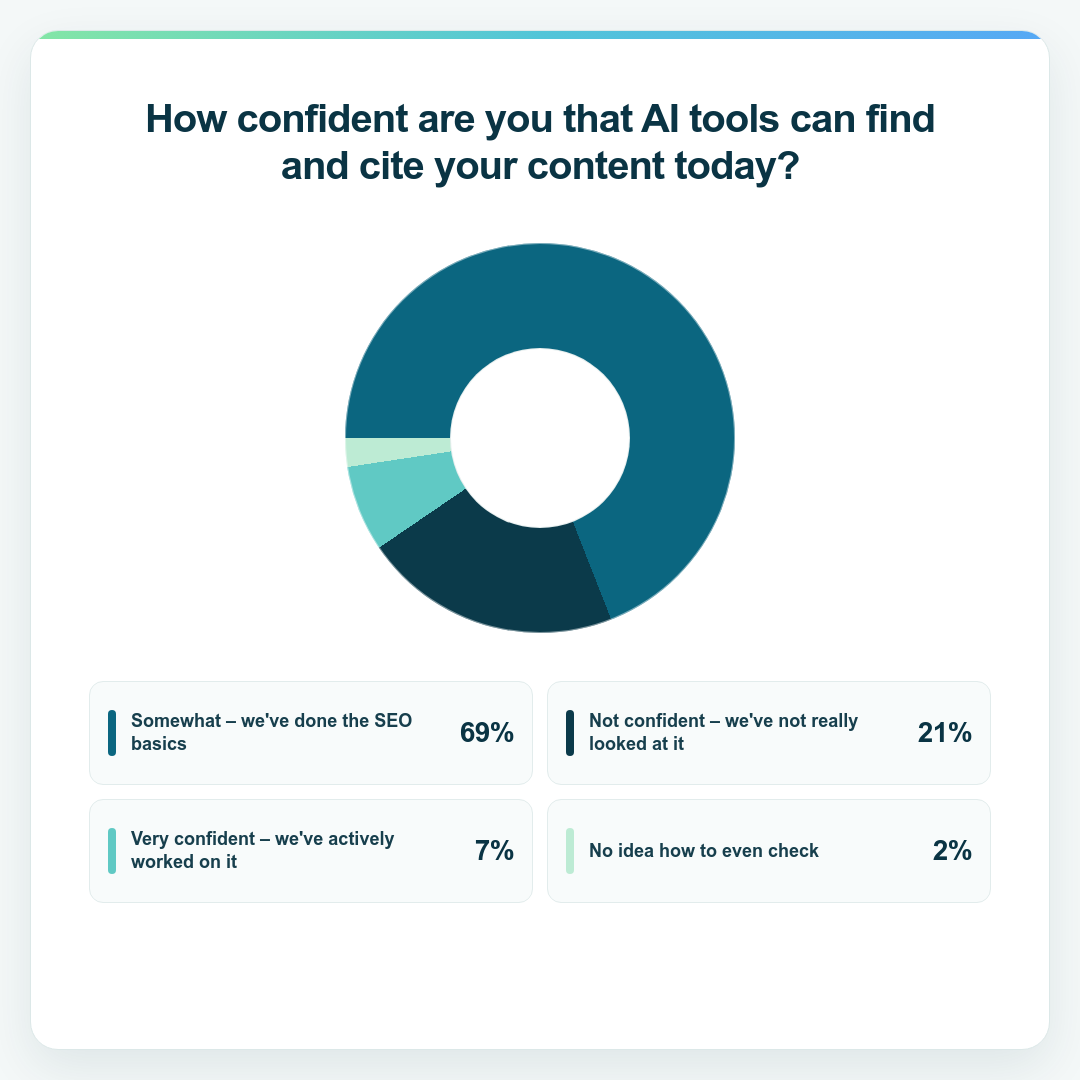
00:02:40.460 --> 00:02:45.859
Will Noble: Yep, hi, thanks, Tom. I'm Will, I've been here 11 years, and I'm a structuring director.
16
00:02:47.150 --> 00:02:55.789
Tom Noble-Sabokbar: Awesome. All right, guys, so let's jump into who Squiz are before we go into the webinar.
17
00:02:56.470 --> 00:03:08.860
Tom Noble-Sabokbar: So we help organizations get found, get navigated, and get results from their digital estate. Today, it's all about that first part, which is getting found. We're going to show you Squiz content intelligence.
18
00:03:08.860 --> 00:03:21.290
Tom Noble-Sabokbar: You may also know Squiz for Funnelback, which is our search product, and you may also know us for our DXP, which is our digital experience platform, which is content management, where you can personalize and optimize.
19
00:03:21.290 --> 00:03:26.829
Tom Noble-Sabokbar: If you want to learn more about Squiz, there's a QR code. Sorry, Will, I jumped the gun.
20
00:03:26.990 --> 00:03:27.350
Will Noble: Yeah.
21
00:03:27.350 --> 00:03:39.600
Tom Noble-Sabokbar: Alright, so let's jump into what we're going to cover today. So, by the end of this session, you'll hopefully have a bit of a mental model for how AI picks
22
00:03:39.630 --> 00:03:51.439
Tom Noble-Sabokbar: content, the four specific signals to check, and a way to audit your own site. This is designed to be useful all the time, not just interesting today.
23
00:03:51.730 --> 00:03:53.310
Tom Noble-Sabokbar: Over to you, Will.
24
00:03:54.910 --> 00:04:00.510
Will Noble: Thanks, Tom. So I guess, yeah, the antithesis of this talk…
25
00:04:00.760 --> 00:04:16.999
Will Noble: is that your best content might be invisible. So, I think all of us on this call, we can be proud of the content that we publish on our website. You know, a lot of it's relevant, it's informative, a good portion of it is clearly written as well. But even with all of that.
26
00:04:17.000 --> 00:04:34.749
Will Noble: it could still be invisible to, to answer engines. And I think the reason for that is because, for the last 25 years, we've mainly built websites for humans, and there's a lot of inferred context and relationship to sections of content on a page, because you're viewing it from the,
27
00:04:34.760 --> 00:04:41.110
Will Noble: from the human eye. And in 2026, we now have this new paradigm where we have to create sites
28
00:04:41.130 --> 00:04:47.240
Will Noble: For machines, and for many years, we've adjusted our sites for search engines.
29
00:04:47.270 --> 00:05:01.030
Will Noble: But large language models have different set of parameters and requirements. And so, oftentimes, you've probably been doing… playing around with some prompting in large language models and trying to wonder why your content isn't being cited.
30
00:05:01.070 --> 00:05:18.069
Will Noble: It might be that the actual content isn't poor in itself, but it's because it's perhaps instructed incorrectly, or it's got the incorrect labeling, and there aren't any of those kind of signals that AI can use. So that's the gap, and that's what we're going to talk about today between good content and findable content.
31
00:05:19.330 --> 00:05:37.330
Will Noble: So, unless you've been living under a rock, you probably would have noticed the shift in how we find information online. There's a big layout change in Google, and there's just a fundamental improvement to user behavior, in my perspective, and I think this is a net positive for everyone.
32
00:05:37.510 --> 00:05:53.669
Will Noble: And, I think in this… this screenshot, we've got the kind of the old way of traditional search engines, which is, we use the analogy of, you know, we've all had access to the entire collective human intellect of the world through the internet, and we can,
33
00:05:53.780 --> 00:05:58.819
Will Noble: We'd go into that library, and we'd have to… we can navigate all those different books and find the information we need.
34
00:05:58.920 --> 00:06:08.870
Will Noble: We're in this new world, it's almost like we have a graduate-level research system that can come in there that's already read everything and can quickly summarize into a nice memo, what we're trying to find.
35
00:06:08.930 --> 00:06:23.980
Will Noble: And in the old way, it was all about backlinks and keyword optimization, and in this new world, for us on this call, it's all about brand mentions, which are now, you know, significantly more important than the old link infrastructure.
36
00:06:24.170 --> 00:06:39.730
Will Noble: And there are some even conflicting interests between SEO and answer engine optimization. There were some researchers at Princeton that found that keyword optimization, the tactic that we've done for the last two decades for content marketing, has actually made visibility worse, which is,
37
00:06:39.730 --> 00:06:47.949
Will Noble: Which is surprising. So I suppose now it's not how do I rank higher, it's how do I become a source, and how do I get cited, and that's this new paradigm.
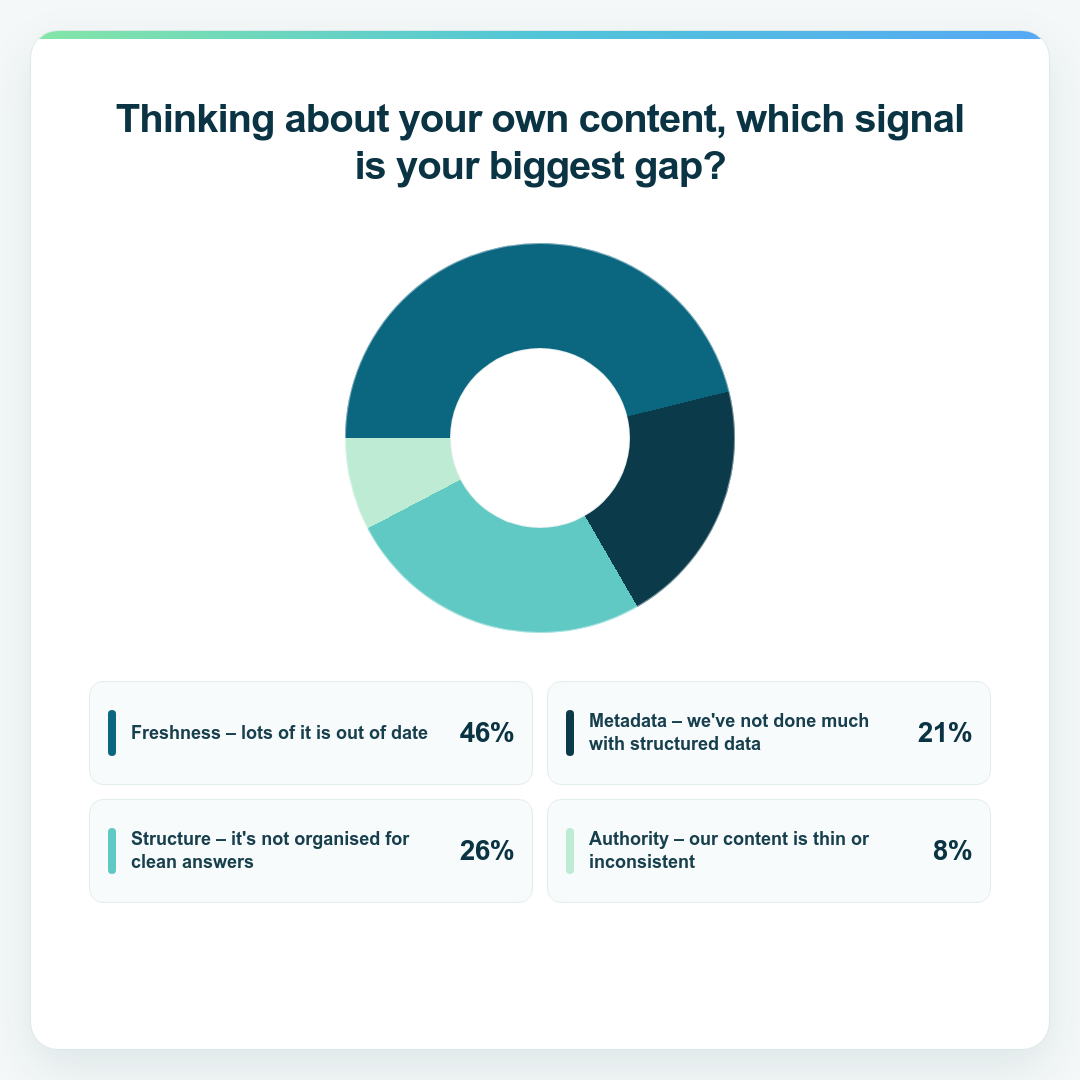
38
00:06:48.690 --> 00:06:58.040
Will Noble: So, what really happens when someone asks AI for a question? So, you put a question into Google, or it's ChatGPT,
39
00:06:58.130 --> 00:07:16.680
Will Noble: maybe, like, I'm asking, do… how do I apply for this nursing degree? That question in of itself has lots of different sub-questions and subcategories, and that is what's in the industry called as a query fan-out. So, the AI takes your question.
40
00:07:16.750 --> 00:07:28.850
Will Noble: and breaks it down into component parts, and then asks lots of second and third questions about it to synthesize or find all the right information to generate a good answer. And that is a really good thing for us on this call.
41
00:07:28.850 --> 00:07:45.460
Will Noble: Because it means the jostling to be on the first page of Google for rankings dissipates away. It's all about, does my content answer all of those sub-questions, as well as the primary question? And that is a great, great leveler to increase the likelihood that we can contribute to the answer.
42
00:07:45.590 --> 00:07:59.639
Will Noble: Once that model has all of that information, either doing web searches, or it's using its own foundational training set in its model, it'll then build that corpus, and it'll determine which bits of content am I going to use to formulate the response.
43
00:07:59.820 --> 00:08:14.300
Will Noble: And this is where we're going to talk about it later on, is that the model will only keep the sources that it feels answer the question confidently, is an authoritative voice, and can be trusted. So even if your copy
44
00:08:14.530 --> 00:08:17.709
Will Noble: Explains the answer really well.
45
00:08:17.970 --> 00:08:25.810
Will Noble: If the model doesn't feel that you're an authoritative source, it's not going to cite you when it assembles that answer, which is step 5 here.
46
00:08:25.840 --> 00:08:36.950
Will Noble: And that can be, a real bummer, right? You've written the right piece of content, but, because of the other areas around that piece of information, you don't get cited.
47
00:08:36.950 --> 00:08:48.549
Will Noble: And the goal is to get cited, because traffic that does come for you from these large language models have a much higher likelihood to convert, or hit a call to action, or book an open day, because the answer
48
00:08:48.550 --> 00:08:53.109
Will Noble: Has cited you, and you only get 2 or 3 sites per… per response.
49
00:08:53.820 --> 00:08:54.650
Will Noble: So…
50
00:08:54.750 --> 00:09:05.540
Will Noble: Before we get into some of the frameworks, we have a question for everyone, and, the question is as follows. So, how confident are you that AI tools can find and cite your content today?
51
00:09:05.970 --> 00:09:21.250
Will Noble: A, very confident, we've been working on it, somewhat confident, second option, we've done some basics, or we're not confident, or we've no idea what to check. So there should be a question panel, I can see it on my screen, so I imagine everyone else can as well.
52
00:09:21.310 --> 00:09:27.820
Will Noble: We'll give everyone a few seconds to, to punch in their answers. Tom, what do you reckon is going to come up?
53
00:09:28.500 --> 00:09:36.360
Tom Noble-Sabokbar: Yeah, I mean, it'll be quite interesting to see what the answers are, because, I know that there's lots of public sector organizations on the call.
54
00:09:36.580 --> 00:09:43.450
Tom Noble-Sabokbar: Here today, be really interested to see whether it's very confident.
55
00:09:43.800 --> 00:09:50.920
Tom Noble-Sabokbar: Very actively working on it, because there's so many things that we need to be doing on our websites every day.
56
00:09:51.280 --> 00:09:53.049
Tom Noble-Sabokbar: I don't know, what are your thoughts?
57
00:09:53.630 --> 00:10:04.629
Will Noble: Well, I think it'd be… I think there's a lot of top-down pressure from executives, saying, what are we doing for AI? And every team, every content communications team has probably had that question. So to just…
58
00:10:04.800 --> 00:10:17.929
Will Noble: throw it under the rug and deprioritize it, we'd be quite a surprise. Be interesting to see how many are very confident, because then they're still joining this webinar to learn more, so that's, that's good. So let's, Emily, should we hit the results and see what we got?
59
00:10:19.160 --> 00:10:20.110
Tom Noble-Sabokbar: Okay.
60
00:10:21.450 --> 00:10:24.819
Tom Noble-Sabokbar: Somewhat. We've done the SEO basics, that's good.
61
00:10:25.590 --> 00:10:32.870
Tom Noble-Sabokbar: So there's some confidence in it. That's good to see. No idea how to even check. Couple of people, looks like.
62
00:10:33.830 --> 00:10:34.730
Will Noble: Yeah.
63
00:10:34.750 --> 00:10:36.280
Tom Noble-Sabokbar: Well, that's interesting.
64
00:10:36.970 --> 00:10:46.959
Will Noble: Yeah, I think that… that confirms our assumptions. That's cool. I would love to speak to the very confident cohort after this call, because maybe we can learn from them too.
65
00:10:47.470 --> 00:10:53.699
Will Noble: Right, let's, let's, let's get to it. I think, Tom, you had some, some gaps to go through.
66
00:10:54.110 --> 00:11:02.599
Tom Noble-Sabokbar: Yeah, so I predominantly speak to the public sector at Squiz, and there are some gaps that we see
67
00:11:03.050 --> 00:11:16.439
Tom Noble-Sabokbar: Over and over again, to be honest with you. I'm not going to read all of these out, but you can see here that there's some clear gaps that, we see. One of the areas that I have an anecdote for
68
00:11:16.540 --> 00:11:33.490
Tom Noble-Sabokbar: is, contradicting pages. So I was speaking to a university about an open day that they ran recently, and a student had shown up to the university and parked directly outside one of the main buildings, assuming that it was free.
69
00:11:33.760 --> 00:11:39.070
Tom Noble-Sabokbar: Because what they had done is gone onto ChatGPT, and asked about parking.
70
00:11:39.270 --> 00:11:54.920
Tom Noble-Sabokbar: and there was free parking for staff, but not for students, but the way that the information had been surfaced made it sound like there was free parking directly outside one of the main buildings of the university, and I think the university was even in London. So, it was,
71
00:11:55.140 --> 00:12:00.710
Tom Noble-Sabokbar: interesting issue that they had to deal with. And I think, Will, you also have some examples?
72
00:12:03.930 --> 00:12:09.850
Will Noble: Presumably that student also didn't get the 90 quid congestion charge. Yeah, I think…
73
00:12:10.060 --> 00:12:24.099
Will Noble: Number 6, it's quite an interesting one. It's in the legal sector, so a incoming director of marketing just inherited this web state, and we were discussing, you know, search visibility, and that firm had really low visibility.
74
00:12:24.510 --> 00:12:35.360
Will Noble: And we were… we did some quick analysis and found that in their robots.txt on their site, they'd put a nofollow to OpenAI and, and some other LLM crawlers.
75
00:12:35.430 --> 00:12:49.060
Will Noble: And, and I think it was probably a reaction in 2022 by the IT team saying, we don't want our data to be fall out of the training model. But how could we progress that now it's just a part of all of our day. And so.
76
00:12:49.060 --> 00:13:04.620
Will Noble: they're not getting any citations because they're saying that they don't want to be involved or even in the loop. But I would say also, from a technical standpoint, so some other gaps here about, like, structured data, and we'll get into it. Site speed has a really big impact on,
77
00:13:04.640 --> 00:13:24.479
Will Noble: on how often that you're cited. So, large language model crawlers, like OpenAIs, and Anthropics, they're not in the business of crawling. Google's in the business of crawling, because they can drive ads through it, so they spend a lot of time investing in their crawlers to grab content that's hidden behind JavaScript, or against pages that take a long time to load.
78
00:13:24.640 --> 00:13:43.970
Will Noble: OpenAI's crawler isn't designed for that, right? Their business model is to get people to stay onto the LLM and formulate responses. So, if those crawlers hit a site that takes too long to load, or isn't… or has information that's hidden in JS, they're just not going to site you, and they're going to move on to another… another page. So something to call out there.
79
00:13:43.970 --> 00:13:47.700
Tom Noble-Sabokbar: It's just not… it's not worth it for them commercially, is it? To…
80
00:13:48.100 --> 00:13:52.519
Tom Noble-Sabokbar: it in that same way. So, I guess.
81
00:13:52.700 --> 00:14:09.059
Tom Noble-Sabokbar: what we want to talk about now is the journey that your content has to go on to survive. So if you think of it like a gauntlet that your content has to run, first, can AI even reach the page? Is it public? Is it crawlable? Or is it stuck behind a login or a download?
82
00:14:09.240 --> 00:14:15.720
Tom Noble-Sabokbar: Second, can it actually read it? Clean, structured HTML, not text baked into an image.
83
00:14:16.090 --> 00:14:20.329
Tom Noble-Sabokbar: Third, can it work out what the page is about? Fourth.
84
00:14:20.560 --> 00:14:34.729
Tom Noble-Sabokbar: Is there any reason to trust you over someone else? And fifth, does your answer beat alternatives? Fall at any one of these hurdles, and you're out of the answer entirely. The good news is that every hurdle maps to something you can fix.
85
00:14:35.090 --> 00:14:52.569
Tom Noble-Sabokbar: And that's the four sign, signals we're about to talk about. So, if we move on to the next slide, we'll talk about these four signals. So, what actually moves the needle? Structure, metadata, authority, and freshness. If you get these right.
86
00:14:52.700 --> 00:15:01.639
Tom Noble-Sabokbar: you'll clear that gauntlet. So we'll take each one in turn, what it means, what good looks like, and a quick gut check that you can apply to your own site.
87
00:15:02.300 --> 00:15:05.520
Tom Noble-Sabokbar: So, let's jump into…
88
00:15:06.220 --> 00:15:22.589
Tom Noble-Sabokbar: the first signal. So, signal one is structure, and it's actually the one that you have most control over. AI doesn't read a page like a person skimming for the gist. It's looking for a clean, extractable answer. That means one topic per page.
89
00:15:22.680 --> 00:15:32.960
Tom Noble-Sabokbar: The answer up top, rather than buried, headings that actually describe what's below them, and proper semantic HTML so it can tell a heading from a caption.
90
00:15:33.890 --> 00:15:46.059
Tom Noble-Sabokbar: If you think of it like this, could you lift the answer to a key question straight off the page in a single, clean sentence? If yes, then AI can probably do the same.
91
00:15:46.390 --> 00:15:49.949
Tom Noble-Sabokbar: And if you have to hunt for it, so does the machine.
92
00:15:50.240 --> 00:15:52.750
Tom Noble-Sabokbar: And it will usually just move on.
93
00:15:53.110 --> 00:15:55.979
Tom Noble-Sabokbar: Over to you, Will, for the next signal.
94
00:15:57.000 --> 00:16:03.580
Will Noble: Yeah, cool. So metadata, so what is metadata? Rather, it's the…
95
00:16:03.580 --> 00:16:18.910
Will Noble: technical labeling that tells a machine what this page is about. It's been around for many years, and we all kind of have SEO metadata. If you've got WordPress, you've probably got the Yoast plugin, right, where you have all of your microdata for social cards.
96
00:16:18.970 --> 00:16:20.950
Will Noble: And…
97
00:16:21.170 --> 00:16:39.830
Will Noble: even 15 years ago, Google released Skima.org, which was trying to say, we should add this kind of structure to our web pages, which tells us information about this piece of content. But the issue is we never really put into it on our sites, because it didn't move the needle for rankings the way that we thought it was, and it was just a lot of extra work.
98
00:16:39.840 --> 00:16:59.810
Will Noble: But for large language models, having good, clean, structured information that speaks directly to, the answer engine increases your citations dramatically. So there's this idea of JSON link data, which is a combination of these recommendations, and if you're, say, for example, you're on a
99
00:16:59.840 --> 00:17:04.689
Will Noble: staff profile page, or a lawyer's page. You want to be able to link
100
00:17:05.109 --> 00:17:22.580
Will Noble: That staff profile page with the courses, or the services that they offer, or they're specialized in, but you also want to look at their… all of the academic journals that they're linked with, or if you're in the legal sector, it could be the rankings in the, the third-party ranking sites as well.
101
00:17:22.740 --> 00:17:30.470
Will Noble: And this takes all the guesswork away from the model to understand further into the authority of your, of your content.
102
00:17:30.530 --> 00:17:49.249
Will Noble: There's also things in here, like adding alternate, like, descriptions on your images to say if it's decorative for what this image shows, which isn't just good for, answer engine optimization, it's also good for accessibility. You're all mandated, if you're in a public sector, to add that kind of good stuff.
103
00:17:49.500 --> 00:17:53.170
Will Noble: So this is low-hanging fruit.
104
00:17:53.240 --> 00:18:10.019
Will Noble: Typically, adding metadata, you know, well, we've got to think about it, we've got to add all this content, you guys now have access to Copilot or models that can help you create this structured metadata across your corpus, and if you've got digital experience platforms like Squiz or others, it'll help you generate this, automatically.
105
00:18:10.750 --> 00:18:22.480
Will Noble: Now, the third signal is all about authority. So, this is… is… if a large language model sees a claim on your site.
106
00:18:22.650 --> 00:18:39.189
Will Noble: are you adding a concrete statistic to, to address it? So there was a study that adding statistics lifted your visibility by roughly 40%. So you need to… if you attribute a claim, you've got to back it up with a source, right? If you're world-leading in this kind of research.
107
00:18:39.450 --> 00:18:46.290
Will Noble: you've got to then back up that claim. And this authority lands to other signals across
108
00:18:46.290 --> 00:18:59.670
Will Noble: The web, you know, are your, are you mentioned in other authoritative sources? In certain aspects, PR is coming back, because if you're mentioned in the FTE about, providing a particular, particular case, that…
109
00:18:59.690 --> 00:19:03.119
Will Noble: that will help you, as well.
110
00:19:03.430 --> 00:19:06.589
Will Noble: So, and this is the kind of ways that we've…
111
00:19:06.690 --> 00:19:17.879
Will Noble: we knew we could write our web copy like this, but we haven't really been forced to. But I think now, in 2026, that this is a fundamental change about how we write, and we need to
112
00:19:18.020 --> 00:19:19.059
Will Noble: To address it.
113
00:19:22.430 --> 00:19:40.020
Tom Noble-Sabokbar: Thanks, Will. So, just going on to the final signal here, we're talking about freshness. So, when two sources answer equally well, AI tends to prefer the one that looks current, and it actively discounts content that seems stale.
114
00:19:40.310 --> 00:19:57.510
Tom Noble-Sabokbar: This isn't a call to publish more for the sake of it, it's about keeping your most important pages accurate. Real last updated dates, no dead links, no figures from 3 years ago, and God forbid, any COVID content.
115
00:19:58.110 --> 00:20:12.189
Tom Noble-Sabokbar: And, yeah, freshness is often seen as the quickest win… win, because it's maintenance rather than creation. So, definitely an area to think about if you're looking at your site. When was the last… when was it last updated? Is it,
116
00:20:12.370 --> 00:20:14.040
Tom Noble-Sabokbar: Is it still relevant?
117
00:20:14.570 --> 00:20:22.770
Tom Noble-Sabokbar: Right, so, a bit more audience participation, let's go on to our next poll. So…
118
00:20:23.030 --> 00:20:36.099
Tom Noble-Sabokbar: Thinking about your own content and your own sites, which signal, do you think, out of the four, is your biggest gap? Do you think it's the structure, so it's not organized for clean answers? Is it the metadata?
119
00:20:36.100 --> 00:20:44.030
Tom Noble-Sabokbar: You've not done much with that? Is it authority? It's thin or inconsistent? Or do you think it's freshness?
120
00:20:44.110 --> 00:20:57.769
Tom Noble-Sabokbar: What do you think, Will? Because I personally think it'll be freshness, because there's so many old web pages, and I don't want to influence the answers, guys, but I would have thought it'd probably be that. What do you think?
121
00:20:59.160 --> 00:21:16.860
Will Noble: Yeah, quite possibly. I guess it depends on the sector that you work in. I mean, if you're in the university or the government sector, then yeah, there's… it's a mountain of information to keep over. That freshness is interesting. The RFs who did a study of 10,000 prompts found that in ChatGBT, 70% of all citations
122
00:21:16.860 --> 00:21:21.739
Will Noble: Came from content that was published within the last year, so they really infer…
123
00:21:21.740 --> 00:21:28.230
Will Noble: On fresh content, and a lot of product pages that haven't changed for many years, you might not need to have added to it.
124
00:21:28.250 --> 00:21:33.919
Will Noble: Yeah, I mean, keen to, keen to see, see what the results are.
125
00:21:33.920 --> 00:21:35.260
Tom Noble-Sabokbar: Drum roll, please.
126
00:21:37.540 --> 00:21:39.659
Tom Noble-Sabokbar: Wow. Well, there we go.
127
00:21:40.940 --> 00:21:44.890
Tom Noble-Sabokbar: That's great, like, good to see these results.
128
00:21:46.480 --> 00:21:55.069
Tom Noble-Sabokbar: I think the authority one is really interesting, isn't it? Because I saw a comment earlier, there was a comment that came through to us from Katie.
129
00:21:55.190 --> 00:22:01.300
Tom Noble-Sabokbar: At a local council, talking about, that…
130
00:22:01.500 --> 00:22:08.510
Tom Noble-Sabokbar: She feels that the content from their site would be more trustworthy above other sites, and that actually kind of
131
00:22:09.480 --> 00:22:13.629
Tom Noble-Sabokbar: connects quite nicely to what you were saying about URLs, right? About…
132
00:22:13.630 --> 00:22:28.099
Will Noble: Oh, yeah, well, like, you… so there is an authoritiveness to the type of domain that you're in, so if you're in a .gov or a .ac.uk one for a university, you intrinsically have a higher level of authority than .coms, for example.
133
00:22:28.120 --> 00:22:36.809
Will Noble: So that can help with, whether the, the models will cite you or not, compared to stuff that's not.
134
00:22:36.860 --> 00:22:46.080
Will Noble: And God forbid those companies that have .NET, domains, because they really have to work 3 times as hard as everyone else to, to drive those mentions.
135
00:22:46.080 --> 00:22:48.690
Tom Noble-Sabokbar: Let's not talk about Squiz URL… Squiz's URL.
136
00:22:48.690 --> 00:22:49.070
Will Noble: I'm happy.
137
00:22:49.070 --> 00:22:50.990
Tom Noble-Sabokbar: Squiz.net.
138
00:22:50.990 --> 00:22:51.630
Will Noble: Fair enough.
139
00:22:51.630 --> 00:23:01.710
Tom Noble-Sabokbar: But the authority… so maybe that's reflective in why people feel that, on this call, that authority isn't so much the issue, then. It's more, sort of, focused on freshness.
140
00:23:01.710 --> 00:23:09.659
Will Noble: Potentially, yeah, maybe it's just a… knowing the types of organizations we serve, which are those in the
141
00:23:09.770 --> 00:23:24.779
Will Noble: information-heavy environments, there is a lot of content, and there's a decentralized governance model with a lot of different distributed authors. So, having the ability to understand how fresh our content is, that, yeah, that does… that does chime.
142
00:23:25.390 --> 00:23:31.099
Tom Noble-Sabokbar: All right, well, well, I think the next section is for you, Will, so I'll hand the mic back over.
143
00:23:32.820 --> 00:23:39.250
Will Noble: Cool, yeah, this is a, it's kind of an example slide of, like.
144
00:23:39.410 --> 00:23:48.020
Will Noble: If you were taking the extremes of, let's look at a page that might be invisible to answer engines versus what it might be surfaced, so…
145
00:23:48.060 --> 00:24:01.230
Will Noble: If your page structure, has a very long introduction that goes into details that aren't necessarily relevant, rather than having a big answer-first summary at the top.
146
00:24:01.270 --> 00:24:11.569
Will Noble: That is a benefit for humans as well as for answer engines, because you can then orientate yourself on that page of what are the admissions requirements. I think this is, you know, obviously a university sector example.
147
00:24:11.580 --> 00:24:21.379
Will Noble: If you have no metadata telling the machine what this page is, or what it relates to, and the context behind it, that's going to get overlooked versus a page that does have that information.
148
00:24:21.670 --> 00:24:25.460
Will Noble: If you,
149
00:24:25.650 --> 00:24:42.049
Will Noble: So I think in this example, if the page repeats information or contradictory information, then it doesn't know if it's the right page to sort, and obviously, if you haven't looked at that page for several years. And I think freshness is interesting, because we are offering a
150
00:24:42.270 --> 00:24:48.109
Will Noble: There was a… there was a debate on, okay, well, this page information is still relevant, but…
151
00:24:48.250 --> 00:24:58.069
Will Noble: Do we need to go in and just click republish? What do we do? I think our recommendation is to kind of follow that NHS model of last reviewed, you know, so if you… if you're…
152
00:24:58.110 --> 00:25:12.349
Will Noble: say your kid's sick, and you search for, what, what might… what that might issue be. You go onto the NHS website, and it says, this page was last reviewed, that piece of metadata, is invaluable to answer engines as well.
153
00:25:13.690 --> 00:25:15.250
Will Noble: So,
154
00:25:15.500 --> 00:25:33.650
Will Noble: you're probably thinking now, okay, I probably need to audit my content for these four signals, how do I do it? Well, you do it like any other project that you do. Start small, go with the highest traffic, most valuable part of your site, and run some analysis against them, and we'll be sharing these slides after this call.
155
00:25:33.700 --> 00:25:40.109
Will Noble: And then you can look at those, build a bit of an audit against all that criteria.
156
00:25:40.170 --> 00:25:48.510
Will Noble: And then you can ask questions against your content, and take a look at the responses, and feel what might be missing, and where you have some content gaps.
157
00:25:48.590 --> 00:26:07.119
Will Noble: But the… I guess the big issue here is that doing this on a manual basis is just a one-off thing, and content changes, and your business may change as well. It's really valuable, potentially, to look at a way of doing this on a repeatable basis.
158
00:26:09.770 --> 00:26:18.869
Tom Noble-Sabokbar: Alright, so everything we've covered today is doable, on one page by hand, or manually.
159
00:26:18.920 --> 00:26:31.700
Tom Noble-Sabokbar: The challenge, really, is doing it across your whole site, and keeping it done. So that's why Squiz has built Content Intelligence. It scans your entire estate and gives you an AI readiness picture.
160
00:26:31.700 --> 00:26:47.359
Tom Noble-Sabokbar: which pages are working, which aren't, and specifically what's wrong, and it will also make suggestions on how to improve those pages. It tells you what to fix first, what will have the biggest impact, and it turns this from a one-off audit
161
00:26:47.360 --> 00:26:52.130
Tom Noble-Sabokbar: Into an ongoing program that you can actually measure.
162
00:26:52.140 --> 00:26:58.239
Tom Noble-Sabokbar: At the moment, Squiz are offering a one-month, trial.
163
00:26:58.280 --> 00:27:09.089
Tom Noble-Sabokbar: So, if you'd like to request a trial for Content Intelligence, please scan this QR code, fill out your details, and we'll be in touch
164
00:27:09.180 --> 00:27:15.380
Tom Noble-Sabokbar: And we'll get you set up on Squiz's content intelligence tool.
165
00:27:15.480 --> 00:27:27.839
Tom Noble-Sabokbar: We have another slide coming up, where you can also request, if you don't want to request access to the tool, you can just request a report. The only caveat is that you may have to speak to me or Will.
166
00:27:27.840 --> 00:27:38.880
Tom Noble-Sabokbar: Directly, so, hopefully that's not too annoying. But if you'd like to request, your own report for your own site.
167
00:27:39.490 --> 00:27:45.799
Tom Noble-Sabokbar: Please do, and we can walk you through some of the learnings and recommendations
168
00:27:46.020 --> 00:27:50.480
Tom Noble-Sabokbar: On how to improve AI visibility.
169
00:27:50.680 --> 00:27:58.100
Tom Noble-Sabokbar: So, Will, I think you're going to do the key takeaways next, and then we're going to go into a couple of questions that I've seen come through in the chat.
170
00:27:59.050 --> 00:28:01.060
Will Noble: Nope, yeah.
171
00:28:01.200 --> 00:28:11.419
Will Noble: just a seamless plug there, Tom, from ZoomMandy to the product. Cool, okay, so what are our takeaways?
172
00:28:12.210 --> 00:28:15.960
Will Noble: Right, we're all now hunting for citations, not for clicks.
173
00:28:16.000 --> 00:28:28.150
Will Noble: And there is a fundamental way that we need to rewrite our content and structure our sites to do that, which we went through today. One of the great things about models is that
174
00:28:28.150 --> 00:28:39.449
Will Noble: questions isn't just one search, it's multiple search with that query fan-out I described at the beginning, which is a great opportunity for us to capture, second-order questions.
175
00:28:39.580 --> 00:28:47.710
Will Noble: We've left you with the four signals, and I really think we should have had an acronym for… is it SAMF?
176
00:28:48.140 --> 00:29:05.839
Will Noble: Famous? Okay, I don't know. Structure, metadata, authority, or freshness. Those are the kind of key things from a content perspective that we're, we're recommending. And if you're going to do anything, take your highest traffic pages, take a bite at the elephant, which is obviously a cliche, but, but it works.
177
00:29:07.230 --> 00:29:15.369
Will Noble: Cool, okay. Right on the dot of half an hour, so our field marketing manager, Tom, is going to be very pleased.
178
00:29:15.370 --> 00:29:26.029
Tom Noble-Sabokbar: Very pleased. We've done a great job. We did forget to mention that we're not related, so if anyone thought that we're both nobles, we're not, there's just pure coincidence, we're not cousins.
179
00:29:26.250 --> 00:29:38.689
Tom Noble-Sabokbar: And I know that we have similar accents as well, but we are not related, just to clarify. We have a few questions in the chat. Will, I'm gonna put my hand up and try and answer, one.
180
00:29:38.690 --> 00:29:39.080
Will Noble: True.
181
00:29:41.360 --> 00:29:48.370
Tom Noble-Sabokbar: When we write a page, are there any simple rules of thumb to help AI pull a clear answer from it?
182
00:29:49.030 --> 00:29:53.640
Tom Noble-Sabokbar: So, rules of thumb, no.
183
00:29:54.200 --> 00:29:57.259
Tom Noble-Sabokbar: Because it depends totally what's on the page.
184
00:29:57.650 --> 00:30:06.010
Tom Noble-Sabokbar: But one thing I would say, and one thing that pops… crops up a lot, is that, certainly with public sector organisations, there's a lot of
185
00:30:06.180 --> 00:30:12.199
Tom Noble-Sabokbar: What something is, but not a lot of how to get access to that what.
186
00:30:12.340 --> 00:30:15.899
Tom Noble-Sabokbar: So, there'll be a service that's listed,
187
00:30:16.140 --> 00:30:20.409
Tom Noble-Sabokbar: let's pick Blue Badge. But actually, when…
188
00:30:20.590 --> 00:30:24.930
Tom Noble-Sabokbar: it's being cited, and people ask, how do I get my blue badge?
189
00:30:25.250 --> 00:30:31.680
Tom Noble-Sabokbar: The large language models aren't able to, like, cite the step-by-step process.
190
00:30:31.680 --> 00:30:47.060
Tom Noble-Sabokbar: And so, lots of universities and public sector organizations that I've spoken to have taken that away and then structured their FAQs differently, or included a step-by-step process underneath the information around that specific service.
191
00:30:47.060 --> 00:30:54.970
Tom Noble-Sabokbar: So, rule of thumb, in inverted commas, is to be as clear as possible with the how-to as well as the what.
192
00:30:55.400 --> 00:30:59.299
Tom Noble-Sabokbar: Hopefully that's not too vague. Hopefully that does make sense.
193
00:30:59.460 --> 00:31:02.540
Tom Noble-Sabokbar: Will, anything to add to that?
194
00:31:02.990 --> 00:31:22.789
Will Noble: Yeah, I would just bookend on that, that we did a bit of a talk two webinars ago on some of the signals to look out for, so you just talked about content completeness and habit making it specific, and then I think consistency was another one. So they're kind of, like, I think there are five signals, consistent, specific, complete.
195
00:31:22.920 --> 00:31:33.429
Will Noble: consolidated and fresh. And so that's… that's… that's good practice across all… all pages. So, we'll, I think, as a shame it's an anonymous person, but we'll,
196
00:31:33.660 --> 00:31:35.860
Will Noble: That was… that would be our recommendation.
197
00:31:36.070 --> 00:31:38.090
Tom Noble-Sabokbar: Make your… if you'd like to make yourself known.
198
00:31:38.420 --> 00:31:44.300
Tom Noble-Sabokbar: Feel free to email us directly, and we can answer in more detail. I'm happy to set up a chat.
199
00:31:46.650 --> 00:31:55.150
Will Noble: Cool. Then we've got another one here is, is traditional SEO worth doing, or is our effort better spent elsewhere for now?
200
00:31:55.380 --> 00:31:59.809
Will Noble: I'm still a big advocate for doing,
201
00:31:59.920 --> 00:32:15.059
Will Noble: For, like, monitoring search engines and making sure that you are, you are cited there. I kind of see this as an exten… like, what we've gone through today is an extension of search engine optimization, but just with some nuances.
202
00:32:15.060 --> 00:32:20.949
Will Noble: I did call out some, some issues with the… with the keywords, but in general.
203
00:32:21.350 --> 00:32:25.589
Will Noble: for recent content, so say, for example, you asked a large Haynes model.
204
00:32:25.770 --> 00:32:29.739
Will Noble: When is the next open day at Greenwich University?
205
00:32:30.120 --> 00:32:37.989
Will Noble: the model isn't going to have that information in its own dataset. It's going to have to go and fetch that from the internet.
206
00:32:38.210 --> 00:32:56.050
Will Noble: And the way it'll do that is it will… it will query the Google API or the Bing API, and then it'll try and find the response in that, in that API call. So, if you have paused SEO and it's not easily foundable.
207
00:32:56.080 --> 00:33:08.699
Will Noble: in… when they make that API call, then you're going to hit your citations anyway. So, there's actually some interesting studies that look at if the model can find the response in that
208
00:33:09.110 --> 00:33:24.869
Will Noble: packet, so in the… in your metadata, the 256 characters that says, okay, well, this is when the next open day is. It won't… the large… the OpenAI crawler won't even go to your site. It will just use that as, as the answer. So,
209
00:33:25.000 --> 00:33:34.000
Will Noble: I… we can't throw everything the way we've done for making sure that we rank in search engines, because the models use the search engines, as well.
210
00:33:34.710 --> 00:33:41.830
Tom Noble-Sabokbar: I see, another question here. How can we use an automated search
211
00:33:42.270 --> 00:33:47.320
Tom Noble-Sabokbar: On our site, which has 1,200 pages and 1200 PDFs.
212
00:33:47.610 --> 00:33:49.329
Tom Noble-Sabokbar: That might sound like a lot.
213
00:33:49.550 --> 00:33:57.180
Tom Noble-Sabokbar: We work with institutions that have a lot more than that as well, for duplicate or overlapping content.
214
00:33:57.180 --> 00:34:11.380
Tom Noble-Sabokbar: I've struggled to find a tool to do this. As a council, some topics like payment methods or trees may be mentioned in other places. So, that's literally what, Squiz's content intelligence tool is designed.
215
00:34:11.699 --> 00:34:26.319
Tom Noble-Sabokbar: to help you with. If you have struggled to find a tool, this is actually a tool that will help you find that duplicate content and present it to you, in a dashboard. We're not going to do a live demo, don't worry, but,
216
00:34:26.409 --> 00:34:38.379
Tom Noble-Sabokbar: if you'd like to see more, on how that works, more than happy to set that up with you, with you, Greg. So, hopefully that answers your question.
217
00:34:41.920 --> 00:34:45.959
Tom Noble-Sabokbar: Will, do you see any others that… And popped up, yeah.
218
00:34:45.960 --> 00:34:55.470
Will Noble: Elizabeth, you said… I noticed early on that you said keyword optimization has led to surfacing issues when it comes to LMs. So I read this this morning, so I will,
219
00:34:55.540 --> 00:35:06.559
Will Noble: And my, my temporary memory being so terrible as it is, I can't remember the exact details, but I will send you the research after this, so you can, take a look.
220
00:35:07.940 --> 00:35:18.000
Will Noble: And also, all of these questions, I should say, we will build a landing page with the answer… answers after this, so everyone on this call can navigate that.
221
00:35:21.770 --> 00:35:24.110
Will Noble: Another one,
222
00:35:24.940 --> 00:35:36.419
Will Noble: There was, would you recommend FAQs for web pages? We've been told in the past they're a sign of poor content writing and it can hinder accessibility, but I guess they may help AI tools.
223
00:35:38.030 --> 00:35:48.610
Will Noble: So, obviously, the model of question and answer in an LLM lends itself to, to writing more in that style.
224
00:35:48.680 --> 00:36:05.989
Will Noble: we're not… Eric Squiz not huge advocates for building huge FAQ sites that live, like, elsewhere on the site, like a dedicated area, but kind of much more of the idea that adding some, you know, a frequently asked panel on a key service or a sector page is beneficial.
225
00:36:06.280 --> 00:36:12.480
Will Noble: And often those… with those questions, I think Tom alluded it to, talked about the how.
226
00:36:12.610 --> 00:36:14.659
Will Noble: Not just the what you do.
227
00:36:15.380 --> 00:36:28.970
Will Noble: that can be really valuable context for the models to then use to have a greater understanding of the client journey and the process. So yeah, I think our overarching recommendation in Squiz is that we feel that there is a place for
228
00:36:29.070 --> 00:36:32.180
Will Noble: through FAQs, because it kind of mirrors the…
229
00:36:32.310 --> 00:36:42.419
Will Noble: the way that they respond anyway, so they will pick that information up. And if there's less compute that the model has to carry out, then, they're all for that.
230
00:36:42.420 --> 00:36:57.400
Tom Noble-Sabokbar: Yeah, and I would add to that that, hosting on a separate URL or having it in a different section may not be ideal, not just from a large language model reading it perspective, but also an operational perspective, because the service owner might not
231
00:36:57.440 --> 00:37:07.150
Tom Noble-Sabokbar: know if a process changes, so they might own the page itself, but not the FAQ, so a good way to just have that
232
00:37:07.150 --> 00:37:17.579
Tom Noble-Sabokbar: is, or to handle that is to have it just all on that same page and consolidate. It also reduces digital footprint if you have less web pages, so…
233
00:37:18.150 --> 00:37:20.259
Tom Noble-Sabokbar: Win-win, I guess, in that situation.
234
00:37:26.150 --> 00:37:34.739
Will Noble: So I think… There's a question here about,
235
00:37:34.960 --> 00:37:41.949
Will Noble: Are long pages less prone to be found in answer engines, even if we structure them properly?
236
00:37:42.640 --> 00:37:48.790
Will Noble: So I guess this is a question of, like, is long-form content and thought leadership
237
00:37:49.120 --> 00:37:53.380
Will Noble: Is that something that we need to truncate into different areas?
238
00:37:53.530 --> 00:38:02.069
Will Noble: It's an interesting question, isn't it? Because if, like, why would it be a long page, and if that is a long page, but it's all about one topic.
239
00:38:02.430 --> 00:38:15.280
Will Noble: then it makes sense to keep an area of research, for example, that you're explaining, and you're going deep into it, and it's, it's organic content that you've written yourself that's showing a point of view that's distinctive.
240
00:38:15.410 --> 00:38:30.130
Will Noble: I think we should absolutely carry on doing that kind of, that website… that website… that writing. And I… the… the issue, and when… in the talk we talk about is when you're putting multiple different topics onto one page.
241
00:38:30.400 --> 00:38:38.360
Will Noble: Then that… that's where the model gets a bit, it doesn't like it so much, because it's hard to understand what exactly is this page about, and
242
00:38:38.430 --> 00:38:57.290
Will Noble: And go from there. So I think, is there a space for long-form content? Absolutely. Long pages can still play a value there. It just makes sure that the topic is consistent, so just don't do it two… two to one. And actually, on that, about writing, because we were… me and Tom were talking about this this morning, like.
243
00:38:58.190 --> 00:39:02.340
Will Noble: does AI… like, if we use AI to…
244
00:39:02.510 --> 00:39:06.189
Will Noble: To change our copy and how we present ourselves.
245
00:39:06.320 --> 00:39:24.069
Will Noble: Will that then overarching become us, we will sound exactly the same as everyone else, and it'll impact our visibility? And the answer, I think, is quite nuanced, because I think it's absolutely fine to use AI to understand gaps in your content, and use it to suggest revisions.
246
00:39:24.170 --> 00:39:26.859
Will Noble: Which is kind of what content intelligence does.
247
00:39:27.040 --> 00:39:34.519
Will Noble: But there is always going to be a place for organic content, and distinctive writing and new, like.
248
00:39:34.970 --> 00:39:49.479
Will Noble: inputting to the collective understanding and knowledge of, of human understanding. So, we shouldn't just get large mega models to write all of our blog posts, to write all of our service pages unaided with just some simple brand guidelines.
249
00:39:49.480 --> 00:39:55.790
Will Noble: Because that copy won't say anything distinctive, because it's just using the training data that it has already.
250
00:39:55.810 --> 00:40:00.680
Will Noble: So I guess there's a, there's a balance to be had across those.
251
00:40:00.740 --> 00:40:01.760
Will Noble: There's two errors.
252
00:40:05.140 --> 00:40:20.029
Will Noble: Cool. Tom, I think then, we're about to run out of time, and, all I would like to say is, thank you everyone for joining. Recording will come through, we'll cover all the questions off that we, potentially haven't answered.
253
00:40:20.180 --> 00:40:23.920
Will Noble: And, hopefully see you at the next webinar.
254
00:40:24.140 --> 00:40:26.869
Tom Noble-Sabokbar: Yeah, thanks so much, guys. Have a great rest of your day.
Poll results
- Check back later for more information.
AI visibility report
Is your content invisible in AI search platforms?
Get a free AI visibility report of your content. See where you stand today and get clear recommendations on next steps.
Webinar Q&A
The Q&A is being answered internally. Check back later for more information.
Coming soon.
Coming soon.